

Prognosis & Predictions: Rethabile Melamu – CEO, SAPVIA

Looking at the world that was and what could be in our annual power and energy feature
Prognosis for 2025
2025 marked a year of tangible progress for Africa’s renewable energy market — a shift from ambition into active implementation. As project pipelines matured and investment confidence strengthened, several defining developments emerged across the sector.
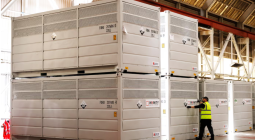
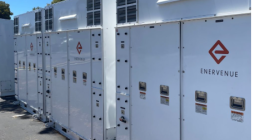
Among the most notable was the acceleration of battery energy storage, with global capacity expected to exceed one terawatt by 2030. In 2025 alone, individual projects surpassed 400MW (LSF Market Study 2025), reflecting how rapidly deployment is scaling. Vanadium Redox Flow Batteries (VRFBs) continued to gain traction, valued for their recyclability and high recovery potential — a meaningful step toward circularity in energy storage.
However, this progress exists alongside a stubborn constraint: access to grid capacity. Developers are increasingly ready to build, investment interest remains strong, and yet grid connection remains one of the biggest hurdles to timely delivery. If we cannot connect, we cannot accelerate.
It is time for a more deliberate push to unlock infrastructure capacity, strengthen wheeling frameworks and modernise grid systems so that renewable energy can move from pipeline to production at the scale required.
Across Africa, 2025 also demonstrated a stronger focus on workforce development. Several SADC markets are preparing to introduce skilling programmes similar to the PV GreenCard — a signal that governments are recognising that energy security is built on people as much as it is built on technology. The future cannot be imported; it must be developed, trained and retained locally.
Predictions for 2026
Despite financing challenges for manufacturers, private procurement remains a major driver of new builds, supported by regulatory reform and growing confidence. By 2030, we expect private investment in large-scale PV and storage to reach R72 billion (GreenCape, MIR). The priority now is ensuring this investment translates into local value — jobs, manufacturing capacity and access for communities.
Looking toward 2026, there is clear opportunity. Decentralised solar can strengthen rural economies through productive-use applications such as irrigation and refrigeration. Regional training hubs and gender-inclusive programmes can widen participation. And harmonised standards and incentives can strengthen local manufacturing to reduce import dependency while creating jobs. In South Africa specifically, streamlining grid access remains essential to unlock the next stage of private-sector-led growth.
The solar PV industry globally continued its steady global growth in 2025, and Africa and South Africa mirrored this trajectory. Installed capacity increased by more than 1 GW, bringing the country’s cumulative solar PV capacity to approximately 9.4 GW by mid‑2025 in South Africa. This firmly places South Africa among the top 20 solar PV markets worldwide.
The pipeline for further growth is robust. More than 16GW of private sector projects are registered with the National Energy Regulator of South Africa (NERSA), with around 60% of these being solar PV projects ranging in size from 100kW to nearly 200MW. This signals strong momentum for the coming years.
To support this projection, SAPVIA, in collaboration with the South African Wind Energy Association (SAWEA) and the National Transmission Company South Africa (NTCSA), launched the fourth iteration of the South African Renewable Energy Grid Survey (SAREGS). The 2025 results revealed a pipeline of 220GW of renewable energy projects, of which 72GW are already at advanced stages of development. Notably, just under 50% of these projects are hybrid, demonstrating the increasing role hybrid technologies will play in 2026 and beyond.
The Renewable Energy Independent Power Producer Procurement Programme (REIPPPP) also contributed significantly to growth in 2025. On 23 December 2024, the Minister of Electricity and Energy announced the preferred bidders for Bid Window 7, which had an allocation of 5GW. Of this, 1.8GW was allocated to solar PV, while 3.2GW was earmarked for wind.
However, due to grid constraints, no wind projects were awarded preferred bidder status, meaning solar PV was the sole beneficiary of BW7. On the same date, the Minister also announced the preferred bidders for the second Bid Window of the Battery Energy Storage. Independent Power Producer Procurement Programme (BESIPPPP), further cementing the role of storage in South Africa’s energy mix.
Policy priorities
From a policy perspective, government released the latest Integrated Resource Plan (IRP) in 2025, projecting that solar PV will contribute approximately 30GW by 2039. SAPVIA, alongside other partners, represented business at the NEDLAC process during the IRP’s finalisation. South Africa’s leadership on the global stage also shaped the energy transition agenda. Under its G20 presidency in 2025, South Africa prioritised renewable energy and energy transition as a central theme. This resulted in a declaration and commitments to increase investment in scaling renewables across Africa, reinforcing the continent’s role in the global energy transition.
Significant progress was also made on the South African Wholesale Electricity Market (SAWEM), which is set to be enforced in 2026, opening up the market to multiple players and attracting investment into the sector. To address grid constraints in high‑resource areas, the Department of Electricity and Energy launched the first bid window of the Infrastructure Transmission Programme (ITP) in 2025.
In parallel, NERSA ran consultations on grid access rules, which are expected to be finalised in 2026.
Looking ahead, the implementation of the South African Renewable Energy Market (SAREM) will be a key focus. In 2025, the Department of Electricity and Energy established an Executive Oversight Committee for SAREM, with SAPVIA as a member. This will remain a priority area of support in 2026.
Lastly, the deployment of solar PV in the residential market has stagnated, but set to grow in 2026 due to escalation in the cost of electricity.
Beyond South Africa, other African markets are also showing strong growth. Nigeria, Kenya, Egypt, Morocco and Zambia are all scaling up renewable energy capacity, driven by both national policy frameworks and international investment. Together, these markets highlight Africa’s emerging role as a hub for renewable energy development.
South Africa’s solar PV sector enters 2026 with strong installed capacity, a robust pipeline, and enabling policies. With hybrid technologies, storage integration and grid expansion on the horizon, and with continental momentum reinforced by G20 commitments, the outlook for solar PV in South Africa and across Africa is one of resilience and growth. ESI
Cover photo: SAPVIA.