

Can the battery minerals market keep up with technological shifts and global tensions?
Battery energy storage technologies are evolving rapidly, which Roland Chavasse, Secretary General, International Lithium Association, thinks could mean exciting times for Africa’s future battery minerals market and production.
To provide context, Chavasse traced the origins of rechargeable lithium batteries, noting that the first one was produced by ExxonMobil in 1977. It was large and went through three iterations before the first commercial one was used by Sony in camcorders in 1991.
By 2011, rechargeable lithium batteries were being used in portable devices such as phones and watches, but it was only when electric vehicles began mass production about six years later that the impact exploded.
“Today, the battery industry is ten times larger than it was 20 years ago. At the moment, we are looking at a market in terms of terrawatt hours; it’s about 1.5TWh produced last year,” said Chavasse.
The IEA says the global lithium-ion battery market exceeded $150 billion in 2025, an increase of over 20% from 2024
“In 2030, it should be about 4.5TWh, so tripling the market. doubling by 2040, up to possibly 11TWh,” posited Chavasse.
As he explained at the Investing in African Mining Indaba on a panel discussion on the battery minerals market, this fast-growing sector means “an enormous requirement for all sorts of critical minerals materials, particularly lithium, copper, nickel, cobalt, and possibly manganese. There are various forms of lithium batteries,” said Chavasse.
China’s outsized influence on the battery minerals market
Mikhail Nikomarov, a partner at Boston Consulting Group, says he has spent the past 18 months examining battery supply chains and critical minerals, noting that China has been consistently focused on investing in Africa over the past 15 years.
As Nikomarov puts it, there are pros and cons for any African country to work with China. Though the Far Eastern country is becoming more sensitive to the localised requirements of African countries, it remains focused on processing critical minerals in China, regardless of where they are sourced.
Nikomarov sees Japan, the UK and the EU as all trying to move beyond China’s domination of the critical minerals market to build more long-term, diversified supply chains than the US’s more transactional approach to Africa and critical minerals mining.
“Obama focused on power, Biden on healthcare, but for Trump, it is critical minerals. It’s very short-term; they want to get as much done as possible before the next election,” he explained.
He sees the Gulf countries emerging as a source of investment for Africa and more attention from India due to rapid electrification. “You do now have a lot more options than before,” said Nikomarov.
Right now, though, there is a misalignment in timing—commodity pricing determines a mine’s cost and whether it is bankable, and it takes up to 15 years to get a mining project started—so capitalising on this boom in interest in Africa’s mineral resources is a tricky proposition.
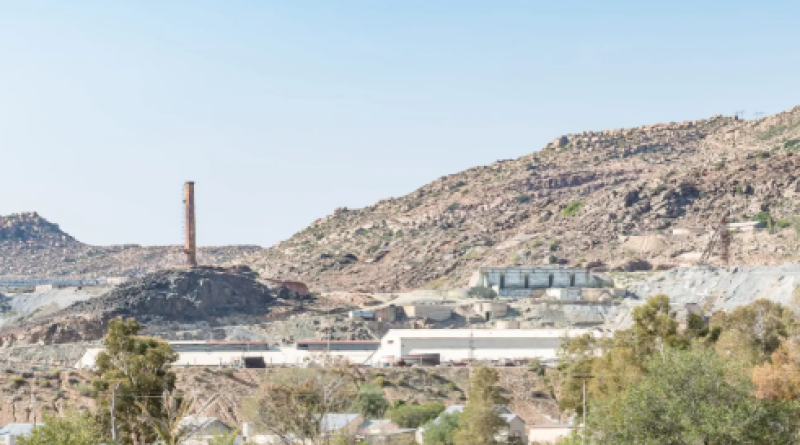
Cover photo: Capitalising on the interest in Africa’s mineral resources is a matter of timing and insight.