


Heat, drought and fire: how extreme weather pushed nature to its limits in 2025
National Trust says these are ‘alarm signals we cannot ignore’ as climate breakdown puts pressure on wildlife
Extremes of weather have pushed nature to its limits in 2025, putting wildlife, plants and landscapes under severe pressure, an annual audit of flora and fauna has concluded.
Bookended by storms Éowyn and Bram, the UK experienced a sun-soaked spring and summer, resulting in fierce heath and moorland fires, followed by autumn floods.
The National Trust, which provides a snapshot of how the weather is hitting wildlife every Christmas, described it as a rollercoaster of conditions that tested nature’s resilience like never before in modern times.
Ben McCarthy, the head of nature conservation at the charity, said: “Heat, drought and fire are the defining headlines of 2025.
“Extremes in weather is nothing new, but the compounded impact of several drought years in a short period – 2018, 2022 and now 2025 – is putting untold strain on habitats and making life even more difficult for wildlife. These are alarm signals we cannot ignore, and we need to work faster, smarter and in a more joined-up way.”
Human-caused climate breakdown is supercharging extreme weather across the world, driving more frequent and more deadly disasters from heatwaves to floods to wildfires. At least a dozen of the most serious events of the past decade would have been all but impossible without human-caused global heating.
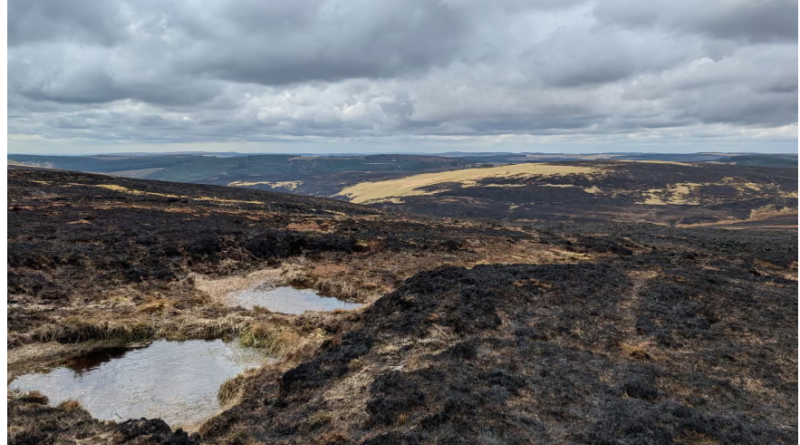
The fires had a dramatic impact. A blaze on Abergwesyn Common in mid Wales in April, burned across more than 5,000 hectares of peatland and destroyed habitats for small mammals, reptiles and birds, including golden plover, skylark, raven, red kite, common lizard, common frog, field vole and rare dragonflies such as the black darter. Rangers said the ecological damage will be felt for decades.
Further north in Wales there were concerns that the tufted saxifrage may vanish from the slopes of Eryri (Snowdonia) because of the heat. The trust said there were only seven of the plants known to still cling on. Happily, they just about survived.
Even where fire did not take hold, the heat harmed species such as raptors and owls. Numbers crashed in parched grasslands at the Mottisfont estate in Hampshire and Sherborne estate in Gloucestershire.
Low rainfall left streams and ponds perilously low or dry at places including Fountains Abbey in North Yorkshire while at Tattershall Castle in Lincolnshire, breeding ponds for great crested newts dried up. On the Merseyside coast, Formby’s natterjack toads producing no toadlets.
Extreme weather continued to place unprecedented strain on trees, the trust said.
Newly planted saplings suffered losses of up to 40%, rather than the expected 10-15%, while mature trees showed stress through early leaf loss, limb drop and reduced canopy colour.
Oaks, already threatened by acute oak decline, are less able to withstand repeated dry years, particularly in the Midlands and east where rainfall is lowest.
It was a tough year for some seabirds. There was a 30% decline in Arctic tern nests at Long Nanny in Northumberland and puffin numbers fell by a third on Farne Islands off the coast of north-east England.
The mild, wet autumn triggered a second flush for a range of plants. At Newark Park in Gloucestershire, staff noticed woodland holly flowering in November, while in the Peak District in Derbyshire the summer-flowering harebell was blooming in November.
Other unusual sights included apple trees blossoming in Nottinghamshire and Herefordshire in September and October, and roses blooming in Hampshire in December.
Some animals appeared to be out of sync. Bats and brimstone butterflies were still on the wing in November in Suffolk, while jackdaws, hooded crows and rooks were flocking and rebuilding their rookeries at Mount Stewart in Northern Ireland many months early.
Despite the extreme weather, there were some winners. “Generalist” species such as grey seals, carrion crows and speckled wood butterflies did well thanks to their ability to adapt to warmer temperatures and survive on a varied diet.
It was a fine year for berries and nuts in many places. Dunham Massey in Cheshire saw the largest acorn crop in living memory, while across the South Downs and Chilterns in southern England hedgerows were thick with berries.
The trust flagged up successful schemes such as “stage 0” at the Holnicote Estate on Exmoor, south-west England, where a lush wetland has been created, enabling species including water voles, great white egrets and flocks of gold finches to thrive.
At Holnicote, one of the UK’s rarest butterflies – the heath fritillary – enjoyed a dramatic resurgence. More than 1,000 individuals were recorded across 13 sites, up from about 600 last year.
McCarthy said: “While adaptable species are coping, those with specialist needs are in steep decline. The homogenisation of the wider countryside is accelerating this trend. Protected sites such as SSSIs [sites of special scientific interest] can no longer act as a safety net; they’re too small and too fragmented to form an effective ecological network. Without urgent, joined-up effective action, nature will continue to decline.”
Cover photo: The effects of a huge wildfire on Abergwesyn Common, mid Wales. Habitats for many species such as reptiles and birds were destroyed. Photograph: Chris Smith/National Trust