

Building Heat-Resilient Cities: Lessons from Small Businesses in Urban India

Extreme heat has become one of the most pressing climate challenges confronting India’s urban centres. Cities across the country are witnessing longer, hotter summers that strain public health, weaken livelihoods, and disrupt essential services. Among those most affected are small businesses who form the backbone of India’s urban economy. Their exposure is direct, prolonged, and poorly shielded by existing infrastructure. Yet, their experiences also offer valuable lessons for shaping locally led adaptation.
A recent study conducted in Ahmedabad and Guwahati—two cities representing diverse climatic and governance contexts—provides insights into how heat affects daily life and how communities and institutions are beginning to respond. While not a comparative study, both cities reflect the broader story of urban India: rapid growth, rising temperatures, and expanding initiatives to strengthen resilience.
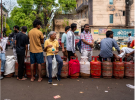
The study found that extreme heat consistently reduces productivity, increases fatigue, disrupts food practices, and raises household expenses on water and cooling. Many small businesses shorten operating hours, especially in open markets where shade is limited. Electricity bills often rise by 25–50 per cent during the summer months, and access to drinking water becomes uncertain in many neighbourhoods. Women who balance both paid work and care responsibilities experience a disproportionate mental and physical burden.
At the same time, India’s climate-resilience architecture is evolving rapidly. The National Disaster Management Authority’s Heat Action Guidelines (2024), early warning services from the India Meteorological Department, and urban missions such as AMRUT 2.0 and DAY-NULM are steadily improving public preparedness. Ahmedabad’s pioneering Heat Action Plan and Guwahati’s growing emphasis on green infrastructure show that Indian cities are increasingly recognising the need for heat-aware urban governance. Community-level efforts—tree planting, temporary shading, shared water points—further indicate that adaptation is already underway.
However, the study highlights areas where policy attention can deepen impact. Heat-safe work standards, such as mandated rest breaks and hydration access, can be integrated into municipal labour regulations. Small businesses require access to climate-risk finance, including micro-insurance and low-interest credit for cooling upgrades. Urban planning codes—such as cool-roof standards, ventilation norms, and requirements for green buffers—can be strengthened to reduce surface temperatures in dense markets and informal clusters.
Effective heat resilience also depends on improved data systems. Ward-level dashboards that integrate IMD forecasts, health surveillance, and local observations can help municipalities shift from reactive to anticipatory action. Communication must become more localised: multilingual warnings, occupation-specific guidance, and market-level notice boards can translate early alerts into everyday decisions.
Most importantly, small businesses should be recognised as partners—not beneficiaries—in shaping urban resilience. Their place-based knowledge, coping strategies, and willingness to co-invest in cooling solutions make them important actors in India’s climate transition.
It is important to recognise the substantial progress already made by national and local institutions in addressing extreme heat. The NDMA’s updated Heat Action Guidelines, IMD’s strengthened early-warning systems, and the proactive leadership shown by municipal authorities in cities like Ahmedabad and Guwahati demonstrate a growing commitment to heat-aware governance. State Disaster Management Authorities, public health departments, urban development agencies, and livelihood missions such as DAY-NULM are gradually integrating heat safety into their programmes. Civil society organisations, academic institutions, and community groups have also played a vital role by supporting awareness campaigns, piloting nature-based cooling solutions, and ensuring that the voices of small businesses and informal workers are heard. These collective efforts provide a strong foundation to build upon and offer encouraging evidence that multi-stakeholder collaboration is possible, scalable, and central to India’s urban resilience journey.
India’s heat crisis is often portrayed as a challenge of infrastructure or meteorology. But as this study shows, it is equally a social and economic issue—one that can be addressed through inclusive urban planning, integrated governance, and community leadership. As temperatures continue to rise, India’s cities must strengthen their commitment to resilience: greener neighbourhoods, safer work conditions, improved services, and financial protection for those who keep urban life running. The way forward lies in connecting science, policy, and lived experience to ensure that adaptation reaches every market, street, and household.
Cover photo: AIDMI