

Turning back to nature to grow Africa’s green economy
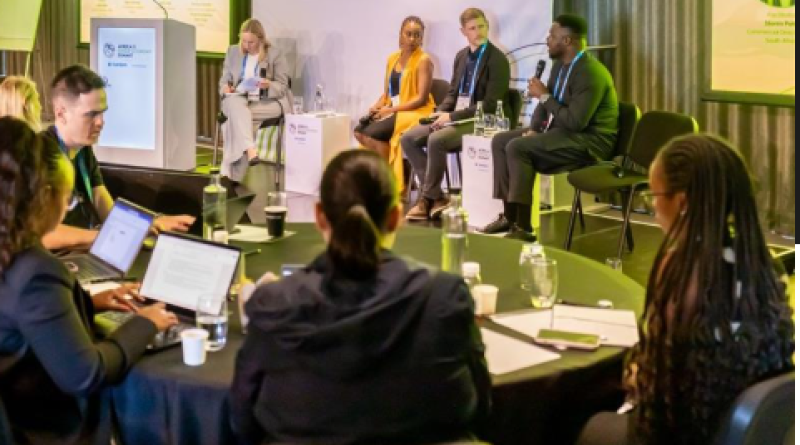
AGES this year expanded to include a pre-event day of workshops around carbon markets
The fourth edition of Africa’s Green Economy Summit (AGES) in Cape Town kicked off Tuesday (24 February) in the familiar lively atmosphere and interactive style that this annual gathering has become known for.
The event is aimed at accelerating the continent’s transition to a sustainable, net-zero future. It acts as a critical deal-making platform connecting global investors, financial institutions and developers with bankable projects in renewable energy, green transport and agriculture.
The pre-conference day focused on practical sessions focused on carbon credits and nature and biodiversity finance. The first workshop explored how innovative bond structures, including green, blue and wildlife conservation bonds, are being used to finance nature-positive outcomes. The all-women panel discussion was led by Samantha Petersen, who leads the WWF’s Southwest Indian Ocean Regional Programme.
“It was a rich, honest and appropriately nuanced conversation. For me, the major take-home is that this is not just about innovative finance. It’s really about alignment. And we heard a lot of the speakers speak about the need to decode nature for financial institutions, but that there are also challenges around pipeline and some of the difficulties to develop some of these projects.
“What was exciting for me was to see the diversity of voices and actors in the room and the rich conversation that we were able to have so that only when we come together can we move together and really unlock the potential that bonds have for nature,” said Petersen.
A well-known example is the so-called Rhino Bond, a multi-million, 5-year sustainable development and outcomes-based bond issued by the World Bank in 2022 to support black rhino conservation in South Africa’s Addo Elephant National Park and Great Fish River Nature Reserve.
“Outcome-based bonds are just some of the tools that we use in terms of designing de-risking instruments in order to help attract private sector investors to support nature conservation and biodiversity projects across Africa. We heard the very practical experiences and examples that were shared by SANparks, for example, of how long it takes to design an outcome-based bond and the challenges that they face,” explained panelist Mookho Mataba, DBSA Climate Finance Specialist.
Unrealistic expectations
The next discussion unpacked debt-for-nature swaps, sustainability-linked loans and impact-linked finance, as these are gaining traction as tools to align sovereign and corporate debt with environmental outcomes.
Panellist Erik Wandrag, CEO of Oceans Finance Company, developer of the groundbreaking Galapagos Debt-For-Nature swap: “I think there are a lot misconceptions about debt-for-nature swaps. I also think there are a lot of unrealistic expectations, but I found that there was a lot of interest today and people were really keen to properly understand it and to look for opportunities to deploy it.
“I think the main takeaways were that it’s got to be focused on impact. We’ve got to make sure that the outcomes that you hope the swaps will achieve are achieved over the long term. And those outcomes are based around conservation, social upliftment, economic development and the like.”
The transaction, which reached financial close in May 2023, is recognised as the largest debt-for-nature conversion in history to date.
Nascent nature credits
A session on biodiversity credits featured experts on this emerging complementary tool to carbon markets and decoded the state of play around biodiversity credit methodologies, market demand and verification systems with a spotlight on what’s happening in Africa and where the real opportunities lie.
“We had a fantastic session” says moderator Candice Stevens, CEO and founder of the Sustainable Finance Coalition. “We really focused on how do we secure investment in nature for nature’s sake? How do we ensure that we channel sustainable finance to the people and places that need it the most? Biodiversity or nature credits are still nascent, there’s a lot of work to do, but excitingly, Africa is full of natural wealth and full of pioneers. So as we put those two things together, we stand the chance of creating a brand new finance solution for nature.”
Carbon markets=huge opportunity
Following the success of the Carbon Markets 101 Masterclass at last year’s AGES, another one was offered this year, as demand for foundational learning in the African carbon markets and project development and implementation continues to grow, especially among private-sector executives, financiers and policymakers newly entering the carbon markets space.
Olufunso Somorin, Carbon Markets Coordinator at the African Development Bank Group was one of the facilitators in this packed session: “We are in a dimension where carbon markets present a huge opportunity for Africa. And I think the level of interest in the room shows that. We cannot afford to miss out. We did once. We have a second chance now. We have to do things differently going forward. And the level of knowledge, technical expertise and the information that we need must be available timely, but also to support people to be part of it.”
Nature-based credits
The final session of the opening day combined the two audiences in one lively discussion on nature-based carbon credits, exploring how African projects can access both voluntary and compliance markets, navigate Article 6 opportunities and ensure integrity, equity and local benefit as demand for high-quality nature-based solutions grows.
“I think what has come through in a lot of the sessions is that integrity is a really important, almost, buzzword,” says session moderator Dr Storm Patel, the commercial director at TASC, a carbon offset project developer based largely in South Africa, but active across Africa. “Integrity is a word that we use a lot, but there isn’t a common understanding of what it is. I think it’s important that as we move forward, that we, as a market, start to define and help those trying to enter into this market, define what integrity and quality look like.”
Communities as stakeholders
She continues: “Something else that came through very clearly is we use this metric of one ton of carbon dioxide as the kind of standard unit for showing how well the project is performing. But that unit doesn’t price in or doesn’t reflect other very important critical ecosystem services that are coming through from these projects. It doesn’t quantify adaptation benefits or community and social benefits we move forward. That’s another thing that we need to think about and understand as we quantify these other additional benefits.”
She adds: “Finally, there is no nature-based project without the community that the project serves. And we need to start looking at communities as stakeholders, as project participants and not beneficiaries of the project. And once we do that, we are going to get into a mode of being able to scale all of these kinds of projects.”
Cover photo: Africa’s Green Economy Summit 2026. Source: The VUKA Group.