

Why are diagnoses of ADHD soaring? There are no easy answers – but empathy is the place to start
Some say it’s overdiagnosis, others say it’s greater recognition. But it’s clear we must think about how our society is impacting human development
Does the rise in diagnoses of ADHD mean that normal feelings are being “over-pathologised”? The UK’s health secretary, Wes Streeting, seems to suspect so. He is said to be so concerned about a sharp rise in the number of people claiming sickness benefits that he has ordered a clinical review of the diagnosis of mental health conditions, and autism and ADHD.
I was diagnosed with ADHD (ADD, as it was then most often called) decades ago, in my early 50s. As I wrote in my book on the subject, Scattered Minds, it “seemed to explain many of my behaviour patterns, thought processes, childish emotional reactions, my workaholism and other addictive tendencies, the sudden eruptions of bad temper and complete irrationality, the conflicts in my marriage and my Jekyll and Hyde ways of relating to my children … It also explained my propensity to bump into doorways, hit my head on shelves, drop objects, and brush close to people before I notice they are there.”
There was good reason Scattered Minds was my first completed book, several others having been abandoned midstream. I could never be organised and persevering enough to finish such a big project until – well into midlife – I came to terms with the puzzlingly erratic functioning of my mind.
In retrospect, though, my “seemed to explain” was a telling Freudian slip, for in fact the diagnosis elucidates nothing. A useful description, it fails as an explanation. Consider: “So and so has ADD.” How do we know? “Well, they tend be inattentive, their mind leaps all over the place, they may be hyperactive, and they display poor impulse control.” Why do they exhibit such features? “Because they have ADD.” How do we know they have ADD? “Because they show these patterns.” Oh, how come they manifest these troublesome traits? “Because they have ADD.” And so we go, round and round the spinney, like Winnie-the-Pooh and Piglet stalking Woozles and only doubling their own tracks in the snow.
Consensus is lacking about almost every aspect of ADHD. While it has become the object of an intellectual free-for-all as to its nature, neurobiology, origins – and, in some circles, even its validity – the diagnosis is burgeoning internationally. Among children in China, for instance, it has been called “an increasing public health concern”. In Germany, rates increased almost fourfold in a little over a decade. In the UK, prescriptions for ADHD medications have risen 18% each year since the pandemic. Similar trends are seen in North America.
Whatever the accuracy of such statistics, it is evident that throughout the globalised world more and more children are struggling with attention challenges, emotional instability, learning disabilities and behaviour regulation, to say nothing of the panoply of other diagnoses such as spectrum disorders, anxiety, “oppositionality”, depression or the catch-all phrase, “neurodivergence”.
What to make of all this? Among the possibilities are an unwarranted hyperinflation of diagnoses coupled on the other hand with better recognition; or some attributes of contemporary culture that are exerting a noxious influence on many children’s healthy development. I believe both must be factored in – most crucially and most urgently the latter.
Many see ADHD as a biological dysfunction of the brain largely rooted in genetics. It is sometimes said to be the “most heritable” mental illness, which in my view is like calling quartz the most chewable crystal. Despite some earlier reports, since debunked, no gene or group of genes has ever been identified that, by themselves, determine inattention or hyperactivity or deficient impulse control. At most they provide a predisposition, but that’s far from a predetermination, for genes are turned on and off by the environment. “Genes affect how sensitive one is to the environment, and environment affects how relevant one’s genetic differences may be,” wrote the renowned geneticist RC Lewontin. “When an environment changes, all bets are off.” Whatever the genetic contribution, we must still ask ourselves what features of modern life may sabotage optimal human development.
The key lies in the inextricable and multifaceted unity of social and personal experience, psyche and neurobiology. The brain, neuroscience tells us, is a social organ, its circuitry and biochemistry modulated by how the environment, particularly the emotional milieu, acts on the genetic material. “The interaction of genes and experiences literally shapes the circuitry of the developing brain, and is critically influenced by the mutual responsiveness of adult-child relationships, particularly in the early childhood years.” So reported a major review paper from Harvard University’s Center on the Developing Child. As this seminal article pointed out, that interaction begins already prenatally, in the womb.
And there’s the rub. What is happening to that indispensable parent-child responsiveness under the present-day neoliberal dominion? Given a setting of increasing inequality and economic insecurity; growing isolation; the breakdown of social supports such as the traditional community and extended family; the fraying of the social safety net; proliferating social hostility; and the addictive siren call of digital media – given all this, stress on families and young parents is increasingly intolerable.
Stressed parents, despite all the love and devotion they feel and wish to extend to their offspring, are at a disadvantage. Research has demonstrated that when stressed, parents are less patient, more punishing and harsher with their young children. Stress impairs their capacity to be calm, responsive and attuned. As a review by leading researchers pointed out: “In more stressful environments for parents, children not only experience less protection from environmental stressors but also are more likely to have stress-inducing relationships with caregivers.”
When parents are stressed, children are stressed, affecting their brain development and their functioning. And when stressed, children are more likely to “tune out” as a coping mechanism. Intensifying risk to young brains is the documented psychologic and neurotoxic impact of digital media.
Where, then, is the solution? Surely it must be rooted in a societal commitment to support pregnant and parturient women; to aid young families; not to blame parents or to stigmatise troubled children, as is too often the case; to treat young humans with full understanding and empathy in all institutions of childcare, from preschool through adolescence; to provide special help to all young ones who, through no fault of their own or of their parents, are discomfited by the traits of ADHD and related conditions. And, not least, in an understanding by health professionals that compassionately helping parents deal with their own emotional stresses and unresolved traumas is essential in securing a nurturing environment for a developing child.
Will all that incur financial costs, as some conservative commentators seem to dread? Yes, a pittance compared with the real economic burdens and human suffering imposed by current social conditions that have created an unstable and even hostile context for the raising of the human young.
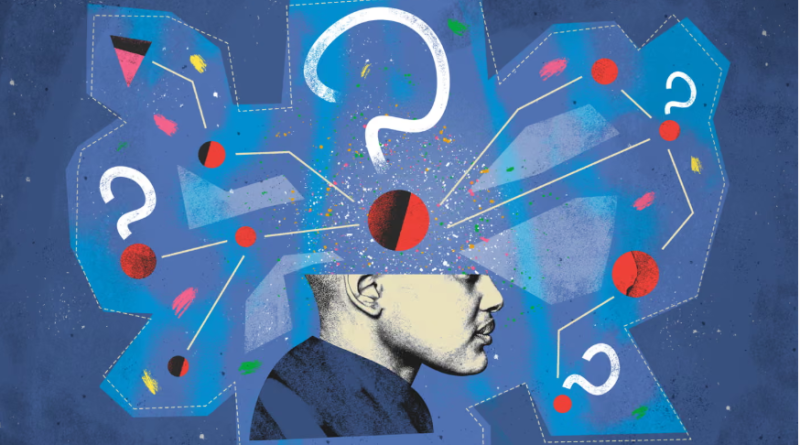
Cover photo: Illustration: Nate Kitch/The Guardian