

Solar rollout powers 1,072 Zimbabwe health facilities

By the United Nations Development Programme (UNDP)
“We used to request mothers to bring candles and torches as part of delivery services. Installation of solar power has tremendously changed our services,” noted Petunia Tshuma, acting nurse-in-charge at Mhandamabwe Clinic in Zimbabwe, who has delivered many babies under candlelight.
Adopting solar power in health facilities does not only reduces energy poverty but also removes barriers to healthcare.
“It was one of those moments when as a mother about to give birth, I would feel very unsafe and anxious,” said Emelda Madlangove in Mhandamahwe, who recalls the “dark days” after delivering her third child at Mhandamahwe Rural Health Centre located in Masvingo Province in Zimbabwe.
A flick of a switch can change lives. Reliable electricity allows doctors to safely operate at night. It keeps vaccines and medicines cool, preserving their potency. And it powers IT systems needed to deliver quality healthcare, including digital patient records, laboratory test reports and supply chain operations.
Globally, nearly a billion people in low- and lower-middle income countries are served by health facilities with unreliable or no electricity. Clinics facing blackouts often rely on diesel generators, which add air pollution and fuel costs to already stretched health budgets.
“If there is no electricity for two days, our refrigerators are affected, and so is our cold chain,” said Judith Chamboko, Nurse in Charge at Nemwana Clinic, Zimbabwe.
Towards smart health systems
With financing from the Global Fund to Fight AIDS, Tuberculosis and Malaria, the United Nations Development Programme (UNDP) partners with governments and communities to equip health facilities with solar energy, which reliably powers essential services while reducing carbon emissions.
Green energy unlocks internet connectivity, health technology adoption and innovative financing mechanisms, boosting healthcare efficiency, sustainability and resilience.
More than 1,000 healthcare facilities in Zimbabwe fitted with solar infrastructure
In Zimbabwe, with support from the Global Fund and national partners, 1,072 health facilities have been equipped with solar power, reducing operational costs and avoiding 17,699 tonnes of CO2 in 2024 alone. Another 188 facilities will have been upgraded by the end of 2025, bringing green energy to 70% of health facilities nationally.
“Getting energy from solar helps us reduce emissions and get a more affordable energy source,” Ruramai Makamure, Electrical Engineer at UNDP Zimbabwe noted.
Zimbabwe’s facilities also include distribution warehouses, which ensure medicines are safely stored and swiftly delivered to even the most remote areas, and national laboratories that test the safety of health products.
Renovations and training have increased laboratory testing volume by 300% since 2014, expanding capacity to stop HIV, TB and Malaria and other disease outbreaks.
And hundreds of healthcare facilities benefitting from solar in Zambia
Building on the success of Zimbabwe, in Zambia, 423 rural health facilities, which serve more than five million people, and three national medical warehouses will have been equipped with solar energy and satellite internet by the end of 2025, in partnership with the Ministry of Health.
Digital connectivity will provide real-time streaming data to national health authorities, ensuring uninterrupted power supply and smarter decision-making.
At eight pilot sites, smart sensors will leverage the Internet of Things (IoT) to monitor equipment use, energy consumption and environmental conditions to safeguard medicines and other health supplies, allowing administrators to prevent problems before they arise. Clean water and advanced systems for managing healthcare waste will further improve the local environment for health.
To enhance sustainability, Zambia is developing a national framework that includes training local technicians, engaging communities in basic maintenance, and exploring innovative financing – such as carbon credit sales, use of excess energy, and donor-backed guarantees – to ensure service reliability during crises.
Building climate and health resilience
Smart health systems strengthen national resilience. In 2024, both Zambia and Zimbabwe experienced the worst drought in at least two decades, exacerbated by El Niño and the climate crisis.
The dry spell reduced hydroelectricity production at the Kariba Dam and other plants, causing daily power cuts of up to 21 hours in Zambia and 17 hours in Zimbabwe. Both countries currently rely on hydropower for most of their electricity supply.
For patients and local communities, decentralised solar power and energy storage keep health services running, providing a lifeline before and after climate disasters.
Solar impact on healthcare sector’s carbon footprint
For countries, UNDP support to low-carbon, climate-resilient digital healthcare helps lower the health sector’s environmental footprint, which accounts for 5% of greenhouse gas emissions worldwide. It also supports countries – including Zambia and Zimbabwe – to fulfil their commitments in the COP28 Declaration on Climate and Health, to achieve the Sustainable Development Goals and leave no one behind.
“We want everyone, no matter where they live, to have access to reliable, quality healthcare,” said Dr James Wakiaga, Resident Representative at UNDP Zambia. “Solar energy is the bridge to achieving that vision.”
Realising this vision means investing in smart solutions across both health and climate. Yet funding for health-specific climate action remains remarkably low. Investing in Smart Health Systems and its innovative financing model, in partnership with governments and underserved communities, provides a powerful answer.
UNDP’s Smart Health Systems deploys solar energy and digital technology to transform health services and reinforce health equity, sustainability and resilience. The multisectoral initiative builds on a decade of UNDP support to countries at the intersection of health, energy, environment and climate change to deliver measurable impact for the health of people and the planet.
Leveraging UNDP’s partnership with the Global Fund, Smart Health Systems employs scalable modular solutions to expand climate-resilient health infrastructure, drive digital transformation and AI adoption, strengthen health workforce capacity, and increase innovative health financing. From 2025, UNDP is fast-tracking customised modular solutions, targeting ten countries and mobilising at least $100 million for expansion to 20 new countries by 2030.
Source: UNDP, edited by ESI Africa. Originally published 11 September 2025
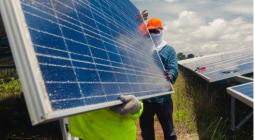
Cover photo: Reliable solar energy has increased the volume of laboratory services at the Medicines Control Authority of Zimbabwe, which ensure the safety of health products used at health clinics. Source: UNDP Zimbabwe