
Five disasters in a single wet season show the climate crisis is here and now in the Northern Territory
We’re tough in Australia’s Top End, but there’s a limit to what communities can endure without adequate resources and if leadership isn’t honest about the cause
The Northern Territory has always prided itself on being tough. We’re known for facing down extreme heat, isolation and crocs. However, there is a point at which resilience stops being a virtue. And this wet season, we’ve felt invisible to the rest of Australia.
Four separate national disaster declarations in a single wet season. And now a fifth disaster, Tropical Cyclone Narelle, is barrelling towards us.
The 2025–26 wet season has been unlike anything the Northern Territory has ever experienced.
It began with Tropical Cyclone Fina hitting the Cobourg Peninsula and Darwin in November 2025, the earliest cyclone to make landfall on the NT coast since records began, and the most intense cyclone to hit Darwin since Cyclone Tracy.
Then came the floods. A tropical low settled over central Australia in late February, with flooding affecting approximately 85% of roads across the Barkly region.
The Northern Territory has always prided itself on being tough. We’re known for facing down extreme heat, isolation and crocs. However, there is a point at which resilience stops being a virtue. And this wet season, we’ve felt invisible to the rest of Australia.
Four separate national disaster declarations in a single wet season. And now a fifth disaster, Tropical Cyclone Narelle, is barrelling towards us.
The 2025–26 wet season has been unlike anything the Northern Territory has ever experienced.
It began with Tropical Cyclone Fina hitting the Cobourg Peninsula and Darwin in November 2025, the earliest cyclone to make landfall on the NT coast since records began, and the most intense cyclone to hit Darwin since Cyclone Tracy.
Then came the floods. A tropical low settled over central Australia in late February, with flooding affecting approximately 85% of roads across the Barkly region.
Darwin is now Australia’s most expensive city for home insurance, ahead of Sydney and Brisbane – with average home insurance premiums of $4,015 per year. The combination of escalating climate disasters and rising construction costs has made insuring a home in the Territory a luxury many cannot afford.
The National Climate Risk Assessment paints an even starker picture of what lies ahead. It forecasts a 423% increase in heat-related deaths in Darwin. Close to 70% of the Northern Territory’s entire population will live in high or very high-risk areas.
These are not projections from some distant, hypothetical scenario. They describe our current reality – the one we are accelerating with every fracking project approved, every climate target abandoned by the NT government.
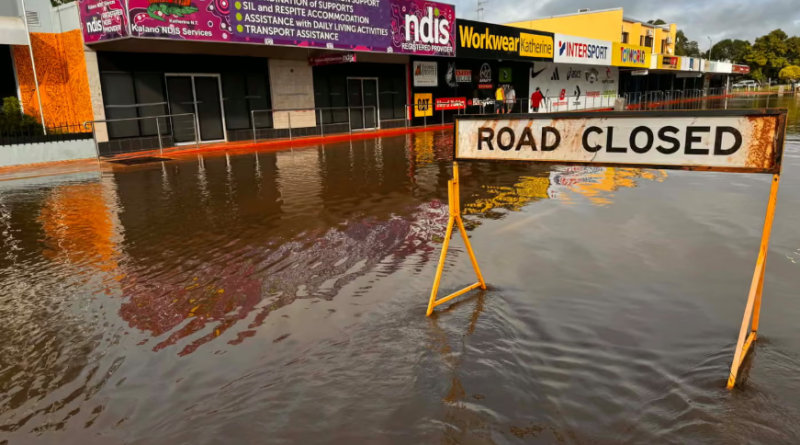
The NT government’s review into the Katherine flooding is welcome. But it is impossible to take that review fully seriously when it comes from a chief minister who has scrapped the Territory’s climate and renewable energy targets. You cannot review your way out of a crisis you refuse to name.
The Northern Territory is ground zero for fossil fuel expansion in this country, from Santos’s toxic Barossa gas project to the Beetaloo Bason fracking carbon bomb, to Inpex’s polluting Ichthys gas plant to the taxpayer-funded proposed Middle Arm gas and petrochemical hub.
And as we watch the LNG ships sail out of Darwin Harbour earning billions in profits, while we pay the price, it’s never been clearer to people living in the NT that companies like Santos and Inpex should be forced to pay for the destruction their projects have unleashed. It’s well past time for a 25% tax on gas exports, and a climate pollution levy levelled on fossil fuel companies so we can raise the funds to respond to these escalating disasters and address the cost-of-living crisis in Australia.
The Territory has always asked a lot of the people who call it home. It demands resilience, adaptability and a tolerance for extremes. But there is a limit to what communities can endure when disaster follows disaster without pause, without adequate resources, and without leadership that is honest about the cause.
Cover photo: Flooding in Katherine, 8 March, 2026. ‘The 2025–26 wet season has been unlike anything the Northern Territory has ever experienced.’ Photograph: Gavin Parish