
Global Shipping Body Considers Net-Zero Rule in ‘Quiet Act of Resistance’ to Trump
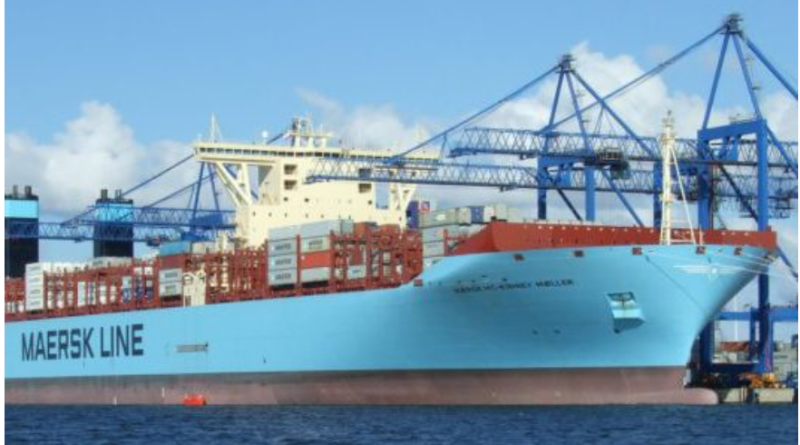
A key committee of the International Maritime Organization is meeting this week to advance a net-zero framework for green shipping, over loud objections from the Trump administration.
On Monday, the chair of the U.S. Federal Maritime Commission, Laura DiBella, announced she would attend the meeting of the IMO’s Marine Environment Protection Committee (MEPC) in London April 27-May 1, vowing to “use the agency’s enforcement powers to block any move that would increase costs for U.S. shippers,” the Journal of Commerce reports.
But by then, an IMO working group had already spent several days hammering out the details of a net-zero framework (NZF) that would include the world’s first-ever global carbon price on any polluter, including details on how to distribute an expected $10 to $15 billion in annual revenue that would be earmarked for climate finance. One observer interpreted the framework as “a quiet act of resistance against Trump and petrostates who continue to strongly oppose the agreement.”
“This week at the IMO, we saw an encouraging willingness from both states and industry to make progress on the guidelines essential to implementing an agreement,” said Jesse Fahnestock, director of decarbonization at the Global Maritime Forum, in a release issued at the end of the working group meeting but before the MEPC session began. “The transition to zero-emission shipping requires companies to develop strategic plans and begin making investments today, but to do so they need a clear and reliable regulatory environment.”
“We were pleased to see IMO member states actively engaged in working out the details of the Net-Zero Framework, countering opponents’ claims that the IMO is a ‘house divided’,” added Clean Shipping Coalition President Delaine McCullough. Now, “IMO member states must hold the line against those looking to once again disrupt and delay. The NZF is imperfect, but is the fruit of years of negotiations and compromise, and has broad support among IMO member states.”
If it’s eventually adopted, “the Net-Zero Framework will raise money by penalizing non-compliance,” explained Christiaan De Beukelaer, a senior lecturer in culture and climate at the University of Melbourne. “The use of such revenues has long been a point of contention.” But support for the NZF as it now stands “will help IMO regulations to ensure a just and equitable transition.”
Dating back to the 2015 Paris climate agreement, the IMO has been seen as an obstacle to global emission reductions, producing “miniscule progress” on emission reductions as recently as 2021. But the MEPC agreed to tax shipping emissions at its meeting last year, with support from 63 of the 103 countries present, after the United States loudly left the room before the vote. Beginning in 2027, ships above 5,000 gross tonnes that travel internationally—and account for 85% of international shipping emissions—will have to reduce their emissions intensity or pay $380 per tonne for “remedial units” for any climate pollution above a target threshold.
The decision at last year’s meeting was greeted as either a breakthrough or a watered-down compromise, after a group of developing small island states called for a universal levy on shipping emissions that could have been more effective. But the deal is now seen as “a historic multilateral achievement, showing how countries can come together to create a solution aimed at the global best interest,” Sapphire Ross, policy officer at Opportunity Green, told The Energy Mix in an email. “This marked a notable move towards implementing the ‘polluter pays’ principle which could set an example for other sectors lagging behind on climate action.”
The certainty of a “clear and predictable carbon price signal” is important to industry, Ross said. Eliminating it would “create substantial policy uncertainty and investment risk, thereby failing to bridge the cost gap between fossil fuels and sustainable fuels. This could increase the risk of stranded assets and delayed investment decisions across the fuel supply chain and fleet transition.”
Although the NZF “represents a significant compromise from more ambitious proposals,” she added, “it remains the only option currently on the table capable of providing the strong signal needed to drive investment in sustainable fuels. It also provides a firm foundation from which to increase future ambition and achieve a just and equitable transition for climate vulnerable countries.”
Ross acknowledged that “some major states, namely the United States, have stepped back from multilateral climate ambition, posing a serious threat to progress.” But “this pressure is being actively challenged. Climate vulnerable countries, including Pacific Island states, recently called for stronger emissions charges and fairer revenue mechanisms within the NZF to reflect the realities they face on the front lines of climate impacts. Their leadership is a reminder that ambition remains both necessary and possible.”
Cover photo: Slawos/Wikimedia Commons