

An Energy War is Raging. The Last Thing Canada Needs is More Fossil Fuel Production.
The Middle East war is the excuse du jour for new oil and gas exports. But with the energy shock driving importing countries to ditch fossil fuels, Canada must prepare for the industry's decline.
The global energy shock brought on by the Middle East war makes it more important, not less, to keep the deep risks of new fossil fuel investment in clear focus.
It isn’t the storyline you’ll hear from oil and gas producers in Canada, the federal government officials they incessantly lobby, or their counterparts in any other oil or gas-exporting country. After the initial American/Israeli strikes on Iran February 28, it took Alberta Premier Danielle Smith less than 48 hours to turn a moment of global horror into her latest pitch for new oil and gas production.
We’ve heard this song before. But for Smith, and the industry that paid her lobbyist salary before propelling her to political power (foreign-funded radicals, anyone?), there’s just one problem: the evidence doesn’t fit their narrative.
In the short term, with the Strait of Hormuz blocked and Iran showing no patience for Donald Trump’s bumbling attempts at diplomacy, we’re already in the midst of an economic and humanitarian crisis—in the region, to be sure, but also across a wider world that is now seeing how deeply we’ve all depended on fossil fuel supply chains. Oil and gas prices are skyrocketing, essentials like fertilizer are going to be in short supply, and we’re seeing daily predictions that the chaos will last long after the strait reopens.
There’s every possibility that things will get a lot worse. As CNBC wrote Saturday:
The clock is ticking... The emerging view from oil industry executives and analysts is that the economic and market fallout from the war could escalate sharply if the Strait of Hormuz isn’t reopened within roughly the next one to three weeks. Even then, enough damage may have been done already to leave energy and many other prices higher for longer.
And yet the Pentagon is apparently preparing for “weeks of ground operations in Iran,” the Washington Post reported, with thousands of American soldiers arriving in the region “for what could become a dangerous new phase of the war” if Trump’s latest round of “sundowning” prompts him to escalate.
But even so, there’s no reason to expect and certainly no way to reliably predict that today’s supply shocks will continue through the years it would take to get new pipelines or oil liquefied natural gas (LNG) terminals in place. Every reason to believe that the war will accelerate the fossil fuel decline that was already under way before the missiles and drones began to fly across the Middle East. And therefore no basis for any investor to interpret today’s crisis as a reason for a long-term financial commitment to oil or gas.
Energy Mix Productions is working with UK-based Carbon Tracker to host a webinar this Tuesday, March 31 at 1 PM North American Eastern Time, looking at the financial risks ahead for Canadian oil and gas. If you haven’t already signed up, it isn’t too late.
During the webinar, Carbon Tracker analysts Olivia Bisel and Rich Collett-White will present the research in their two recent reports: Fading Fortunes and Petro-Provinces at Risk, with updates that factor in the impacts of the war. Then we’ll hear reactions from three of Canada’s top climate finance experts: Julie Segal of Environmental Defence Canada, Yrjo Koskinen of the Institute for Sustainable Finance, and Adam Scott of Shift Action for Pension Wealth and Planet Health.
The headline last fall was that investors in Canadian oil and gas will face serious financial risk—and provincial revenues from the industry could fall by as much as 82%—as the global energy transition unfolds through the 2030s. The back story, of course, is that we’re talking about the energy forms that fry the planet when used as directed, with Canada’s energy politics ignoring the 80% or more of the emissions in a shipment of oil and gas that enter the atmosphere after the product reaches its end user.
“Both Canadian oil and gas company valuations and provincial budgets are exposed to the same structural risks of weakening long-term oil and gas demand,” Carbon Tracker stated when it released the reports last November.
Big Risks for Fossil Investors
The timing of the Carbon Tracker release was pretty much perfect: just a week later, Smith and Prime Minister Mark Carney signed their controversial memorandum of understanding (MOU) that suggested a path forward for a new oil sands pipeline to Canada’s West Coast, aimed at increasing the country’s oil production by 1.4 million barrels per day.
There was no apparent sign of investor interest in the project then, and four months later, the two governments are admitting they won’t meet their April 1 deadline to seal the deal. The Carbon Tracker analysis might explain why. The governments can’t move without private investors. And despite this year’s price surge—or even because of it—it’s increasingly unlikely that demand for any new fossil fuel supplies from Canada will last long enough to cover investors’ costs or bring them the profits they’re looking for.
In Fading Fortunes, Carbon Tracker warned that new fossil fuel infrastructure in Canada will be riskier as other countries move faster to decarbonize (or, now, to assure their own energy security).
“Canadian oil and gas expansion is increasingly a high-risk, low-reward strategy,” Bisel said at the time. “Investors and policy-makers should be cautious: the long-term risk profile of Canadian portfolios is deteriorating. Capital allocation decisions and public policy need to reflect this reality.”
New gas infrastructure, “long considered a strategic pillar of Canada’s energy sector,” would lose money in a moderately-paced energy transition, Carbon Tracker added.
The analysis last fall didn’t anticipate a region at war, with different grades of oil trading at about $100 to $117 per barrel as of Saturday. But once again, multi-gajillion-dollar investments based on today’s numbers (or tomorrow’s, if the Strait of Hormuz is still closed three weeks from now) would only pay off if high prices persisted for years or decades—and if countries weren’t already turning to renewables as an affordable alternative.
Crushing Losses for Canadian Provinces
If the future of oil and gas demand is risky for investors, it’s disastrous for provincial governments that rely on tax income from an industry now entering its sunset, Carbon Tracker concluded in Petro-Provinces at Risk. As of last fall, Collett-White’s analysis showed those revenues falling 82% through the 2030s, as energy-consuming countries shift to more affordable and less carbon-intensive options.
Alberta’s over-reliance on fossil fuel royalties already had Finance Minister Nate Horner projecting a stunning $9.4-billion deficit and “buckets of red ink expected in the years to follow,” The Canadian Press reported Feb. 27, the day before the first American/Israeli strikes. For now, the price spike brought on by the war may be. bringing the province some relief. But before factoring in that temporary boost, Carbon Tracker calculated that future oil and gas revenue losses could run as high as:
• 85% in Alberta;
• 72% in British Columbia;
• 78% in Saskatchewan;
• Nearly 100% in Newfoundland and Labrador.
“Provincial governments need to prepare for a future of lower oil and gas demand,” Collett-White said at the time. “Rising global deployment of clean energy and electrification of transport threaten to wipe out future tax-take, with high-cost Canadian production likely struggling to compete globally. Diversification into transition-resilient sectors is the safest route to maintaining fiscal stability.”
Energy Security Means Faster Decarbonization
It may not have been on your to-do list for this “decisive decade” for climate action to see geopolitics and energy security emerge as the lead argument for replacing climate-busting fossil fuels with clean, renewable electricity.
But Russian dictator Vladimir Putin got that ball rolling when he sent his troops to invade a neighbouring country in 2022, then tried to use Europe’s dependence on his country’s gas exports as a weapon of war to impede Europe’s support for Ukraine. Then Putin’s reliable White House ally inadvertently sealed the deal by engineering what International Energy Agency Executive Director Fatih Birol is calling the world’s worst energy shock ever.
In response to Putin, EU countries adopted a plan that quickly increased energy efficiency and renewable energy deployment. Now, the American/Israeli attacks and Iran’s retaliation are being described as a “Ukraine moment” for Asia, the continent that received about 80% of Qatar’s LNG.
“The temptation to fall back on coal will be powerful, as will the pursuit of LNG as a ‘transition fuel’. The region has been aggressively building infrastructure to produce, import and export fossil gas. The momentum is powerful,” our friends at Climate Capital Asia wrote this morning.
“But that short-term thinking doesn’t address energy security, never mind the existential threats of climate change,” adds CCA writer and editor Kari Huus. And “Asia’s dangerous dependence on imports that pass through the Strait of Hormuz is not limited to fuel. Closely related, and profoundly important, is the region’s reliance on chemical fertilizers from the Middle East, as well as the fossil fuel-based inputs to produce them.”
We don’t hear this as much in Canada, since we’re an oil and gas exporter. But the war is convincing the energy-importing countries, home to three-quarters of the world’s population, that the only path to energy and economic security is to embrace energy sources they can depend on—and that cost them less into the bargain.
For a sense of what’s possible look no farther than Pakistan, where a rooftop solar boom delivered a stunning buildout of 32 gigawatts in just two years, amounting to one-third of total power demand. It all began after the country was priced out of the global LNG market by Russia’s war in Ukraine.
Now, as BloombergNEF founder Michael Liebreich told The Energy Mix in an interview last month, the new rule for reliable energy is:
“Build the asset. Don’t burn the commodity.”
The shift is already happening. China has positioned itself as the world’s first electrostate, and Canada stands to see some of the benefit after negotiating a limited tariff and trade deal with Beijing. India is moving even faster to electrify, and multiple countries across Africa and Asia are pushing in the same direction. Every new announcement, every new investment, makes it less likely that Canada will find reliable markets for the oil and LNG that we’re told we absolutely have to export.
But don’t take our word for it. Carbon Tracker literally wrote the book on unburnable carbon—they coined the term nearly 15 years ago—and their analysis has been getting even wider, smarter, and more sophisticated ever since. So here’s that webinar registration link one more time.
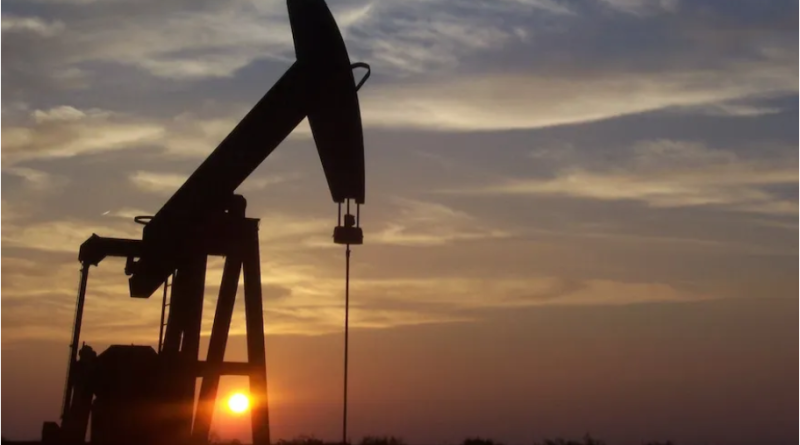
Cover photo: Eric Kounce, TexasRaiser/Wikipedia