


A Climate Summit at the Crossroads: Why COP31 in Türkiye Matters
As climate diplomacy enters a decisive decade, the focus is no longer only on setting ambitious targets, but on implementing them. In this new phase, the question of where global climate negotiations take place is becoming almost as important as what is negotiated. Location shapes participation, framing, and ultimately, the political energy behind climate action.
Against this backdrop, hosting COP31 in Türkiye would represent more than a logistical decision. It would signal a shift in the geography of climate leadership; one that better reflects the complexity of today’s climate challenges and the diversity of actors needed to address them.
For much of the past three decades, global climate governance has been driven by advanced economies and a limited number of major emerging powers. While this structure has been instrumental in building international agreements, it has also left key regions underrepresented. The Eastern Mediterranean, the Middle East, and parts of Central Asia fall into this category, despite being among the areas most exposed to climate stress.
These regions are already experiencing the compounded effects of climate change. Water scarcity is intensifying, prolonged droughts are placing pressure on agricultural systems, and extreme heat events are becoming both more frequent and more severe. At the same time, rapidly expanding urban populations are increasing vulnerability to climate risks, particularly in cities where infrastructure and planning frameworks are still evolving.
What makes this geography particularly significant is that climate vulnerability is unfolding alongside economic transformation. Industrial expansion, urbanization, and rising energy demand are reshaping development trajectories. This creates a dual challenge: sustaining economic growth while aligning with increasingly stringent climate commitments.
This is precisely where Türkiye’s relevance becomes clear.
Türkiye embodies the tensions and opportunities that define climate policy in many emerging economies. With a large industrial base and deep integration into European markets, the country must simultaneously maintain competitiveness, ensure energy security, and transition toward a low-carbon economy.
Its ratification of the Paris Agreement in 2021 marked an important turning point, followed by a growing policy focus on emissions reduction strategies, carbon market development, and green industrial transformation. These discussions are no longer abstract. They are increasingly tied to real economic pressures, including trade dynamics shaped by evolving European sustainability regulations such as carbon border adjustment mechanisms.
At the same time, Türkiye’s energy landscape is undergoing a visible transformation. Renewable energy capacity—particularly in wind and solar—has expanded significantly over the past decade. This shift reflects both domestic policy priorities and external economic incentives, illustrating how climate policy and market forces are becoming more tightly interlinked.
Yet Türkiye’s significance is not just national, it is structural.
The country occupies a unique position between advanced and emerging economic systems. It is deeply embedded in European value chains while sharing institutional and developmental characteristics with middle-income economies. This dual identity allows it to function as a bridge, not only between regions, but between different approaches to climate governance.
Hosting COP31 in Türkiye would therefore create a platform where these different perspectives can meaningfully interact. It would connect discussions on deep decarbonization in advanced economies with the practical constraints faced by countries still building the institutional capacity required for large-scale climate transition.
This bridging role is particularly relevant at a time when global climate diplomacy is undergoing a quiet but fundamental shift. The early years of international climate cooperation were defined by negotiation—establishing targets, frameworks, and commitments. Today, the central challenge lies in implementation.
Delivering on climate goals requires more than political agreements. It demands functioning carbon markets, effective regulatory institutions, accessible climate finance, and scalable technological solutions. These are areas where many emerging economies face structural constraints, from limited fiscal space to institutional capacity gaps.
At the centre of this implementation challenge lies one of the most politically sensitive questions in climate diplomacy: the managed phaseout of fossil fuels. While recent COP decisions have acknowledged the need to transition away from unabated fossil fuel use, translating that language into credible national pathways remains uneven and contested. For emerging economies in particular, fossil fuel phaseout is not only a climate issue but also an economic, social, and geopolitical one, closely tied to employment structures, energy security concerns, and industrial competitiveness.
The upcoming discussions at the Santa Marta conference, 24-29 April 2026, will further elevate this debate, bringing renewed attention to timelines, accountability, and the practical sequencing of transition policies. In this context, hosting COP31 in Türkiye would situate these global conversations within a country that is itself navigating the complexities of reducing fossil dependency while maintaining growth and regional energy stability. This proximity to real-world trade-offs could ground the phaseout debate in implementation realities rather than abstract commitments.
As a result, the success of global climate action will increasingly depend on how these countries navigate the transition.
In this context, Türkiye offers a valuable testing ground. Its experience in balancing industrial policy, energy diversification, and urban development under climate constraints provides insights that are directly relevant to a wide range of countries facing similar challenges.
At the same time, hosting a COP in Türkiye would not be without its complexities. Questions around policy consistency, long-term decarbonization pathways, and institutional capacity remain part of the broader discussion. However, it is precisely this imperfect and evolving landscape that makes such a setting meaningful. Climate governance is not shaped in ideal conditions, but in real economies navigating trade-offs.
Equally important is Türkiye’s geopolitical position. Situated at the intersection of Europe, Asia, and the Middle East, the country has long functioned as a space of Exchange—economic, political, and cultural. This characteristic extends naturally to climate diplomacy.
A COP hosted in Türkiye could convene a diverse set of actors: governments, development institutions, research communities, civil society organizations, and private sector leaders. More importantly, it could create a space where their interactions reflect the interconnected nature of climate challenges, rather than siloed policy discussions.
Such multi-actor engagement is no longer optional. Climate change is not a sectoral issue; it is systemic. Addressing it requires coordination across governance levels, economic sectors, and geographic regions.
The significance of COP31, therefore, lies not only in its formal outcomes but in the signal it sends. Hosting the summit in Türkiye would acknowledge that the centre of gravity in climate governance is shifting. It would highlight the importance of regions that are both highly exposed to climate risks and central to the future trajectory of global energy systems.
In many ways, the coming decade will determine whether the international community can move from commitment to transformation. Achieving this transition will require broader participation, stronger institutional capacity, and more inclusive dialogue.
Positioning COP31 at the crossroads of continents and climate realities would not solve these challenges on its own. But it could help reframe the conversation, bringing implementation, inclusivity, and real-world complexity to the forefront of global climate diplomacy.
At a time when momentum is as critical as ambition, that shift may prove more consequential than it appears.
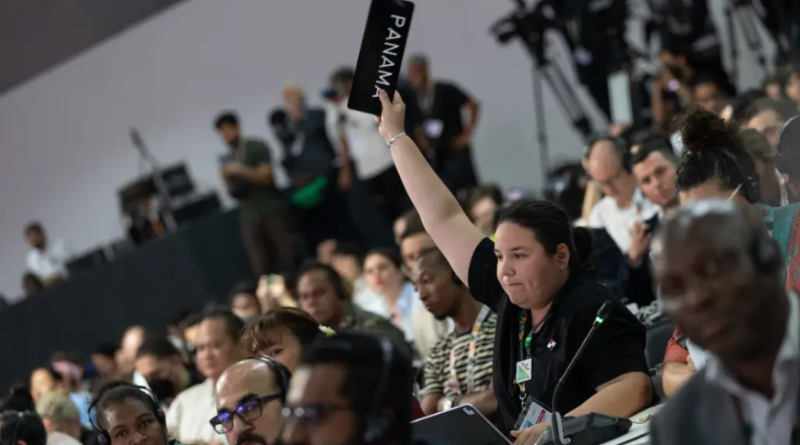
Cover photo: Photo: © UN Climate Change - Kiara Worth