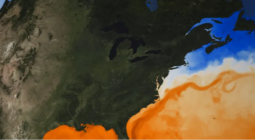


The Amoc is slowing because air temperatures are rising rapidly in the Arctic because of global heating. That means the ocean cools more slowly there. Warmer water is less dense and therefore sinks into the depths more slowly. This slowing allows more rainfall to accumulate in the salty surface waters, also making it less dense, and further slowing the sinking and forming an Amoc feedback loop.
The Amoc system is highly complex and subject to random natural variations, making precise predictions impossible. However, a major weakening is now expected by scientists and that alone could have serious impacts in the decades to come.
The new research, published in the journal Science Advances, explored four different ways of using real-world observations to assess the models. They found a method called ridge regression, which had been little used in climate science before now, provided the best results.
The Amoc is difficult to model because it is governed by subtle differences in water density caused by salinity changes over the entire Atlantic. The reduction in uncertainty in the new analysis results from identifying the models that better reflect surface salinity in the south Atlantic, which scientists already knew was important. This makes the work “very credible”, said Rahmstorf.
Rahmstorf said Amoc slowdown in 2100 may be even greater than in the new, pessimistic assessment. This is because the computer models do not include the meltwater from the Greenland ice cap that is also freshening the ocean waters: “That is one additional factor that means the reality is probably still worse.”