

Balcony Solar a Largely Untapped Option in Canada
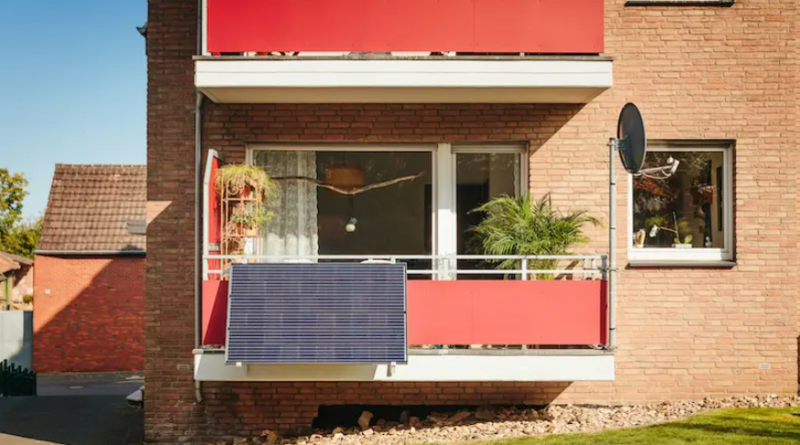
Balcony solar systems are gaining momentum in Europe and the United States, offering apartment residents a way to generate their own electricity. But in Canada, the technology remains largely out of reach.
These small plug-in solar panels, designed for urban homes, typically connect through an inverter to a standard 120-volt outlet, CBC News reports. In dense cities, they allow residents to generate small amounts of electricity without a major installation.
As interest grows in Canada, questions are emerging about whether regulatory frameworks and building rules are slowing adoption or perhaps preventing it altogether.
In Ontario, for example, regulatory barriers remain significant, said Nansy Hanna, senior director of engineering at Ontario’s Electrical Safety Authority (ESA), a provincial government agency delegated to ensure that electrical work is done safely and follows the province’s laws and regulations.
Hanna said the ESA is “not aware of existing products in this category that have this approval for us in Ontario.” She added that the systems pose known risks “because of how [balcony solar] generates power and back feeds the systems that were not designed for two-way power flow.”
She added that, “in addition to the availability of certified products, there will be a need to install a new special type of receptacle and upgrade the branch circuit wiring.”
The absence of clear pathways may be leading some users to act independently. Posts on online forums, such as Reddit, describe individuals purchasing systems from abroad and installing them without clarity on regulations and formal approvals, though these accounts are anecdotal and difficult to verify.
Beyond technical barriers, condominium rules present another layer of complexity. Balconies are typically classified as exclusive-use common elements under Ontario’s Condominium Act, 1998, giving condo corporations authority over how they are used.
“Most condominium rules strictly prohibit attaching objects to railings or hanging items over the exterior edge,” said Ana Marin, sales representative with REAL Broker Ontario and director of operations at Found Spaces, a property management company in Hamilton.
Those restrictions—designed to address safety, liability, and building aesthetics—could make installing balcony-mounted solar panels difficult, even if regulations evolve, Marin added.
At the same time, standards development is under way. UL Solutions in Illinois launched a certification program in January for plug-in-solar in the United States, and “there is a bi-national UL standard development in progress—ANSI/CAN/UL 3700—related to plug-in solar,” Hanna added.
Germany has emerged as a leading market for balcony solar, supported by energy policies that have encouraged decentralized electricity generation. That approach has enabled rapid growth in small-scale systems, according to the International Energy Agency.
Canada’s electricity system, by contrast, is structured around provincial grids and large, centralized utilities, which can make it challenging to organically integrate smaller, distributed technologies, according to the C.D Howe Institute, which has highlighted how the country’s siloed grid structure complicates broader system integration.
Cost also plays a role. A typical 200-watt starter system in the United States can cost between US$300 and $400. With average high rise apartment consumption at 5,900 kilowatt-hours per household annually, according to Statistics Canada, a small balcony system generating roughly 600 kilowatt-hours per year could offset about seven to 12% of electricity usage.
The cost of the equipment in other countries is relatively low. In Canada, however, costs will depend on how the technology is regulated and implemented, according to industry sources. There could be additional costs related to installation, certification, approvals, and inspections.
Whether that return is enough to drive adoption remains uncertain. For balcony solar to scale in Canada, regulatory approval, building-level permissions, and electrical system compatibility would all need to align.
Cover photo: (yuma solar/unsplash)