

Experts on scaling carbon in Africa: The fight for data, standards and trust
Carbon markets are inherently decentralised and require progress across accounting, asset interoperability and trading
What is the single biggest barrier to scaling trusted carbon and green real-world asset markets in Africa today?
Ask the question in any climate finance forum, and the answers come fast, including:
- fragmented registries and poor interoperability,
- weak data quality, transparency and Measurement, Reporting and Verification (MRV),
- governance gaps and regulatory uncertainty,
- limited access to finance and thin market demand, and
- the lack of capacity and inclusion of local project developers.
These barriers to scaling trust were among the central issues explored during a webinar hosted by the Africa Green Economy Summit in collaboration with ESI Africa.
The discussion brought together industry leaders to examine what is holding back Africa’s carbon and green asset markets and what it will take to move from pilot projects to credible, investable scale.
According to Ieva Steponaviciute, Director of Strategy and Outreach at the Climate Action Data Trust (CAD Trust), the interoperability challenge is already being addressed, but unevenly and across multiple layers of the ecosystem.
She argued that global markets require progress across accounting and systems, as well as asset interoperability and trading.
Optimism for Africa’s carbon accounting
CAD Trust’s work, she explained, focuses on improving access to standardised, reliable information across diverse registry systems, including who issued a credit, where it was issued and under which methodology.
“That basic information is what allows anyone to identify what assets are being created around the world,” she said, noting that it is also critical for governments, the UN and international institutions seeking to regulate and aggregate market data in a consistent format.
She added that carbon markets are inherently decentralised, which is why CAD Trust has been designed as a decentralised public digital infrastructure.
Through an open-source, blockchain-enabled network, crediting programmes—such as government schemes and mechanisms under the Paris Agreement—can harmonise registry data in a common format and make key information publicly available at no cost.
Despite the current fragmentation, Steponaviciute struck an optimistic note about progress at the accounting and systems level. “Broadly speaking, I’m very optimistic about this part—about accounting and about agreeing on what the key pieces of information are that we really need to identify credits around the world and then how everything rolls up together.” ESI
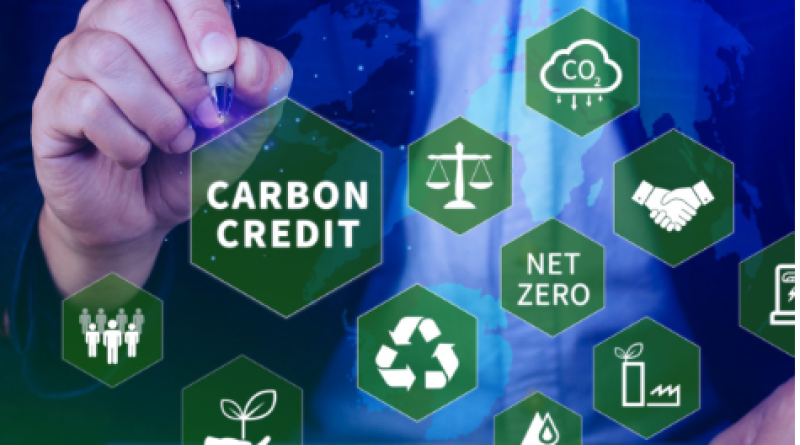
Cover photo: rawintanpin©123rf