
Why Forest Loss in the Congo Basin Requires Immediate Action
The Congo Basin is the largest remaining net carbon sink in the tropics, removing an average of 160 million tons of carbon dioxide equivalent (CO2e) from the atmosphere per year between 2015 and 2024 — equivalent to more than Nigeria’s fossil fuel emissions. Protecting the region’s vast forest areas is crucial for reversing global climate change and nature loss, as well as in sustaining the livelihoods of roughly 100 million people, including Indigenous Peoples.
In 2024, Congo basin countries experienced relatively low rates of humid tropical primary forest loss compared to other tropical countries, with no Congo Basin countries ranking within the top 10 for percentage of loss.
Yet the region still saw an increase of 14.2% in primary forest loss in 2024 — a year of record-breaking primary forest loss in the tropics — compared to 2023.
This builds on a persistent trend where Congo Basin countries have seen relatively stable or slightly increasing rates of loss over the past decade, with no years of significant reduction. And there is little indication that rates of forest loss will decrease in the future without specific policy and technological interventions to course-correct current trends and address the root causes of primary forest loss.
Here we explain where forests are being lost in the region, discuss the different drivers of this loss, do a deep dive into countries with the highest amounts of loss and discuss interventions that could help turn the tide.
What are the trends in forest loss in the Congo Basin?
Over the past 10 years there’s been a slow but stubborn rise in the rate of forest loss, including primary forests, in the Congo Basin. The Congo Basin refers to six countries: Cameroon, the Central African Republic, the Democratic Republic of the Congo (DRC), Equatorial Guinea and the high forest, low deforestation countries of Gabon and the Republic of Congo. These countries hold some of the largest areas of primary tropical forest in the world: As of 2024, DRC’s primary forest was the second largest after Brazil’s. Other countries hold smaller areas but large proportions of primary forest: A massive 85% of Gabon’s land area is covered by primary forest, closely followed by Equatorial Guinea at 80%, Republic of Congo at 60% and DRC at 42%.
Annual rates of primary forest loss have remained relatively stable over the past decade. DRC alone contributed over 75% of these losses, followed by Cameroon (learn more on these two countries below), partly reflecting the fact that these countries contain the largest forest areas in the Congo Basin, and their relative size. Other countries, especially Gabon, Equatorial Guinea and Central African Republic, have much lower rates — for example, in 2024, Gabon had the lowest rates of loss at 0.07%, compared with 0.56% in DRC — yet these rates have also remained steady over the past decade.
In 2024, 0.44% of the Congo Basin’s primary forest area was lost, an increase from 0.38% in 2023. In absolute terms, this is 780,000 hectares of natural, often pristine forests lost in 2024 alone, the equivalent of four times the size of Douala, one of the largest cities in Central Africa.
What’s driving tree cover loss in the Congo Basin?
Agriculture
Overall, small-scale shifting agriculture — a traditional form of subsistence farming where forests are cleared for temporary planting and then left fallow for a period while forests regrow — remains the dominant driver of tree cover loss across much of the region.
However, permanent agriculture is rising, and these industrial forms of agriculture can have more serious impacts on forests. In Cameroon, 40% of tree cover loss between 2001 and 2024 was due to permanent agriculture, which is the highest in the region, dwarfing DRC’s 15%.
Cocoa farming is emerging as an agricultural driver in some countries where it is being prioritized by the government — for example, in DRC, cocoa production more than quadrupled between 2015 and 2023. While most policies support shaded and intensified cocoa farming systems, these may still lead to forest loss in highly forested landscapes such as the Tsopo, Equateur and Oriental provinces in DRC, and Centre in Cameroon.
Other drivers
Charcoal production is another major driver of forest loss in the region, especially in DRC, Cameroon and Republic of Congo , and although it does not directly lead to permanent loss of the forest, it causes widespread degradation. In DRC, around 95% of the population relies on biomass, including charcoal, for energy.
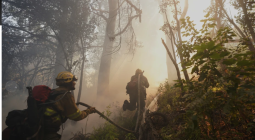
Other drivers remain small overall but do have larger impacts at the local level. Climate change has driven more frequent fires in the region, such as in the Republic of Congo , where primary forest loss jumped from 24,000 to 62,000 hectares between 2023 and 2024 with half of these losses caused by fires. Three departments of the country (Cuvette, Likouala and Plateaux) saw more than a 40% increase in primary forest loss due to fires. These areas house peatlands that store large amounts of carbon, which could be lost when they burn, leading the area to turn from a carbon sink to a source.
Mining is a relatively small direct driver of forest loss, yet its indirect impacts can be substantial to forests and communities. For example, recent evidence shows that artisanal mining indirectly causes 28 times more deforestation than directly from the area of the mine itself.
Not all forest loss results in permanent deforestation. Loss from shifting agriculture, charcoal production and fires can be temporary, while permanent agriculture, conversion for settlements, infrastructure and mining typically result in permanent loss of forest, which is considered deforestation. However, even if forest loss is not permanent, the forest may take decades or longer to recover. Understanding these drivers is crucial so that decision-makers can identify the right kind of interventions.
Trends in DRC and Cameroon
DRC and Cameroon are the two countries in the Congo Basin with both the largest areas of primary forest and primary forest loss in the past decade. Over the past five years, DRC has ranked among the top three tropical countries for forest loss globally, and Cameroon among the top 10.
We therefore dive deeper into the trends in natural and high-value forest areas in these countries, focusing on primary forests and three forest title categories — community forest concessions (designated as community forests in Cameroon and local communities’ forest concessions in DRC, legally managed by Indigenous Peoples and local communities for economic and conservation purposes); forest and logging concessions that are mainly dedicated to logging activities; and protected areas — which together represent over 80% of all legally recognized forest titles in all Congo Basin countries (excluding Equatorial Guinea).
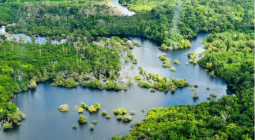
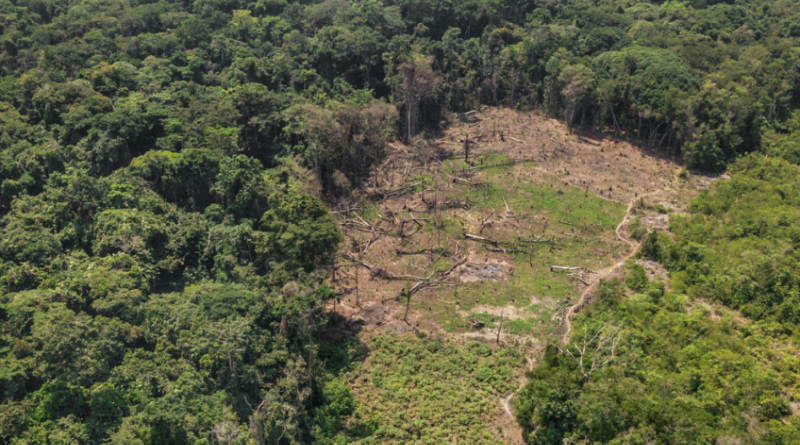
Cover photo: Deforestation near Lieki, DRC. Photo by CIFOR