

Turning South Africa’s Transmission Development Plan into action
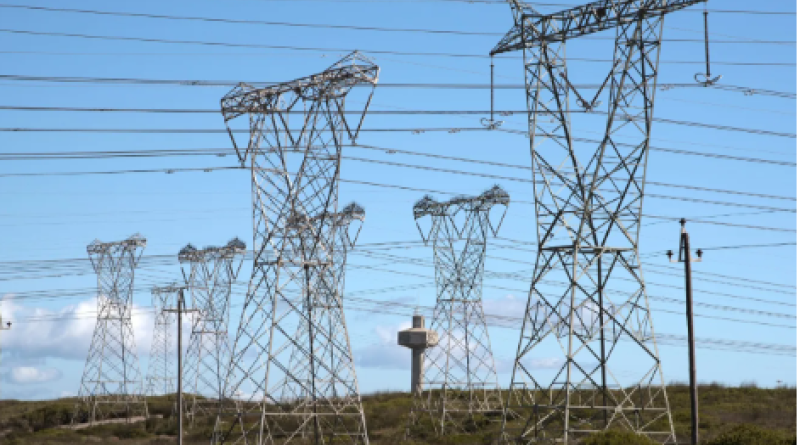
How to build the 14,000km of transmission lines needed for the IRP’s planned capacity is outlined in the Transmission Development Plan
The current pace of grid expansion in South Africa necessitated by the Transmission Development Plan is wholly inadequate, considering the minimum of 1,400km per year required to secure the country’s energy security, if we are to add the 53GW of generation capacity planned in the Integrated Resources Plan.
Given the scale of capital investment required to build the infrastructure, as well as the capacity and expertise required to implement this Transmission Development Plan (TDP), the government is calling on the private sector to be involved.
The newly established Independent Transmission Infrastructure Procurement Programme (ITIPP) takes its cue from the Renewable Energy Independent Power Producers Procurement Programme (REIPPPP) to facilitate the expansion and strengthening of the national transmission network and associated infrastructure.
Building out the Independent Transmission Infrastructure Procurement Programme
The ITIPP is being implemented in phases, with Stage 1 being the procurement of Independent Transmission Projects (ITPs) for specified transmission facilities.
To give effect to the Transmission Development Plan (TDP), a Transmission Determination was issued by the Minister of Electricity and Energy on 28 March 2025, designating:
- The Department of Electricity and Energy as the procurer;
- The National Transmission Company of South Africa (NTCSA) as the buyer under Transmission Services Agreements;
- A defined project scope of 1,164km of 500kV transmission lines and associated infrastructure across the Northern Cape, North-West and Gauteng; and
- Procurement to follow fair, equitable, transparent and competitive tendering processes, in line with global benchmarking.
The Minister of Electricity and Energy, Dr Kgosientsho Ramokgopa, announced the list of 7 prequalified bidders for the ITIP programme on 15 December 2025. Of the 17 respondents to the initial RFQ for qualifying bids, the prequalified bidders are:
- Adani Power Middle East
- AREF Cobra Transmission Consortium
- Celeo Redes/Acciona/TX SA
- EITP Consortium
- State Grid International Development
- TBEA Company (China Southern Power Grid International Company)
- EDF Power Solutions
Localising the effort
Ramokgopa pointed out at the time that all 7 prequalified bidders for the ITIPP are international companies. Still, he hoped that by the third or fourth iteration of this programme, local companies would have matured enough to take the lead on the projects.
Citing lessons learned from the REIPPP, which concentrates on the generation sector, Ramokgopa said: “There are those players who circumvented the rules, undermined the transformational elements of the programme…
“We are guarding against those, we are working with the dtic, National Treasury, to have a dispensation that is going to make sure that we are able to domesticate the benefits.
“We are not going to export employment opportunities, not going to just import technology over time, that must be embedded in the country. There is an insistence [that] there must be local capacity,” the Minister of Electricity and Energy stated.
Delivering the Transmission Development Plan
The TDP 2024 forecasts that around 56GWe of new generation capacity will need to be integrated into the transmission network by 2034.
To meet this demand, engineers will need to build around 14,500km of new transmission lines and 210 transformers, providing around 133,000MVA of capacity.
This is a fivefold increase in delivery over the next 10 years compared to the previous decade. R112 billion has been approved for this TDP programme over the next five years.
The DEE is working with the government, the private sector and stakeholders to implement a hybrid delivery model that includes in-house delivery, engineering, procurement and construction (EPC), and Independent Transmission Projects (ITP). A key challenge is overcoming local supply chain constraints as the industry ramps up to meet increased demand.
In August 2024, the DEE signed 19 long-term agreements with local EPC companies to expedite transmission line construction. It also launched an incubation programme to build local capacity for high-voltage line construction.
The NTCSA is also addressing global supply chain challenges for key equipment such as transformers. They have appointed a panel of transformer suppliers to compete for 101 contracts.
Contracts for 26 large transformers, expected to be delivered within 12 to 36 months, have already been placed, and efforts are underway to secure contracts for the remaining transformers needed for TDP2024.
Cover photo: Power lines in Melkbosstrand, outside Cape Town, feeding electricity to the national grid from the Koeberg nuclear power station. Source: petertt©123rf