Protecting local water sources in Africa, with a little help from big business
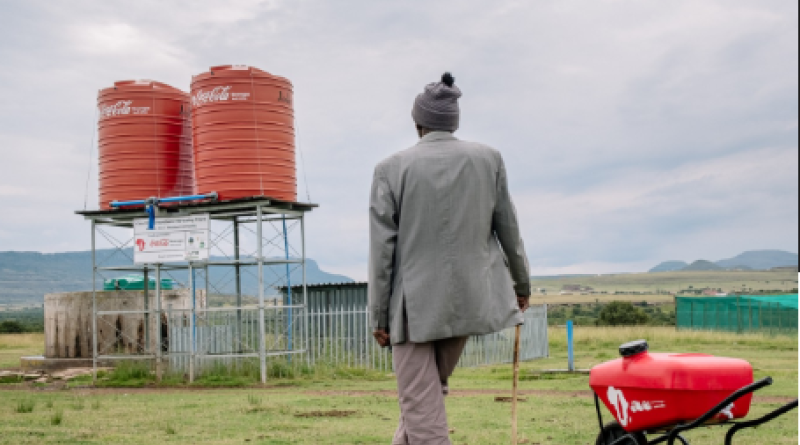
Coca-Cola Beverages Africa steps up to help protect local water sources in African countries
As the largest authorised Coca-Cola bottler on the African continent, Coca-Cola Beverages Africa (CCBA) is aware that water is essential to people and ecosystems.
Water being the main ingredient in CCBA’s products, it recognises its responsibility to help assist those who face water scarcity and to help protect local water resources where it operates, especially in places with the biggest challenges.
The projects that CCBA supports aim to build long-term resilience and improve water security in local communities. They benefit local watersheds that supply water for drinking, agriculture and manufacturing, restore and conserve habitats for plants and animals while offering opportunities for local economic development.
The Coca-Cola System’s Africa water stewardship initiative
One such project is the Coca-Cola System’s Africa Water Stewardship Initiative, that was announced in 2024 by The Coca-Cola Company in Africa and its bottling partners, CCBA, Equatorial Coca-Cola Bottling Company (ECCBC) and Coca-Cola Hellenic Bottling Company (HBC).
The initiative includes a nearly $25 million investment to help address critical water-related challenges in local communities in 20 African countries beginning in 2024 and continuing through 2030.
The work will be led by the Global Water Challenge (GWC) and implemented by a consortium of partners, including The Nature Conservancy (TNC), the International Union for Conservation of Nature (IUCN) and the World Wildlife Fund (WWF).
The Coca-Cola System’s Africa Water Stewardship Initiative aims to help protect and enhance the health of important watersheds and to help improve access to water and sanitation services in local communities.
Spotlight on Ethiopia
In Ethiopia, CCBA, in collaboration with Drop of Water, local communities and the Amhara regional state Water Resource Bureau, has completed a clean water supply project in Bahir Dar Zuria Woreda, Amhara Regional State.
The project supports The Coca-Cola Company’s goal to return safe water back to nature and communities.
CCBA in Ethiopia has contributed 3 million Birr ($21,192) to the total project budget of nearly 3.9 million Birr ($27,550), with the remaining funds provided by Drop of Water and the beneficiary community.
Designed in close partnership with the Amhara Regional State Water Bureau, local administration and community stakeholders, the project included building a reservoir and installing eight water distribution points across a 12-kilometre span.
Efforts in Mozambique
Meanwhile, CCBA in Mozambique has invested nearly MZN 8 million ($125,208) in two infrastructure projects that are providing access to safe water for communities near its bottling plants in Nampula and Matola-Gare.
In Nampula, CCBA and water entity Águas da Região Norte (ADRN) have extended the water network in the Napipine-Nicuta neighbourhood. The second project provides water to Block 13 in Matola-Gare where CCBA’s plant is located. The systems provide convenient access to potable water for the community.
The Coke Ville programme in South Africa
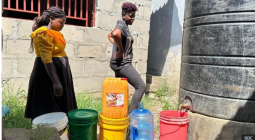
In South Africa, water-stressed communities around the country have gained access to a supply of potable water as Coca-Cola Beverages South Africa (CCBSA) continues to invest in water initiatives that aim to benefit nature and communities.
Since 2020, CCBSA has implemented Coke Ville, an innovative off-grid, solar-powered groundwater harvesting and treatment initiative. This programme encompasses the entire process of pumping, treating, storing, and distributing groundwater to water-stressed communities, providing local residents with access to potable water at no cost.
CCBSA’s Coke Ville programme has supplied clean and safe drinking water to communities in Limpopo, KwaZulu-Natal, Gauteng, Free State and the Eastern Cape provinces, benefiting thousands of households.
One of the company’s largest Coke Ville projects is a R12 million ($679,448) groundwater harvesting project that supplies the town of Graaff-Reinet in the Eastern Cape with potable water. This particular implementation directly integrates with the municipality’s infrastructure to supply water to the local community. ESI
Cover photo: By ESI Africa