

Enough fresh water is lost from continents each year to meet the needs of 280 million people. Here's how we can combat that.
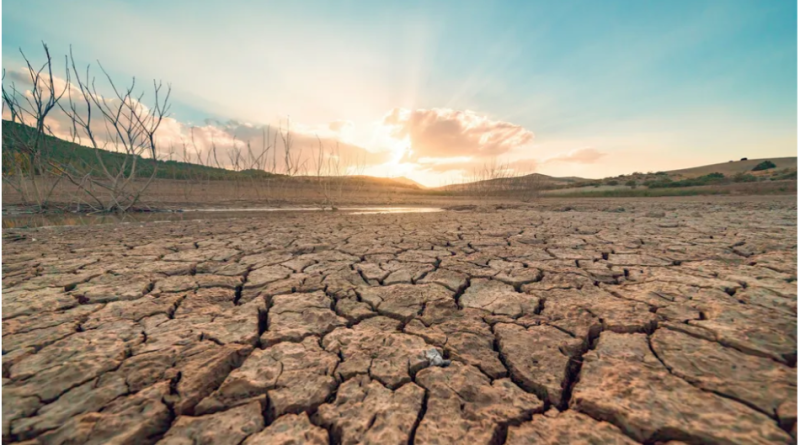
Earth's continents are losing 4 Olympic swimming pools' worth of fresh water every second, with dire consequences for jobs, food security and water availability.
Continental drying is a long-term decline in fresh water availability across large land masses. It is caused by accelerated snow and ice melt, permafrost thaw, water evaporation and groundwater extraction. (The report's definition excludes meltwater from Greenland and Antarctica, the authors noted.)
Continents have now surpassed ice sheets as the biggest contributor to global sea level rise, because regardless of its origin, the lost fresh water eventually ends up in the ocean. The new report found this contribution is roughly 11.4 trillion cubic feet (324 billion cubic meters) of water each year — enough to meet the annual water needs of 280 million people.
The report was published Nov. 4 by the World Bank. Its results are based on 22 years of data from NASA's GRACE mission, which measures small changes in Earth's gravity resulting from shifting water. The authors also compiled two decades' worth of economic and land use data, which they fed into a hydrological model and a crop-growth model.
The average amount of fresh water lost from continents each year is equivalent to 3% of the world's annual net "income" from precipitation, the report found. This loss jumps to 10% in arid and semi-arid regions, meaning that continental drying hits dry areas such as South Asia the hardest, Zhang said.
This is a growing problem. In a study published earlier this year, Zhang, Famiglietti and their colleagues showed that separate dry areas are rapidly merging into "mega-drying" regions.
"The impact is already being felt," Zhang said. Regions where agriculture is the biggest economic sector and employs the most people, such as sub-Saharan Africa and South Asia, are especially vulnerable. "In sub-Saharan Africa, dry shocks reduce the number of jobs by 600,000 to 900,000 a year. If you look at who are the people being affected, those most hard hit are the most vulnerable groups, like landless farmers."
Countries that don't have a large agricultural sector are also indirectly affected, because most of them import food and goods from drying regions.
Cover photo: Earth's continents are losing staggering amounts of water to the ocean each year