Egypt: Major solar and storage build-out as summer energy demand rises
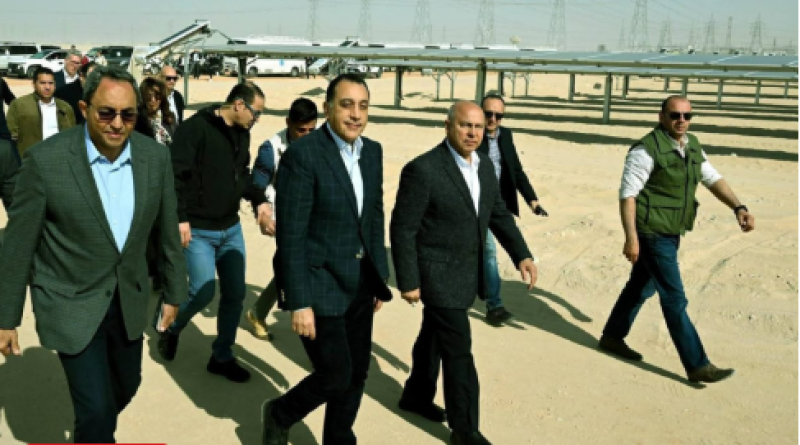
Officials say the latest solar and storage investments, coupled with interconnection projects, are central to reducing reliance on fossil fuels
Egypt’s cabinet has approved a new wave of renewable energy and grid infrastructure projects, as authorities race to bolster electricity supply ahead of rising consumption and position the country as a regional power hub.
During its weekly meeting on 17 February, the government authorised the implementation of four energy projects by Kemet Industries Group, the executive arm of the United Egypt Group for National Industries.
The developments combine large-scale solar generation with battery storage – a configuration increasingly viewed as critical for managing peak demand in North Africa’s rapidly growing power systems.
Large solar and battery projects
The projects include:
- two solar plants in the Bahariya Oasis with capacities of 320MW and 400MW;
- a 2,000MWh standalone battery storage facility in Nagaa Hammadi; and
- a 2,000MW solar power plant in the same area
Authorities also approved land usufruct agreements between Kemet, the New and Renewable Energy Authority and the Future of Egypt Authority for Sustainable Development. Separate arrangements were cleared between Kemet and the Egyptian Electricity Transmission Company covering power purchase and grid connection.
The facilities are scheduled to be completed and operational by 2027. Payments will be made in Egyptian pounds and the projects include commitments to support local renewable energy manufacturing and supply chains.
Alongside the generation projects, the cabinet authorised licensing procedures for a new 66kV substation in New Fayoum City.
Government preparing for peak summer loads
The approvals come as President Abdel-Fattah El-Sisi reviewed preparations to secure electricity supply for summer 2026. Officials forecast a 6% to 7% increase in national grid consumption during peak months.
In a meeting with Prime Minister Mostafa Madbouly and Electricity and Renewable Energy Minister Mahmoud Esmat, the president was briefed on measures to ensure grid stability and uninterrupted supply.
The government plans to add 3,000MW of solar capacity this year and deploy 600MW of battery storage before summer, bringing total battery storage capacity to around 1,100MW.
El-Sisi stressed the need to maintain reliable electricity supply, tackle power theft and accelerate renewable energy integration while maintaining cost efficiency.
Esmat said the national grid remained stable and capable of meeting residential, commercial and industrial demand.
Over the past year, 34 new transformer stations were connected to the unified grid and expansions were carried out at 40 additional stations. Authorities also extended 194,000km of distribution lines and 5,610 km of transmission lines.
Towards a regional electricity hub
Egypt aims to raise the share of renewables in its electricity mix to at least 42% by 2030 – potentially ahead of schedule – as part of its Integrated and Sustainable Energy Strategy.
Officials also discussed regional interconnection projects. The first 1,500MW phase of the Egypt-Saudi Arabia interconnection is expected to begin operating in time to support the 2026 summer demand period.
Cairo is expanding links with neighbouring countries and studying new connections, while longer-term plans with Greece and Italy could allow exports of up to 6,000MW to Europe.
The country already hosts some of Africa’s flagship renewable projects, including the 1,465MW Benban Solar Park and the 580MW Gabal El-Zeit wind farm. Installed renewable capacity in Egypt reached 9,366MW in 2025, up from 3,658MW in 2015.
Officials say the latest solar and storage investments, coupled with interconnection projects, are central to reducing reliance on fossil fuels, supporting industrial activity and cementing Egypt’s role as a regional energy exchange hub.
Cover photo: Earlier this year, Prime Minister Mostafa Madbouli, centre, inaugurated the first phase of the Obelisk Power Plant in Nagaa Hammadi, Qena Governorate. Source: EslAmOthmAn/X