

Africa races to provide electricity and clean cooking by 2030
Without urgent, ambitious, and coordinated action, millions will remain trapped in energy poverty, undermining the continent’s broader development aspirations
With 560 million without electricity and 940 million relying on polluting fuels, Africa is racing against time to reach its 2030 energy targets.
The Africa Sustainable Development Goal 7 Report (2025) by the African Energy Commission (AFREC) provides a detailed assessment of the continent’s progress toward universal, modern and sustainable energy.
The report indicates that while Africa has made significant strides, particularly in expanding electricity access and initiating the renewable energy transition, progress remains insufficient to meet the SDG7 targets within the established timeframe.
It underscores how ongoing gaps in access to clean cooking, sluggish progress in energy efficiency, and significant financing shortfalls continue to hinder the achievement of universal, sustainable energy across the continent.
“Electricity access across Africa has improved markedly, with the electrification rate reaching 61 percent in 2023, up from 51 percent in 2017. Despite this achievement, approximately 563 million Africans — primarily in rural and peri-urban areas — remain without electricity.”
Northern Africa nears universal access, Central Africa trails
The report shows that Northern Africa has attained near-universal access, achieving a 98% connection rate, while Eastern and Western Africa have demonstrated encouraging progress.
However, the report notes that Central Africa continues to lag significantly, with only 28% of its population having access to electricity.
“The continent’s rapid population growth, especially in countries such as Nigeria and the Democratic Republic of Congo, risks undermining gains in electrification, as demographic pressures frequently outpace infrastructure development efforts,” the report said.
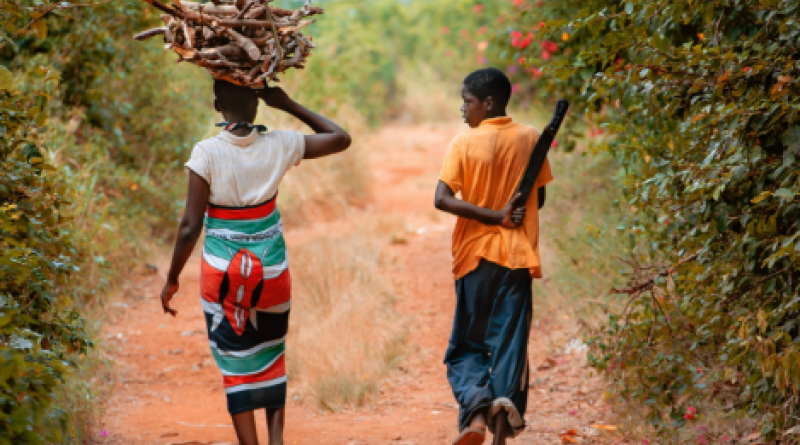
AFREC states that access to clean cooking technologies remains a significant barrier. In 2023, only 35% of Africa’s population had access to clean cooking options, leaving over 940 million people relying on polluting fuels, including wood, charcoal and kerosene.
“While Northern Africa has achieved near-universal access to clean cooking through strong policy measures and LPG adoption, progress in sub-Saharan Africa remains painfully slow. Urban-rural disparities are particularly severe, and without urgent intervention, it is projected that over one billion Africans could remain without access to clean cooking by 2030.”
Financing gaps threaten Africa’s drive for universal energy
The report states that financing the transition to universal energy access and clean energy remains one of the most critical bottlenecks.
It indicates that achieving universal electricity access by 2030 will require an estimated $50 billion annually, with an additional $4 billion per year needed for universal clean cooking. “Current financial flows are markedly insufficient, and while innovative financing models such as blended finance, concessional loans, pay-as-you-go systems, and climate bonds are emerging, they remain limited in scale and reach. Particularly alarming is the chronic underfunding of clean cooking initiatives relative to electricity projects.”
The 2025 Energy Progress Report states that most people without electricity live in remote areas, places facing conflict or violence and low-income regions, making it hard to expand the electricity grid.
It says Sub-Saharan Africa’s rural population growth outpaced electrification efforts, leaving 451 million rural residents without electricity in 2023.
Dr Fatih Birol, Executive Director of the International Energy Agency, said despite progress in some parts of the world, the expansion of electricity and clean cooking access remains disappointingly slow, especially in Africa.
In July of last year, the UN raised concerns about the lack of progress on the SDGs in Africa, despite the continent’s ongoing efforts to accelerate its progress.
The UN outlined six key priority areas where accelerated action can generate transformative impact:
- food systems
- energy access
- digital transformation
- education
- jobs and social protection, and
- climate and biodiversity action
AFREC states that Africa’s energy transition is at a pivotal moment, and while substantial progress has been made, it remains fragile and uneven.
“Without urgent, ambitious, and coordinated action, millions will remain trapped in energy poverty, undermining the continent’s broader development aspirations.”
Cover photo: shangarey©123rf