

Wildfires now destroy twice as much tree cover per year as two decades ago – a crisis fuelled by climate change
The world is losing forests to fire at an unsustainable rate, experts have warned.
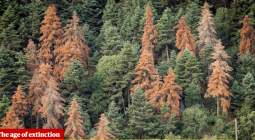
Wildfires have always been part of nature’s cycle, but in recent decades their scale, frequency and intensity in carbon-rich forests have surged.
Research from the World Resources Institute (WRI) shows that fires now destroy more than twice as much tree cover as they did two decades ago.
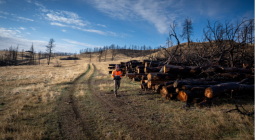
In 2024 alone, 135,000km² of forest burned – the most extreme wildfire year on record.
Yet fires in other landscapes have not risen in the same way, according to research from the University of Tasmania. While the total area burned globally has fallen for decades as farms have expanded across Africa and slowed the spread of blazes – forests have become a new hotspot.
Some of the world’s worst-affected areas
Brazil, Bolivia, Russia, Australia and Canada have all endured some of their worst fire seasons in recent years, as heatwaves stoked by fossil fuel pollution drive the risk of extreme blazes higher.
The maps, using data from the University of Maryland, show some of the hardest-hit forests.
The rise in forest fires is unmistakable. Four of the five worst years on record have occurred since 2020.
Research from the WRI shows that 2024 was the first time that major fires raged across tropical, hot and humid forests such as the Amazon, and boreal forests, such as those spanning Canada’s vast coniferous regions.
Cover photo: The Guardian

Ih toll.