


What’s The Matter With Progressive Billionaires?
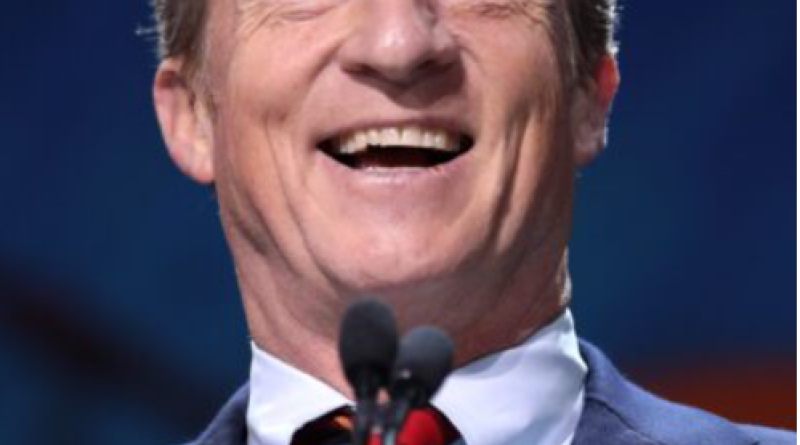
Tom Steyer is a good man, but his new gubernatorial campaign ignores how to build real power
It seems like everyone and his brother-in-law is running for California Governor nowadays, and a week ago we got another one: progressive billionaire and climate champion Tom Steyer. One might think that this should be cause for celebration from environmentalists.
Steyer is a good man. He has poured money into progressive causes and charities, as well as important state ballot measures. He has put the climate agenda front and center. So then what’s the problem?
In short, the problem is power.
It takes time and resources to build power. Elections are not won on Election Day – they are won weeks, months, and years (and sometimes even decades) in advance.
They are not won by individual campaigns for specific offices.
That is especially true in Deep Blue California. Consider me skeptical that a Steyer Governorship will be that much different from, say, a Swalwell Governorship, or a Villaraigosa Governorship, or a Yee Governorship, or a Porter Governorship, or even a Newsom Governorship (although unlike Newsom Steyer will not go out of his way to throw powerless minorities under the bus).
What does it mean to build power? It means building mechanisms that change politics. It means being someone like, say Harlan Crow – whom no one had heard of until it became clear that he has been bankrolling Clarence Thomas for years. More importantly, Crow has built institutions: he founded the Club For Growth, which has made the Republican Party’s central policy dogma advancing tax breaks for billionaires, and which invests in right-wing candidates through the country. He has served on the board of the American Enterprise Institute. The Koch Brothers are famous for doing the same sorts of activities: they founded the Cato Institute, Americans for Prosperity and Citizens for a Sound Economy. And of course they have also bankrolled such climate-denying institutions as the Heartland Institute, the Competitive Enterprise Institute, the Pacific Legal Foundation, and the American Legislative Exchange Council. Those institutions exist, and are powerful, and wield enormous influence electorally
Now, it’s not like Steyer doesn’t do these things, but not nearly as much. Back in 2013, he began a youth-oriented political organizing institution, NextGen Climate (now NextGen America), but seems to have lost interest in it several years ago. He is not mentioned on its website. A Google search finds only two references to it in the last year – a time when organizing has been incredibly crucial. A mobilize.us search comes up completely empty for the organization. His efforts are mostly one-offs: when the Koch Brothers attempted to repeal California’s climate law through the ballot box, Steyer organized against it and cleaned their clocks.
But then he got distracted, running for President in 2020, spending a quarter of a billion dollars on his campaign, placing seventh in Iowa, and sixth in New Hampshire, and not garnering a single delegate.
Just think about what that quarter of a billion dollars could have done, and still could do, if it were focused not on a particular race.
Let me give an example: precinct chairs.
In Texas – a state where Democrats must become competitive in order to build a pro-environmental majority – precinct chairs are a big deal. They organize voting on a neighborhood level and (try) to get people to vote. As Michelle H. Davis explained last year:
One Texas County in 2018 did an experiment on which voters were contacted and which weren’t.
- 70% of voters contacted by their precinct chair turned out to vote.
- In precincts where there was no chair, and voters weren’t contacted, only 38% of voters showed up to vote.
This is why precinct chairs are paramount in flipping Texas.
There are more than 4,000 GOP precinct chairs in Texas, and roughly 3,000 Democratic ones. So right there, you can see that the Republican Party is out-organizing the Democrats. What’s more, says Davis:
The Republican Party treats precinct chairs as royalty. Precinct Chairs have tons of support and training and are highly regarded within the GOP. Texas Republicans throw balls for precinct chairs and give out awards. Many GOP precinct chair races are competitive, meaning multiple people run for one chair position.
The GOP’s precinct chair strategy also involves rigorous training on recruiting and involving neighbors. Within a precinct, the chair usually has block captains and up to five volunteers, getting the word out about elections and getting to the polls.
The Democratic Party – not so much. And that is why we just keep missing in Texas. We are getting beaten on the ground. As Davis notes, Texas isn’t a red state: it’s a non-voting state. If we can get more people there to vote, we can win.
That would require money. A lot of money. And a lot of money spent the right way – not on fancy consultants who cream off funds spend on television ads, but on actually organizing people on the ground. Hmmmm….where could that money come from? Perhaps from someone who wasted a quarter of billion dollars in 2020, and looks to do the same in 2026.
That’s what it means to build power: build organizations to reach people and change political outcomes. It does not mean to run what looks sadly like a sort of vanity race where the policy and political differences between Democrats lie between the 49-yard lines, and Freud’s notion of the Narcissism of Small Differences will become a central there.
The Koch Brothers and Harlan Crow and Elon Musk and Peter Thiel and the rest of them want to dominate government and turn the country and world into some sort of Ayn Randian dystopia. But they are (or in David Koch’s case, were) thinking about how to do this. They understood that they didn’t need to run for office to do it, and it was better for them not to run for office to do it. Better to own politicians than to be one. Elon Musk didn’t run for office: he bought Twitter and turned it into a supercharger for resurgent American Nazism. The Office doesn’t matter. Power does.
Look, I like Steyer. A lot. As I said, he’s a good man, and not stupid. He’s done a lot of really good work. If he turns out to be the last Democrat standing, I will gladly support him and work for him – I might even do it if he is only one of two last Democrats standing. But the environment will not win this way. The climate will not heal this way. And we are running out of time.
Cover photo: Tom Steyer: Good Man, Wrong Job