

We are Drowning in Plastic. Will a New Law Save Us?
The Drain is a weekly roundup of environmental and climate news from Legal Planet.
My family recently spent a warm November morning ankle-deep in mucky, brackish water, fishing out used condoms and syringes near Venice Beach. It stands out as one of the best days I’ve had all year.
We were volunteering with Ballona Creek Renaissance, a local nonprofit that alongside Friends of the Ballona Wetlands organizes creek cleanups and wetlands restoration projects. My son and a few of our friends had fun using those long trash grabbers and turning the trash cleanup into a competition. But it was also disgusting.
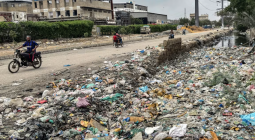
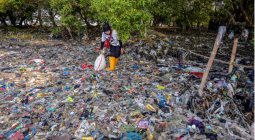
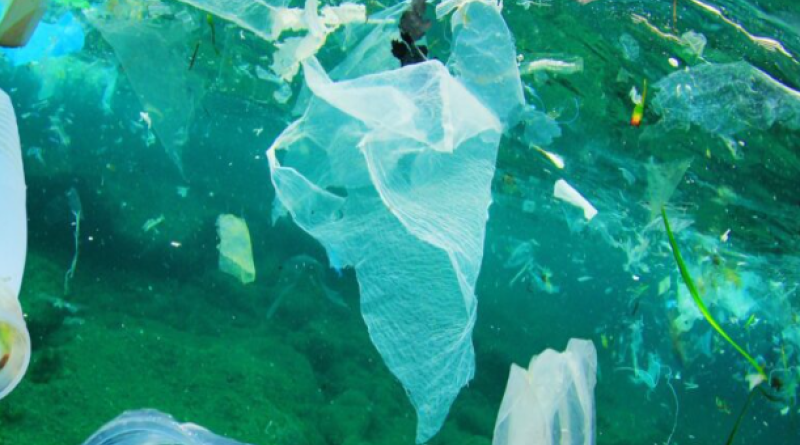
We fished out little bits of disintegrating Styrofoam, Gatorade bottles, Cheeto bags, BIC lighters, Ramen noodle cups, Starbucks coffee lids, pens, toilet bowl cleaner, toothbrushes, a pair of shoes, a still-working wristwatch — as well as lots and lots of plastic bags. In fact, plastic products were by far the most common blight. That shouldn’t come as a surprise but it’s still shocking to see.
Global production of plastic has topped over one trillion pounds per year, and 33 billion pounds of plastic enters the ocean annually. The stuff we buy, and then send into landfills and our waterways, truly boggles the mind.
Did you know that people — maybe people you know — buy boxes of individual, plastic-wrapped toothbrushes that already have toothpaste applied to them so that they can use them once and then throw them away? What fresh hell is this? Colgate calls these single-use, “on-the-go” toothbrushes “Wisp” while Crest markets their disposable brushes dipped in Scope as “no-water-needed” breath fresheners. They are hardly the only ones on the market. There are myriad examples of America’s rampant consumerism, but for some reason I find these little colorful toothbrushes to be just about the most horrifying sign of our impending plastic apocalypse.
I learned about these brushes from a recent panel discussion moderated by my Emmett Institute colleague Julia Stein during the 34th annual Environmental Law Conference in Yosemite. Titled “No Way to Recycle Our Way Out of Plastic Pollution,” the panel discussion was all about how to confront the firehose of single-use plastics — as well as the growing danger of microplastics.
Plastic pollution is a public health problem, but it’s also related to the climate crisis. Plastics are 99% fossil fuel-based and ExxonMobil is the largest producer of plastic polymers used in single-use plastics. As renewable energy replaces fossil fuels, there’s good reason to believe that Big Oil will only double-down on plastics and the messaging that plastic is recyclable — and hence sustainable. California Attorney General Rob Bonta has sued ExxonMobil alleging that the oil major has been misleading the public for decades about plastic waste and the effectiveness of recycling.
Some estimates find that only 5-6% of plastic is really recycled. So, it comes as good news that help is on the way next month, at least here in the Golden State.
Heavy plastic grocery bags like the ones I was fishing out of the creek last month are set to start disappearing from California grocery stores on January 1. That’s when new restrictions are going to tighten as part of the state’s campaign to keep the bags from clogging waterways and landfills.
Deja vu? “California technically banned plastic grocery bags more than a decade ago” as the San Francisco Chronicle’s Lucy Hodgman notes. “But at the urging of plastic and grocery lobbyists, that law left an exception for thicker plastic bags that can theoretically be reused 125 times.” Anyone who has shopped at Target knows about that loophole. The new rule is meant to close it for good.
SB 1053 places new restrictions on the types of bags that may be distributed at the point of sale by most grocery stores, retail stores with a pharmacy, convenience stores, food marts, and liquor stores. These stores will only be allowed to distribute recycled carryout paper bags to customers at checkout counters, self-checkout kiosks, in-store pickup, curbside delivery, and home delivery for a minimum charge of $0.10 per bag. And beginning 2028, recycled paper bags distributed at stores will be required to contain at least 50% postconsumer recycled materials.
That means starting next month instead of being asked if you want “paper or plastic,” you will be asked whether you brought a reusable bag or need to buy one. Judging from CalRecycle’s analysis, the new law doesn’t appear to contain any more loopholes. This won’t save us from our plastic hell, but it’s a good first step. A fashion-forward reusable shopping tote may be the holiday gift for Californians this year.
That morning fishing for trash in the Ballona Creek with my friends and family, we collected many buckets full of sludgy plastic, intercepting it before it could float out to sea. It had me reflecting on the important work of these local nonprofit organizations. Friends of the Ballona Wetlands says it hosted 6,456 volunteer hours and 113 field trips in 2025 alone. They removed a whopping 32.6 tons of non-native plants and other invasive species. As climate policy encounters choppy waters, it’s worth remembering that there are many local environmental organizations doing nitty gritty work in their communities that could use your help — and that can help you feel less powerless.
Gird yourself for the onslaught of 1-year anniversary stories about the Palisades and Eaton fires, like this one in Time magazine. Let’s see how many mention “climate change” and climate resilience as part of their coverage. The Los Angeles Times very rarely mentioned climate change when covering the fires in January and February.
Last week, Los Angeles officially, and quietly, turned off the last coal plant directly powering California — the Intermountain Power Plant in Utah. “The lights didn’t flicker,” Sammy Roth notes. “Nobody noticed the difference.”
And tomorrow (Thursday) the California Public Utilities Commission is scheduled to vote on their staff’s recommendation that the CPUC reject contract termination agreements that the owners of the Ivanpah Electric Generating Station negotiated with PG&E. The contract termination deal before the CPUC would lead to Ivanpah’s closure, Noah Baustin reports.
Meanwhile, the Western Gateway Pipeline, a proposed gasoline pipeline into the state from Phillips 66 and Kinder Morgan is supposed to see some decision by Dec. 19.
The tribal nation that calls Yosemite National Park its ancestral home has reclaimed a piece of its historical territory. Kurtis Alexander at SF Chronicle reports that 900 acres along the western edge of the park were transferred to the Southern Sierra Miwuk Nation this week from the nonprofit Pacific Forest Trust.
CalPERS isn’t divesting from fossil fuels, but climate activists keep pushing, including at a recent meeting, reports the Sacramento Bee. CalPERS says “divestment increases investment risk, loses money and endangers the fund’s fiduciary duty to provide benefits for California retirees.”
Over at the Haas Energy Institute blog, UC-Berkeley resource economist Maximilian Auffhammer has a takedown of his PG&E energy bill, with some help from Chat GTP. “It’s the opposite of what a modern bill should be: short, clear, and human readable.”
And UC Riverside researchers have found that global warming may be reducing nitrogen emissions, at least in places where rainfall is scarce. That’s the result of 6 years of UC-led research in a temperate Chinese forest.
Good News and Bad News for EVs
Sales of electric vehicles in the U.S. have cratered, dropping about 50% from September to October. And yet they are also on pace for record sales this year (about 8% of the market). Both things can be true, and no one should be surprised. Congress killed the EV federal tax credit on Sept. 30.
The question now is “whether this dip is a sign of a prolonged slump or a mere blip in an otherwise upward trajectory,” Tik Root writes at Grist.
Look at the recent LA Auto Show, which has traditionally been a launchpad for EVs. This year’s show, the week before Thanksgiving, brought several check-ins on the state of EVs. Electrification was largely on the sidelines. “The atmosphere reflected the uneasy state of EVs in America in this first year of the new Trump administration,” writes Andrew Moseman at Heatmap News.
LAT’s Hayley Smith spotlights the Nissan Leaf, which offers an estimated 303 miles of range on a charge, and the Chevy Bolt, which offers an estimated 255 miles of range, and the 2026 Jeep Recon, a Wrangler-style EV advertised by the company as “the only fully electric Trail Rated SUV” that offers 230 miles of range starting at $65,000, as well as the pricier Rivian RIS and the Lucid Gravity.
Should we all try to stop driving? Sammy Roth speaks here with Doug Gordon, an author of the new book “Life After Cars.” Authors Gordon, Sarah Goodyear and Aaron Naparstek make a compelling case that cars (electric or otherwise) degrade our lives in ways most of us rarely if ever consider, Roth writes.
Local data from around the country show that Vision Zero planning is making cities safer for pedestrians, but that we’re not implementing enough changes to prevent car violence, writes Leah Shahum at Streetsblog.
Five-minute charging first in China, then in Europe? BYD is reportedly hiring at least two roles in Europe to deploy infrastructure for “Flash Charging” and to build and manage its network operations center there.
Super-fast charging might sound good to Santa Monica. Citing noise complaints, Santa Monica’s city council unanimously approved a resolution to bar Waymo from charging its ghost fleet of self-driving EVs between the hours of 11 p.m. and 6 a.m. — “a measure that would kneecap Waymo in the Los Angeles metro area, one of its leading markets,” David Ferris reports for POLITICO. “The company has refused, and it’s unclear whether the city has the grounds to force the closure.”
In rural Minnesota, no one seems to be complaining about the local transit system there enlisting a fleet of autonomous EVs to help super-charge transportation options especially for local Native American tribes, NPR reports.
And the grace period is now over for EVs to use the HOV carpool lanes here in California.
Insurance and Affordability
New research about property insurance and disaster risk that was shared with The New York Times shows the extent to which climate change is contributing to escalating home insurance premiums, and eating into Americans’ home values in disaster-prone areas.
And yet consumers are getting less information not more: Zillow, the country’s largest real estate listings site, has quietly removed a feature that showed the risks from extreme weather for more than one million home sale listings on its site, Claire Brown reports.
Brown and her co-author are asking readers to submit their own stories about rising insurance premiums colliding with climate change.
And my UCLA Law colleague Kimberly Clausing blogged about why the costs of climate change, especially those from climate-related natural disasters, are already substantial for U.S. households. “These costs are significant, averaging over $700 for a typical household.”
Courts & Litigation
Speaking of insurance… Two residents of Washington state are suing fossil fuel companies for contributing to climate change, alleging that a spike in natural disasters has led to rising homeowner insurance premiums, Politico’s Lesley Clark reports. “The case is the first climate lawsuit to focus on insurance costs.”
California residents filed a class-action antitrust lawsuit in federal court against Chevron, Phillips 66, Valero and other oil refiners, alleging they inflated reports for how much it costs to comply with the state’s Low Carbon Fuel Standard program. The suit alleges a “hidden overcharge” boosted gas costs for consumers by hundreds of millions of dollars, Allison Prang reports for Bloomberg Law.
Earthjustice is suing the Trump administration today over its decision to hold an offshore oil sale in the Gulf of Mexico despite blatant violations of the law and threats to coastal communities and endangered wildlife. “By failing to comply with NEPA, BOEM is now proceeding without analyzing how this sale of public waters could expose the entire Gulf region to catastrophic oil spills, harm endangered Rice’s whales, and leave behind a dangerous legacy of defunct oil wells, pipelines, and platforms,” Earthjustice says in a press release.
Conservation groups have filed 27 lawsuits nationwide challenging some aspect of federal logging programs, including logging’s harms to endangered species, Bobby Magill reports for Bloomberg Law. The Trump administration is trying to use emergency orders to escalate logging on federal lands. The lawsuits in Oregon are especially hotly watched.
Energy and Climate Politics
In Illinois, hundreds of people are benefiting from a provision of that state’s 2021 clean-energy law that allows electric utilities to meet energy-conservation mandates in part by outfitting low-income households with electric appliances that reduce their bills, Kari Lydersen reports for Canary media.
In Colorado, regulators set a major new climate goal for the companies that supply homes and businesses with fossil gas. “By 2035, investor-owned gas utilities must cut carbon pollution by 41% from 2015 levels, the Colorado Public Utilities Commission decided,” Alison F. Takemura reports at Canary.
The power demand for data centers will hit 106 gigawatts by 2035, predicts BloombergNEF’s newest forecast. That’s a 36% jump from the previous outlook, published just seven months ago.
Media companies owned by Rupert Murdoch ran a misleading campaign against clean energy, blaming it for rising electricity prices in New Jersey and doing so during the governors’ race that focused on energy prices. That’s according to watchdog Media Matters.
Switzerland on Sunday overwhelmingly rejected a proposed 50% tax on inherited fortunes of 50 million Swiss francs (that’s about $62 million) or more to cover the costs of climate change impacts, with 78% of votes against the plan, Reuters reports.
Trump Administration
The Trump administration is proposing a significant rollback of fuel economy standards finalized last year by President Biden. Trump will unveil the weakened standards today (Wed) alongside representatives from the big three automakers. “It’s the latest push to make it easier for automakers to sell gas-powered cars,” sources told David Shepardson at Reuters.
In Trump’s second term, the DOT opened 50% fewer investigations into vehicle safety defects, concluded 83% fewer enforcement cases against trucking and bus companies and started 58% fewer pipeline enforcement cases compared with the same period in the Biden administration, Jesse Coburn reports at ProPublica, identifying 30 problematic regulatory actions.
Lots of coverage lately for the Trump administration’s plans to open nearly 1.3 billion acres of waters on the Americans coasts to oil and gas drilling. The Department of the Interior proposed holding as many as 34 lease sales, including six off California and in a remote region of Alaska.
The administration last month also proposed 4 new rules that would be significant new limits on federal protection under the Endangered Species Act. “One of the most contentious proposals would allow the government to assess economic factors, such as lost revenue from a ban on oil drilling near critical habitat, before deciding whether to list a species as endangered,” the NY Times reports.
And Trump’s EPA announced last week that it would delay a (common-sense) Biden rule that requires the oil and gas industry to limit emissions of methane, a planet-warming super pollutant. EPA Administrator Lee Zeldin says that will save oil and gas companies an estimated $750 million over 11 years in compliance costs.
Can the war on coal still be won with Trump and AI frustrating efforts to retire aging coal plants? Ten years ago, Michael Grunwald embedded in the war on coal and this week he returned to report on the delayed victory over coal for Canary Media. “Beyond Coal is still winning, and America is continuing to reduce its reliance on the black stuff. But Trump and the artificial-intelligence boom are complicating the war on coal’s endgame.”
In Michigan, saving coal is costing taxpayers $113 million, Tom Perkins reports for the Guardian
Other Stuff Worth Your Attention
In November, the House Natural Resources Committee advanced the SPEED Act, a bill from Republican committee chair Bruce Westerman that also contains restrictions on executive power to thwart permitted projects. “There’s a lot in this bill for energy developers of all stripes to like — and a lot for environmental activists to loathe,” Jael Holzman writes at Heatmap. Democrats like Mike Levin are pushing for fossil fuel and renewable parity.
Bill Gates says he would support deploying artificial cooling technologies to lower global temperatures — but only if the planet hits so-called climate tipping points. Those comments in a recent interview with Axios are among his most expansive on geoengineering, though the Microsoft co-founder and philanthropist is a major funder of research.
RE:PUBLIC received a pitch for a good story about #vanlife on public lands — that was apparently too good to be true. They were nearly duped. The saga is “a symptom of a commercial-media business model that is broken” writes editor Christopher Keyes.
If you’re looking to donate money to address climate, these are Giving Green’s top climate nonprofits for 2025: Clean Air Task Force, Future Cleantech Architects, Good Food Institute, Opportunity Green, Project InnerSpace, and the Giving Green regranting fund. On this episode of Shift Key, Robinson Meyer talks to Dan Stein, the founder and executive director of Giving Green.
Cover photo: By Legal Planet