

“What fascinated me in the first place about this species is that they change their environment. Like humans, when they are present, they modify their habitat,” said Cano. “We don’t know the cascading effect that this could have in other species.”
The scientists do not know exactly what has caused this pandemic, but Cano said humans were “probably involved” in the distribution of the disease. Current theories about its transmission include shipping, changes to currents and abnormal wave activity.
Cano came to the Canary Islands to study the early life of urchins. He quickly found, to his dismay, that there were not enough young urchins to study. As a result, he changed his doctoral subject to study the rapid decline in their populations.
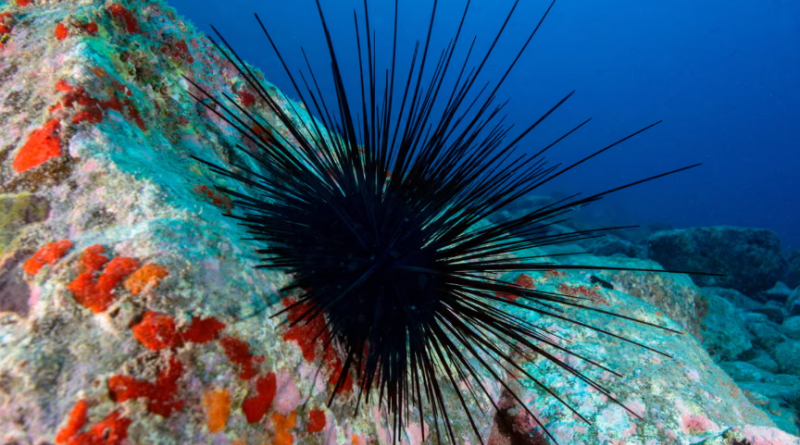
The Diadema genus, which populates tropical waters around the world, are the most widespread and ecologically important family of urchin.
There are only a few pockets of water where Diadema have not been affected by this outbreak of disease.
“We aren’t yet sure how this pandemic will evolve,” Cano said. “So far, it seems not to have spread to other populations in Southeast Asia and Australia, which is good news – but we cannot rule out the possibility that the disease will reappear and potentially spread further.”