

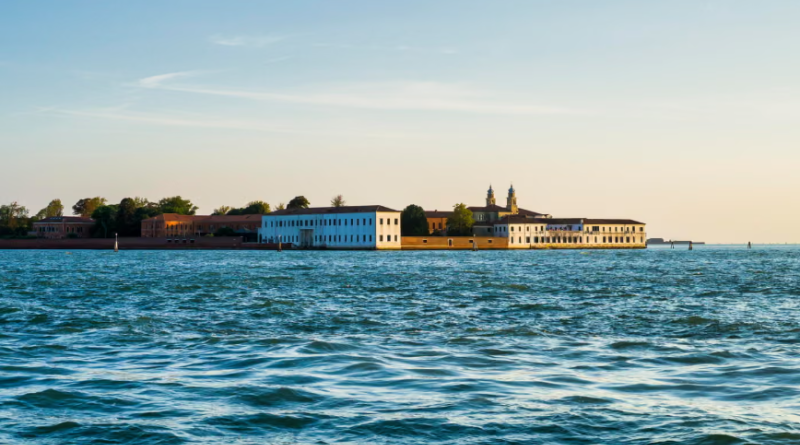
In Venice this approach has saved the herbs from obscurity. The venerated Gelateria Alaska has created a samphire sorbet. One of the city’s most exclusive eateries, the two-Michelin-starred Glam Enrico Bartolini, has an avowed halophyte-lover at the helm in the form of its resident chef, Donato Ascani.
“I was very lucky to come to Venice because there are ingredients that are unique in Italy,” he says. “Wild herbs – the soil where they’re grown – our vegetables have a particular savoury taste that’s hard to find in [the rest of the country], so this soil allows us to have an extra edge with what we do in the kitchen.”
Ascani is acutely aware of the changes that are already affecting seasonal availability of the lagoon’s offerings.
“Every chef knows that every time he changes location, there is a spirit of adaptation to the new place and the crops,” he says. “Similarly, there will also be adaptation to climate change. We’ll go with whatever [nature] has to offer; it’s not like we can just come back and grow crops in the kitchen.”
For Ascani, halophytes represent a way to connect his customers to the lagoon, and “understand the importance of all the land offers”, even if those offerings are obscure.
And in their resilience, halophytes are important, says Ascani: “We can’t tell the season from the calendar any more. We have to look at it in the morning, when you go to the market to buy groceries.”