


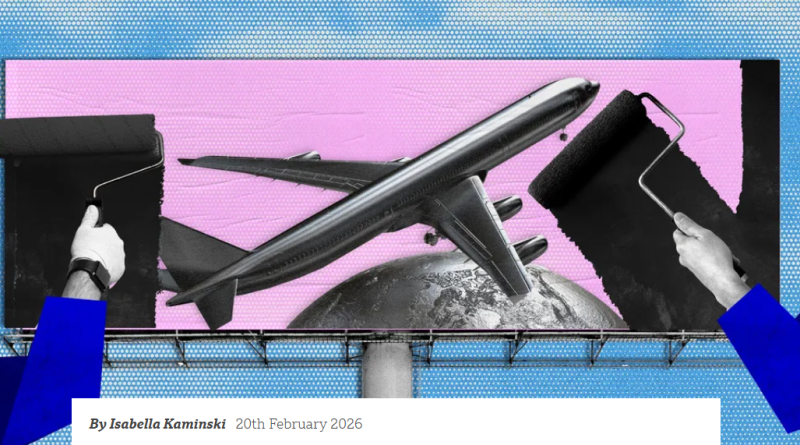
When it comes to billboards, the centre of The Hague isn't exactly Times Square. Still, the cosmopolitan Dutch political capital has its share of looming displays and brightly lit bus shelters.
When I visited in late 2024, these were merrily advertising an array of colourful products and services in the run-up to Christmas, with one promoting trips to sunny beaches thousands of miles away in the Dutch Caribbean.
I was in the city to report on the International Court of Justice's landmark hearings on whether countries can sue each other over climate change. But when I returned seven months later to hear the court's final ruling there was a subtle difference in these adverts: there were no posters for petrol or diesel cars, or for cruises or flights to far-flung holiday destinations.
The change was the result of The Hague's 2024 decision to ban advertising for high-carbon products. The city was the first place in the world to do so through a local law, but is just one of dozens of municipalities across the world that have now agreed to ban fossil fuel adverts, including the district of Saint-Gilles in Belgium, the Swedish capital of Stockholm and most recently the Italian city of Florence. In January 2026, the Netherlands' Amsterdam became the world's first capital to put a ban into law.
"As the International City of Peace and Justice and an important UN city, we find it important to show that we're serious about tackling [the climate crisis]," says Robert Barker, deputy mayor of The Hague. "So it's really a bit weird if in a public space we have a lot of fossil ads, while at the same time you say to people, 'We should reduce them.'"