

NEPA and Democracy

The Trump Administration is at war with transparency and public input.
A striking pattern has emerged from the Administration’s paring back of NEPA. These efforts persistently target requirements for transparency and public input That applies to the administration’s permitting reforms. It also applies to the process that is generating those permitting reforms. In both situations, agencies are fleeing the light of day.
Until the Trump Administration, the process of environmental review involved ample opportunities for public review. To take just one example, agencies were required to make their draft impact statements public and receive public comment. Even when the agency was conducting an environmental assessment to decide whether an impact statement was needed, there was input into the process. Moreover, these requirements were contained in regulations by the Council for Environmental Quality (CEQ) that were formally published by the government. From the Carter Administration through the Biden Administration, the CEQ regulations were the product of extensive public notice and comments.
In his first term in office, Trump followed this same process. But in his second term, he overturned the executive order by Jimmy Carter directing agencies to follow the CEQ regulations and directed CEQ to rescind the regulations. CCEQ repealed the regulations immediately with a token opportunity for after-the-fact public comment. That’s basically the “sentence first, trial after” procedure embraced by the Red Queen in Alice in Wonderland. The Administration has used it in many regulatory proceedings.
Trump also ordered agencies to adopt their own NEPA procedures with CEQ guidance. The resulting procedures are quite varied. Some of them are supposed to be binding rules. Others are guidelines, or even just handbooks of agency practice. Public input was not a factor. And many reserve the right to make further changes without public notice of any kind. The upshot is that instead of having publicly available, uniform rules across the executive branch, we now have an opaque hodgepodge of agency statements.
Many of the new agency procedures rollback previous opportunities for public input in the environmental review process. NEPA requires public notice at one point: when the agency has already decided to do an environmental impact statement, it must publish a notice of intent and obtain public feedback. That notice may not tell the public much about what impacts or alternative actions or mitigation measures that agency plans to consider. More importantly, that notice will only be given in the small sliver of cases where the agency’s already decided to do an impact statement. In the vast majority of cases, there may be no public notice at all.
In short, the Administration has attacked transparency and public input at two levels. Agencies are adopting procedures that could largely eliminate meaningful public participation. And these procedural changes are being made in a way that itself lacks transparency and public input.
These changes limit the potential for public oversight of government actions that, taken alone or as a group, will have major environmental impacts – notably, oil production, coal mining, nuclear reactors, and pipelines. Congress will also have less visibility into these important decisions. People are often impatient about procedures that slow decision making, sometimes properly so. But the solution is not a secretive decision-making process. If it’s true that democracy dies in darkness, it’s also true that ugly things rawl out of the woodwork when the lights are off.
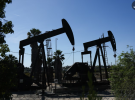
Cover photo: Dan Farber has written and taught on environmental and constitutional law