

Mission 300: 17-point action plan to electrify millions by 2030
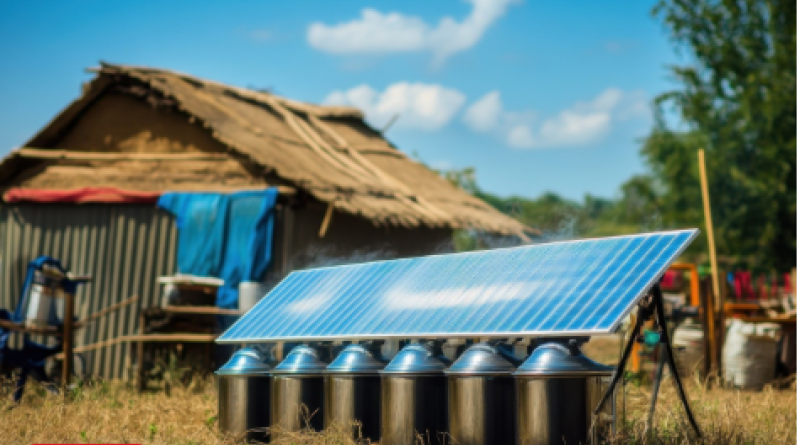
Solar mini-grids are the most capital-efficient way to bring first-time electricity to Sub-Saharan Africa’s 380 million unserved people. The World Bank estimates that reaching them will require 160,000 mini-grids and $91 billion in investment.
A recent paper published by the Africa Minigrid Developers Association (AMDA) indicates that at current deployment rates, only about 12,000 new mini-grids though, serving just 46 million people, will be built by 2030.
The report warns that the gap between ambition and delivery is enormous, and closing it will require intervention at an unprecedented scale. Hence, the 2024 launch of the Mission 300 (M300) initiative by the World Bank and the African Development Bank, a necessary step in the right direction.
Among the 29 governments that signed M300 Compacts in January and September 2025, 20 disclosed their technology mix, with mini-grids representing 17% of planned connections, or 81 million people.
Accelerating mini-grid deployment is essential to connect 115 million people—over 23 million new connections by 2030
A further eight countries indicated that more than 70 million people would be connected via off-grid solutions, without clarifying whether these would be mini-grids or standalone solar.
“If we assume that half of these connections will be via mini-grid, the expected contribution from mini-grids is 116 million people, equivalent to 23 million connections. This analysis excludes one M300 compact country because it did not indicate the technology split.
“If you add up the electrification aspirations across the compacts of all 29 countries, it equates to over 466 million new people electrified by 2030, which is more than 50% higher than the M300 aspiration,” AMDA said.
According to the paper, current projections show that accelerating mini-grid deployment is critical to reach more than 115 million new people – over 23 million connections by 2030, or more than 380,000 per month.
At 500 connections per mini-grid, this requires roughly 766 mini-grids per month for the next five years. Butt in 2024, fewer than 600 mini-grids were delivered across the entire continent.
“The overall implication of this is that the industry – from mini-grid companies to financial institutions to governments and all the supporting stakeholders – cannot operate under a ‘business-as-usual’ approach. In order to see this political will translated into action within the aggressive timeline of M300, all stakeholders within the mini-grid sector need to take a set of decisive and aggressive actions,” says AMDA.
The mini-grid action plan for Mission 300
The paper recommends several targeted action steps to support the scaling of capital to be able to enable rapid industry growth. These are:
- Significantly expand corporate equity and new funding mechanisms to drive more private capital into the sector
- Scale local currency debt facilities to ensure projects are not exposed to global currency risk:
- Drive continued provision of concessional capital and ensure creative application to support equity returns
- Replicate and repeat results-based financing approaches
- Support distributed renewable companies in new market entry
- Develop aligned technical and performance standards across the sector
- Design modularity into the deployment approach
- Accelerate the scale-up of productive use of energy and include businesses and social institutions in M300 KPIs
- Drive collaboration between advanced tech / AI companies and the mini-grid sector
- Enable rapid capability building of the industry
- Rapid finalisation of mini-grid regulations in all markets
- Allow mini-grid operators to earn an appropriate, commercially viable return
- Enable speed and scale through concessions and larger tenders
- Establish the bureaucracy to drive rapid decision-making
- Appropriately balance electrification aspirations with local content requirements
- Implementing mechanisms for transparency and accountability
- Fully engage adjacent industries
Weighing in on the research, AMDA CEO, Olamide Niyi-Afuye, said Mission 300 has set an ambition that meaningfully confronts the scale and urgency of Africa’s electrification challenge.
“This paper is the industry’s response. It reflects a strong alignment among mini-grid CEOs who are already delivering on the ground and ready to scale. The message is clear: the sector is ready. What is now needed is capital mobilisation with a clear, time-bound plan and regulatory and institutional systems that move at the same speed as the ambition.”
Cover photo: yourapechkin©123rf