

The Holy Grail of green hydrogen: A mega-scale GH2 plant in Kenya targeting local added value
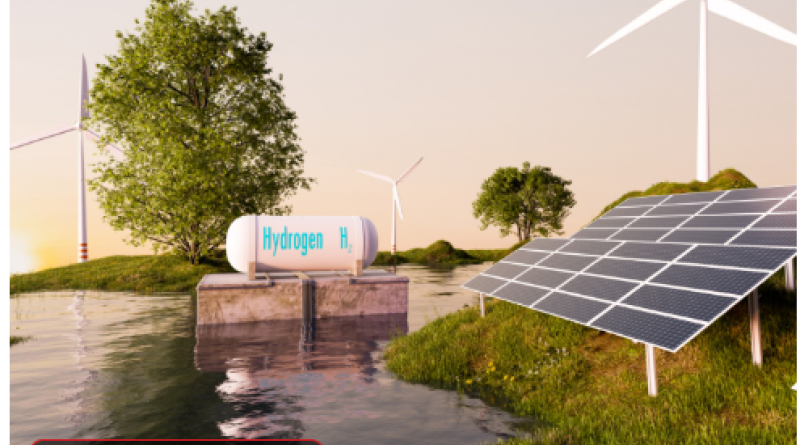
Hydrogen is a very old friend and a very good friend. It’s the most abundant element in the universe and its name means the “water (hydro) generator (gen)”.
A green hydrogen economy—hydrogen produced by water electrolysis using strictly renewables—has emerged as a cornerstone solution for decarbonisation of the economy, especially the hard-to-abate sectors and as a global export commodity in the envisioned zero-carbon energy economy. Jeremy Rifkin in the beginning of the century made headlines with his books The Hydrogen Economy: The Creation of the Worldwide Energy Web and the Redistribution of Power on Earth and The Third Industrial Revolution. The message was clear, hydrogen was here to stay…. sooner or later.
Almost 3 decades later green hydrogen generation, for all intends and purposes, is primarily hosted in scientific books, studies, business plans, articles and (hot air) speeches… So much so that the noun “hype” has begun accompanying references to green hydrogen.
Was Rifkin and others wrong about Hydrogen? Definitely not.
It is just that a number of parameters such as the efficiency of conversion, absence of a global network of hydrogen pipelines, storage considerations, but most importantly market rules, lead to demand uncertainty and cost disparity.
External costs of the fossil fuels industrial revolution
We are living in the last decades of the based-on fossil fuels industrial revolution. By the way, let me inform or remind you, that fossil fuels will be depleted, oil and gas in 4-5 decades, coal probably twice that time.
I would leave the overall assessment of the Industrial Revolution on qualified sociologists and historians, but I have very strong views (as more and more people do, these days) on its impacts on environment, biodiversity and above all climate change.
The extensive use of fossil fuels is responsible for catastrophic impacts across the globe. However, the fossil fuel industry has managed to avoid being held responsible and pay for them, with a market rule trick known as “External cost“.
An external cost (or negative externality) is a cost of an economic activity—such as production or consumption—that is not paid by the producer or consumer, but rather borne by third parties or society as a whole. Examples include pollution, noise, traffic congestion, and health damages. These costs represent a market failure because they are not reflected in the market price.
Here below are the of using Fossil fuels:
- Environmental pollution along the whole chain of utilisation: drilling/mining, transport, storage, burning.
- Biodiversity loss driven by fossil fuel extraction, combustion, and related climate change costs the global economy up to $25 trillion annually These damages include the destruction of ecosystems and vital natural services.
- Atmospheric pollution associated with fossil fuel use is responsible for the premature death of more than 7 million people around the world. Additionally, other health impacts from air pollution cost the global economy more trillions.
- The cost of Climate disasters is in the trillions and it will be growing annually
- Loss and damage: This is a term we should all get very familiar with, because we probably end up one day, seeking Loss and Damage compensation for our own family
Many trillions of damages are written off as “external costs”. And if that wasn’t enough Fossil fuels receive subsidies over and above their revenues:
- Fossil fuel subsidies: the IMF says we pay $5.2 trillion a year. Subsidies to fossil fuels support an industry that drives negative public health impacts, local environmental pollution from fossil fuel extraction and infrastructure, and climate change impacts and costs.
Green hydrogen as substitute for fossil fuels?
I think its clear that if we were to establish market rules which will respect the environment and human life, fossil fuels will be too expensive to touch and Green Hydrogen would be the talk of the town.
Unfortunately, we can’t do that, yet. On the contrary, since the new USA President took office we have a deep dive into more fossil fuels with the well-known philosophy of “Drill, baby drill” which recently has been “enriched” with the new dogma of “Mine, baby mine“, which is designed to serve the new business of “Clean beautiful, coal”.
These decisions spell catastrophe for millions of people all over the planet. Usually poor and marginalised people. Whether from the Global North which is 100% responsible for the climate change or from the Global South which has contributed negligibly to this disastrous development, poor, helpless people pay for these political and market decisions.
As early as 1929, the historian Christopher Dawson observed that even proponents of the so-called “new order” were beginning to recognise the inherent wastefulness of a system built on the irresponsible exploitation of natural resources. He noted that: “They have realised the wastefulness of a system which recklessly exhausts the resources of nature for immediate gain, which destroys virgin forests to produce halfpenny newspapers, and dissipates the stored-up mineral energy of ages in an orgy of stench and smoke,” in his Progress and Religion: An Historical Inquiry.
How right he was! This path is unsustainable and sooner or later it will lead to financial breakdown followed by societal breakdown. Scientists sounded the alarm on the dire consequences of continued inaction at a National Emergency Briefing in Central Hall, Westminster in London, warning on November 27, 2025 that we could be headed for “unprecedented societal and ecological collapse” .
Prophets of doom?
No, we all know, even Trump knows, in his heart of hearts, that we are heading in that direction and we are all hoping that it will be later rather than sooner, so that humanity will wise up in time to reverse course. And when it does that Green Hydrogen will be called to arms.
Hence let’s revisit hydrogen with a renewed positive approach.
Green hydrogen does not offer itself for small scale production, because of high CAPEX and OPEX, of energy conversion inefficiency and of high infrastructure costs. On the contrary large-scale production will bring into play economies of scale and make it even more economically feasible and this dictates MEGA scale projects.

What about a MEGA dual purpose project: supplying large-scale green hydrogen export and clean power for a data centre?
Let’s have a look at the most defining parameters.
Renewable energy resources
Kenya is endowed with a diverse mix of abundant inexhaustible renewable energy resources:
- Geothermal: Kenya’s geothermal potential exceeds 10,000MW, providing reliable baseload generation with high capacity factors (>90%).
- Wind: many areas in Kenya exhibit strong and consistent winds suitable for utility-scale wind generation. But imagine an mega offshore wind plant in the Indian Ocean feeding the hydrogen plant. Initial modeling results indicate a wind potential of between 20 and 76GW.
- Solar: parts of Kenya receive high solar radiation (insolation of 4–6 kWh/m²/day), supporting large PV deployment.
Water supply and location
For a MEGA scale plant, the demand on freshwater resources, could and would strain local water systems. Hence a coastal electrolysis site should be selected to leverage seawater desalination; desalination energy costs add minimally to the overall costs, compared to electrolysis energy demand costs.
Having chosen a coastal site also solves export logistics and the port of Mombasa will serve beautifully the purpose.
Hydrogen storage and conversion
For exportability, hydrogen must be converted into transport-friendly compounds. Two dominant pathways are available
- Green Ammonia (NH₃)
- Liquid Organic Hydrogen Carriers (LOHCs) and Methanol
Data centre integration
The dual-purpose project is intended to maximise economies of scale of the mega Green Hydrogen project. A hybrid system combining solar, wind, geothermal, battery storage, can provide resilience and reliability for a mega data centre (100+ MW).
The incorporation of fertiliser production for domestic hydrogen use could also be envisaged, but the long-term roadmap points toward export markets.
The ultimate goal: Maximising local added value and local economic development
While preliminary estimates of the feasibility of a Mega Green Hydrogen project of the GW scale, are very encouraging, this is not the end of the road. Such a project should not be just an opportunity for international investors. Exploiting Kenya’s indigenous energy resources, has to primarily benefit Kenya and its people. Investors while welcome, operate on the premise of maximising their own benefits.
Hence over and above the techno-economic feasibility study of a Mega Green Hydrogen Project of GW scale, a careful study of how to maximise local economic benefits, should be carried out. Such a study should include for example the maximum localisation of the project’s value chain (Renewable Energy Manufacturing and Service, Electrolyser Assembly & Manufacturing, Data Centre Development, Workforce and Skills Development, etc)
Developing human capital (engineers, technicians, operators) ensures that high-value jobs remain local. Partnerships with universities and TVETs for training in renewable energy, hydrogen technology and advanced manufacturing are essential to achieve this and increase the local added value of the project.
Also venturing in Green hydrogen and its derivatives can catalyse broader industrialisation in areas such as
- Fertiliser and Chemical Industries,
- Green Steel and Advanced Materials,
- Technology R&D Hubs
Conclusion
Kenya’s renewable energy resources, policy framework, and strategic vision position it well to develop a mega-scale green hydrogen industry. Dual use for exporting clean energy via shipping (primarily as ammonia or other derivatives) and powering a mega data centre is technically feasible.
Economic viability depends on a number of apparent factors, but above all in putting a market value on projects depending on the impacts they have on the environment, biodiversity and of course climate.
With targeted policy support and international collaborations, Kenya can leverage green hydrogen as a catalyst for sustainable industrialisation which will benefit the people of Kenya. ESI
About the authors
Prof Dr Ioannis Tsipouridis is a Senior Research Fellow at Strathmore University
Dr Jotham Njoroge is a Lecturer at the School of Humanities and Social Sciences at Strathmore University
Cover photo: [angkhanpt]©123rf.com