

Geopolitics and capital flows: How the Middle East conflict could shape investment in Africa
Short-term Middle East conflict may slow investment flows, but will it influence long-term capital into Africa?
Rising geopolitical tensions in the Middle East are beginning to ripple through global financial markets, prompting investors to reassess risk, capital allocation and emerging market exposure.
For Africa, the implications are complex. While short-term volatility may slow some investment flows, long-term capital providers still view the continent as a strategic destination for infrastructure and growth capital.
Development banks, sovereign wealth funds and private-equity investors broadly agree that the conflict’s impact on Africa will be felt less through direct exposure and more through global economic channels – particularly energy prices, inflation and financial market sentiment.
Every geopolitical disruption reminds Africa of the urgency of strengthening intra-African trade and financing its own development.
Benedict Oramah
Inflation and macroeconomic pressure
Multilateral lenders warn that the most immediate effect of the conflict will likely be transmitted through commodity markets, especially oil.
According to Kristalina Georgieva of the International Monetary Fund: “Geopolitical shocks tend to work through energy and food prices first. If conflict in the Middle East pushes oil prices higher, the ripple effects will be felt globally, particularly by emerging and developing economies.”
For many African economies that rely on imported petroleum products, sustained higher oil prices could lead to increased inflation, currency pressure and widening fiscal deficits. Such macroeconomic stress typically tightens financing conditions, raising borrowing costs for governments and companies seeking capital in international markets.
This dynamic has historically reduced global investors’ risk appetite, particularly for frontier markets.
As David Malpass (former president of the World Bank) has previously noted: “Global instability tends to tighten financial conditions, and that disproportionately affects developing economies that rely on external capital.”
For Africa’s infrastructure sector, where projects are often financed through a mix of concessional finance, development bank loans and private capital, higher global interest rates could slow deal pipelines and extend project timelines.
Development banks emphasise resilience
Despite these risks, development finance institutions continue to frame the situation as a reminder of the need for structural investment across the continent.
Africa’s infrastructure deficit remains one of the largest globally, spanning power generation, transmission networks, transport corridors and logistics infrastructure. For development banks, current geopolitical volatility reinforces the urgency of closing these gaps.
Akinwumi Adesina, former president of the African Development Bank, has repeatedly emphasised the importance of building economic resilience: “Africa must reduce its vulnerability to external shocks. The solution is to accelerate investment in energy, infrastructure and domestic value chains so the continent can build more resilient economies.”
In practice, this means development banks are likely to continue expanding blended finance structures, concessional funding and risk-mitigation instruments to crowd in private capital for large-scale projects.
For investors, such mechanisms remain critical in markets where currency volatility and sovereign risk can otherwise deter private investment.
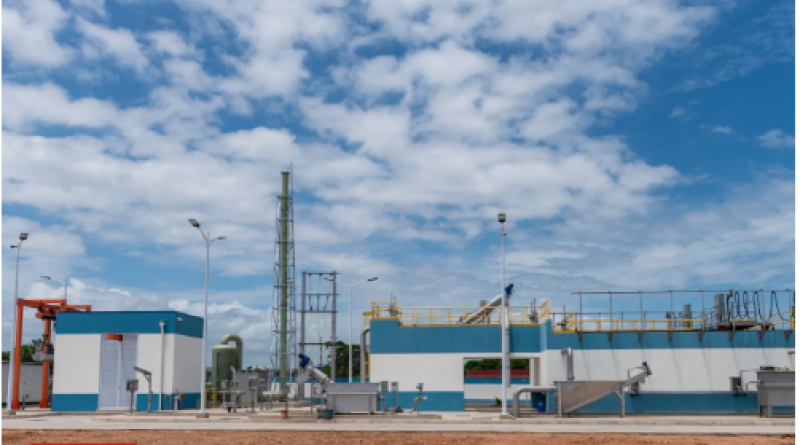
Cover photo: Sumbe Wastewater Treatment Plant in Angola.