

Fossil Fuel Phaseout Conference Could Herald ‘Coalition of the Willing’: Carbon Tracker
Next week’s fossil fuel phaseout summit in Santa Marta, Colombia could mark the arrival of a new “coalition of the willing”, showing that coordinated effort by multiple countries can “bring much-needed forward movement on climate change,” two authors with the UK-based Carbon Tracker Initiatives write in a blog post anticipating the event.
Hosted by Colombia and The Netherlands, the Santa Marta conference April 28-29 was triggered by the “empty deal” at last year’s COP30 climate summit in Belém, Brazil, where petrostates blocked progress on countries’ agreement at COP28 two years previously to move toward phasing out fossil fuels. Over the nearly two weeks that COP30 was in session, at least 82 countries said they would support a roadmap to a phaseout.
But in the end, “after two weeks of tough talking” and a last-minute intervention by Colombia, countries adopted a final decision that was “mainly a reiteration of stuff that’s already been agreed at previous meetings,” the British Broadcasting Corporation reported from the conference floor.
So Colombia announced it would host a First International Conference on the Just Transition Away from Fossil Fuels, and the Brazilian COP Presidency expressed its support for that initiative during the closing plenary.
Nearly six months later, with countries around the world facing a record energy price shock brought on by the American/Israeli war on Iran, “the solution to volatile and expensive fossil fuels is not more volatile and expensive fossil fuels,” write Carbon Tracker’s policy and government affairs adviser, Richard Folland, and responsible investment expert, Niall Considine. So it’s surprising “that many politicians and commentators in Europe and elsewhere continue loudly to lobby for more exploration and production of oil and gas—not only as the quick fix but as the longer-term policy approach.”
The alternative—a roadmap for a fossil fuel phaseout—will be “rigorously examined” in Santa Marta.
“These are testing times for climate action,” Folland and Considine state. So the Santa Marta conference is meant “not only to demonstrate that international cooperation is alive and kicking; but that practical solutions can be found about how to accelerate the transition—and with many Global North countries recognizing their historical responsibilities through their participation.”
Those discussions could point toward a “new multilateralism”, they add, “where progressive countries in a coalition of the willing can cooperate on global issues” and “show in practice that the whole is greater than the sum of the parts.”
Cover photo:
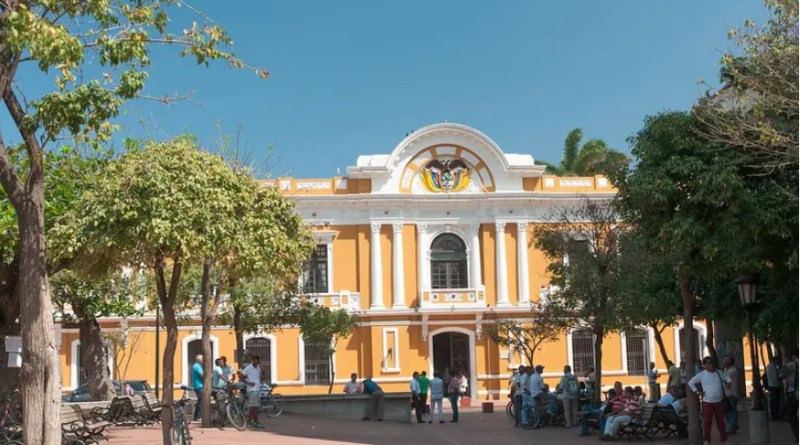
Plaza Bolivar, Santa Marta, Colombia, travelmag.com CC BY 2.0/flickr