

Copper Surge Is Windfall for Congo, Zambia
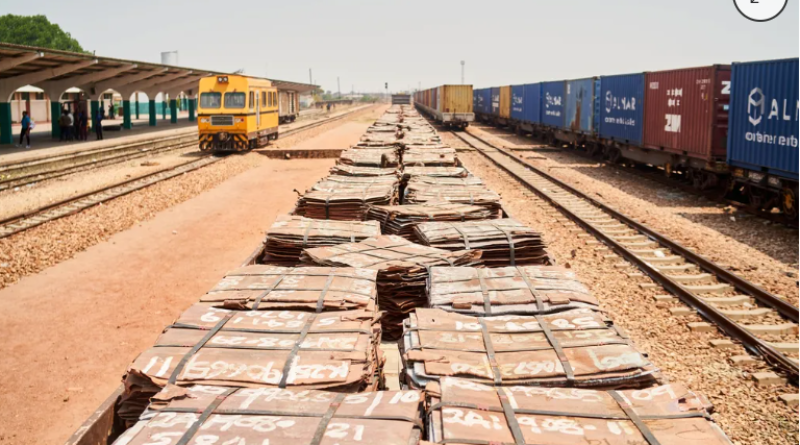
Copper's record surge has handed Zambia and the Democratic Republic of Congo an opportunity of a lifetime.
The neighbors are far and away Africa’s biggest producers of the metal, which generates the bulk of their exports and a big slice of government revenue. Prices have jumped almost 50% since the start of 2025 and this year smashed through $13,000 a ton for the first time, providing a significant boost to the countries’ finances.
Concerns that President Donald Trump’s administration may introduce tariffs on refined copper, which is used in wires and cables, have triggered a rush in shipments to the US. America holds about half of global inventories of the metal, according to Swiss bank UBS.
“Inventories used to act as a buffer, but now they’re locked in the US,” said Li Xuezhi, head of research at Chaos Ternary Futures. “So the buffer is gone and everyone will have to scramble.”
Congo’s copper production has tripled over the past decade following a surge in investment, making it the world’s biggest supplier after Chile. Zambia aims to replicate that success and more than triple its output by the early 2030s.
Optimism is running high that copper’s rally has some way to go, with traders anticipating greater demand from high-growth sectors like renewable energy, data centers and power grids. Supply will also be constrained by underinvestment in new mines and disruptions at existing operations.
Investors are taking note. Congo’s franc gained almost 28% against the dollar last year, while Zambia’s kwacha advanced 26% and yields on its dollar bonds fell to record lows.
The challenge confronting the governments of both nations will be to put any additional revenue to good use and ensure citizens benefit fully from the opportunities afforded by their growing importance in a swiftly reordering global economy.
Key stories and opinion:
Copper Surges to Fresh Record as Inventories ‘Locked in the US’
Copper Lifts Zambia’s Kwacha as Africa Gains From Metals Rally
US Vows Over $1 Billion for Congo Critical Minerals Supply Chain
How a Copper Crunch Is Looming Just as AI Boom Hits: QuickTake
Hot Metals Are Exposing the Fossil Fuel Fantasy: David Fickling
News Roundup
Ethiopia’s sole eurobond rallied after the government reached an agreement in principle with bondholders on a restructuring that would impose a relatively modest haircut on the $1 billion note it defaulted on two years ago. The East African nation plans to issue a new $850 million bond after factoring in a 15% discount on the original 2024 security, according to White & Case, which represents the borrower.
Senegal’s dollar bonds led gains across emerging markets, driven by upbeat government remarks on the prospect for a new International Monetary Fund program and investor interest in its local debt market. The West African nation’s debt has rallied since the finance minister last week suggested progress had been made in winning new funding from the IMF. The Washington-based lender suspended its $1.8 billion facility in 2024 after the government discovered $7 billion in hidden borrowing.
Gabonese President Brice Oligui Nguema fired his finance minister, Henri-Claude Oyima, days after the nation’s credit rating was cut deeper into junk. Thierry Minko was named as the minister of economy, finance and debt, the presidency said. Nguema, who ousted President Ali Bongo in an August 2023 coup, has presided over slowing slowing economic growth and a widening fiscal deficit. Fitch Ratings cut the nation’s credit rating to CCC- from CCC last month.
Zimbabwe remains committed to curbing inflation, but plans to shift the focus of monetary policy to place more emphasis on managing the money supply, the central bank said. Its new five-year strategy characterized the change as a move from a tight to a “prudent” monetary policy thrust. It didn’t specify what this would mean for interest rates, but noted that businesses had complained about high borrowing costs.
Emerging-market stocks hit a fresh intraday record on Tuesday as investor focus shifted from geopolitical risks posed by the US intervention in Venezuela to global economic data. MSCI’s benchmark EM equities index rose almost 1%. Chinese stocks climbed to multi-year highs, fueled by sustained optimism over the country’s AI sector and emerging signs of an economic recovery.
Ghana’s currency, the cedi, was Africa’s star performer against the dollar last year, gaining almost 41%, followed by Congo’s franc, Zambia’s kwacha and South Africa’s rand. Ethiopia’s birr slumped 18%, making it the continent’s biggest loser against the greenback.
Cover photo: Bundles of copper plates at a train station in Kapiri Mposhi, Zambia.Photographer: Zinyange Auntony/Bloomberg