

Congress set to reject Trump’s major budget cuts to NSF, NASA, and energy science
The U.S. Congress has delivered another rebuke of President Donald Trump’s plans to slash this year’s budgets of several science agencies. Today, lawmakers hammering out final bills covering the National Science Foundation (NSF), NASA science, and Department of Energy (DOE) research programs unveiled an agreement to spend very close to current levels.
The three appropriations bills were negotiated by a panel of senators and members of the House of Representatives. The proposed spending package would shrink NSF’s $9.06 billion budget by 3.4% this year, or $300 million, compared with Trump’s request for a 55% reduction. Its research account would hold steady at $7.18 billion and its education programs, which Trump sought to essentially eliminate, would receive $938 million. However, that total is $180 million less than NSF received in 2025.
At NASA, science missions would receive $7.25 billion, $84 million less than this year. That 1.1% dip compares with the 47% cut to its programs that Trump wanted. The space agency’s education activities, which Trump sought to eliminate, would receive $143 million, the same as last year.
The budget for DOE’s Office of Science would actually grow by almost 2% this year, from $8.24 billion to $8.4 billion. Trump had wanted to lop off more than $1 billion. Appropriators were more amenable to the president’s request to slash the Advanced Research Projects Agency-Energy (ARPA-E), tasked with funding high-risk ventures. ARPA-E’s budget for this year is slated to drop by $110 million, to $350 million; Trump had wanted to shrink it to $200 million.
The three appropriations bills released today only cover a portion of federal spending. Legislators hope to get them passed as a “minibus” spending package while they continue work on bills for other agencies, including the departments of Defense and of Health and Human Services, which funds the National Institutes of Health. All those agencies are now operating under a temporary spending freeze. That agreement expires on 30 January, however, meaning Congress will need to move quickly to avoid another government shutdown.
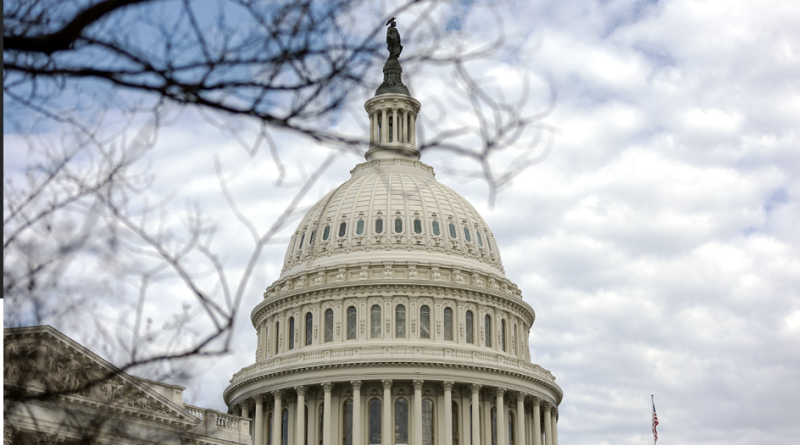
Cover photo: The latest spending package drafted by Congress protects several research agencies