

From complexity to clarity: Master grid feeding system design in minutes
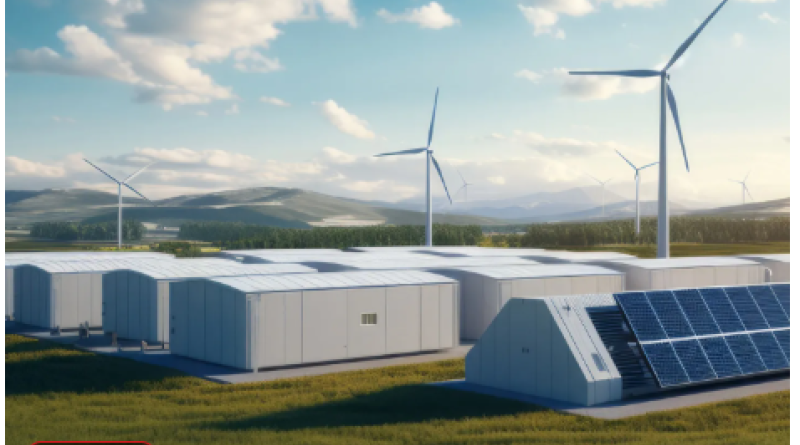
In this Q&A, experts from ABB share insights on grid feeding system designs
As Distributed Energy Resources (DERs) scale globally, designing grid-feeding protection systems that ensure safety, compliance, and grid stability is now crucial.
Protection schemes, regional standards, and fast project workflows must align seamlessly to keep pace with demand.
In this Q&A, experts from ABB, a global leader in electrification solutions for energy transition, share insights on grid feeding system designs. We ask Solar Solution Manager Flurina Heuberger, Product Marketing Specialist: ABB South Africa, Elvis Khumalo, and Analyst Maciej Maselek how ABB partners are succeeding in this fast-changing landscape.
What impact do DERs have on the grid?
Flurina: Rising DER sources are reshaping grid dynamics and challenging existing infrastructure.
Grid-feeding protection prevents faults and islanding, but adapting to grid codes and varying infrastructure and architectures is time-consuming. This is why designing flexible solutions is key to maintaining grid stability while keeping projects on schedule.
What are the challenges of integrating DERs in the African region?
Flurina & Elvis: South Africa, for instance, is facing one of its biggest energy sector challenges: integrating a rapidly growing installed base of distributed energy resources into an already strained electricity grid.
Grid‑connection capacity has long been a bottleneck, but the country has now launched a major upgrade program that includes new long‑distance transmission lines and expanded large-scale transformer capacity. This decade‑long effort aims to ease severe congestion, address structural capacity constraints, and lower barriers to connecting new renewable projects.
Although national loadshedding has been suspended since late March 2024, load reduction remains common in areas where local networks are at risk of overloading.
These targeted interventions are used to protect vulnerable infrastructure from failure. In this context, grid‑feeding systems can significantly enhance the protection and stability of installations, helping the energy system cope more effectively with periods of high stress.
Why is automatic disconnection so critical when integrating DER into the grid?
Flurina: When DERs remain connected during a grid fault, they can magnify the problem instead of helping solve it.
If a small utility grid issue occurs and DERs continue to pump power into an unstable system, it can escalate into a major disruption. Grid-feeding systems detect voltage and frequency deviations instantly and isolate the DERs, preventing cascade failures and protecting both grid stability and worker safety.
How does the Application Configurator speed up the selection of grid feeding systems?
Maciej: Selecting the right products for grid feeding systems can be time-consuming and complex. Engineers often need to navigate extensive datasheets, technical catalogues, and multiple product families. This effort becomes frustrating when system requirements are well understood, but identifying the matching products from hundreds of options is not easy.
ABB’s Application Configurator transforms this experience. Instead of spending hours manually evaluating protection devices, interface relays, and other required products, the tool enables you to generate a complete and validated bill of materials in just minutes.
Through a guided workflow, it simplifies every step of the design process. It reduces engineering complexity, minimises the risk of mis-sizing or compatibility errors, and removes the need to constantly cross-reference multiple catalogues.
Based on the grid feeding system parameters you enter (such as grid code standards, generation power, backup and interface devices, inverter details, short-circuit levels, and connection configuration), the configurator automatically proposes the optimal electrical architecture using ABB’s full product portfolio.
It ensures proper grading, selectivity, and protection coordination across the entire grid feeding system. The whole process becomes streamlined, accurate, and completely free of guesswork.
How does guided selection work in Application Configurator?
Maciej: Application Configurator simplifies configuration through four simple steps. Users provide key system inputs, and the configurator automatically filters out irrelevant or incompatible products based on these parameters.
Leveraging ABB’s built-in expertise and pre-validated combinations, the tool recommends the most suitable protection devices, interface relays, disconnecting devices, surge protection, accessories, and communication or monitoring options for compliant grid-feeding systems.
The configurator automatically checks critical technical aspects such as selectivity, protection coordination, short-circuit withstand ratings, interface protection requirements, and compatibility between products. This reduces design errors and ensures a safe, reliable, and standards-compliant grid feeding system.
Users can still adjust quantities, swap components, or add accessories at any stage, and the configurator instantly updates the recommendations. The result is a complete, validated bill of materials tailored specifically to your grid feeding project.
How much does Application Configurator cost?
Maciej: Application Configurator is free for anyone to use, whether you’re an existing ABB customer or new to ABB solutions. Simply create an account, input your project details, and start configuring immediately. No prior ABB relationship is required, and there is no cost.
Register for ABB’s webinar, “Design Grid-Feeding Protection Systems,” on April 15 to see how Application Configurator simplifies and accelerates the design of compliant grid-feeding protection systems that ensure safety, grid stability, availability, and power continuity.
About the experts
Flurina Heuberger is a Solution Product Manager at ABB Electrification, where she focuses on business strategy and innovation in the Solar, BESS, and Hydrogen Sectors.
Maciej Maselek is the Functional Analyst for the Application Configurator at ABB Electrification. With his expertise as a functional Analyst, he ensures a seamless user experience and efficient application configuration.
Elvis Khumalo is the Product Marketing Specialist for Low Voltage Products at ABB Electrification in South Africa, specialising in motor control, protection products and solutions across various industry segments.
Cover photo: In this Q&A, experts from ABB share insights on grid feeding system designs