

The Answers are Blowing in the Wind

A district court overturns the moratorium on offshore wind, deciding two key legal issues along the way.
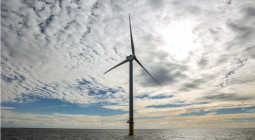
A week ago, a Massachusetts District Court invalidated the moratorium on permits for offshore wind. The moratorium had been imposed by the Interior Department, giving no reason except that President Trump had ordered the action. The court’s decision is a welcome check on Trump’s irrational vendetta against wind power. It also involves two important, broader issues.
The first issue is whether the Administrative Procedure Act (APA) applies when an agency carries out a presidential order. The APA subjects agency actions to procedural and substantive requirements. Under the APA, a court can review whether an agency has abused its discretion or acted “arbitrarily or capriciously.” It also grants judicial review of adverse agency decisions. But the APA applies to agencies, not the President. When Congress gives the President the power to make a decision, which the agency merely executes, any abuse of discretion or arbitrariness can be laid at the President’s feet rather than the agency’s. But when Congress has charged the agency with a decision, does presidential direction mean that the agency no longer has to defend the substance of the decision?
There is a constitutional issue lurking in the background here. Can the President direct agencies on how to exercise their statutory authority, leaving them no legal discretion? Or is he limited to firing administrators after the fact when they violate his wishes? A strong form of the unitary executive theory would say that he is Commander-in-Chief of the entire executive branch. That argument ignores an obvious fact: the Constitution makes the President Command-in-Chief of the military, not the entire government.
Even if we assume that that the President does have the directive power, there doesn’t seem to be any constitutional barrier to requiring the government to justify its decisions based on the evidence even when the decision about how to apply a statute is made by the President. The question is whether Congress intended to do so in cases where it did not delegate the decision to the President. As the district court pointed in the wind turbine case, APA requirements would be meaningless if the President could avoid them simply by adopting a policy position as his own. The APA was meant to impose limits on the administrative state, and it seems unlikely that the Congress meant to make those limits optional.
The second broad issue in the wind turbine case involves the remedy. The Supreme Court has limited universal injunctions as a remedy to illegal government actions. The question is whether that decision changes the rules in administrative law cases, where the APA authorizes courts to “vacate” agency actions. Traditionally, that has meant setting aside the agency action as to everyone, not just the plaintiff. The district court rejected the government’s argument and vacated the moratorium completely, not just as to the current plaintiffs or currently pending permits. It seems clear that there are at least five votes on the Supreme Court for that result (the liberals plus Roberts and Kavanaugh), and lower courts seem to agree.
To summarize, the Trump Administration advanced two far-reaching arguments in this case. One is that, when the President directs how an agency should exercise its statutory authority, normal limits on agency action don’t apply. The other is that, even if an agency action is illegal, it must remain in effect against everyone in the world except the plaintiffs who challenged it in a specific case. We can expect the government to keep pressing these points, up to and including Supreme Court review. But the district court in the offshore wind case, along with other lower courts, correctly rejected these arguments.
Cover photo: By Shutterstock