

Annual Tree Cover Loss Data Explained
Every year, we analyze annual data on tree cover loss to produce insights on the state of the world’s forests. You can read the latest on the world’s forests in the Forest Pulse, and explore more findings across the Global Forest Review (GFR) indicators. But what does the data measure and how does it compare to these other official estimates of deforestation? Here is what you should know about the data.
What is tree cover loss?
The tree cover loss data1 captures disturbances to tree cover, defined here as woody vegetation with a height of at least 5 meters — learn more about tree cover in Key Terms and Definitions.
Tree cover loss includes disturbances that clear at least half of tree cover within a 30-meter pixel, and are detected on an annual basis for each calendar year. Only the first year of loss that occurs after the year 2000 is recorded, meaning that if multiple disturbances occur over time within the same pixel, only the first disturbance event is included.
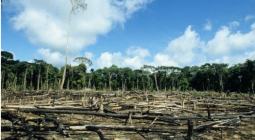
Disturbances include mortality or removal of trees in natural forests as well as in wood fiber or tree crop plantations, agroforestry, urban parks or other areas with tree cover. Loss of tree cover can be due to human causes such as clearing of trees for agriculture, logging or wood harvest — all of which can be legal or illegal — or due to natural events such as storms, wildfire, landslides, flooding or insect outbreaks. These losses can also be permanent or temporary, meaning that forests may regrow or recover following disturbances.
The tree cover loss data can be filtered by a baseline data set to focus on the most concerning losses, such as primary forest areas
How is tree cover loss different from deforestation?
Tree cover loss is not always deforestation, which typically refers to a human-caused, permanent change from forest to another land use. Some forms of human-caused tree cover loss, such as conversion of a natural forest to agricultural land, are widely considered to be deforestation, while other forms, such as timber harvesting in plantation forests or natural disturbances, are frequently not — read more about the differences in Key Terms and Definitions.
In some cases, such as in the Deforestation and Restoration Targets Tracker , we use a proxy for deforestation. That proxy uses data on the drivers of tree cover loss and includes all tree cover loss globally from permanent agriculture, hard commodities (mining or energy infrastructure) and expansion of settlements and infrastructure, as well as loss in humid tropical primary forests from shifting cultivation. Temporary losses, such as from fires or logging activities, are not included.
What baselines do we use to measure tree cover loss?
Tree cover loss statistics throughout the GFR (unless otherwise noted), and by default on Global Forest Watch, use a baseline of tree cover with greater than 30 percent canopy density in the year 2000. This means that loss within this 30% tree canopy density area is included, but loss in lower tree canopy densities or in areas that regrew since the year 2000 are not included.
In the Forest Pulse, we largely focus on tropical primary forest loss because tropical forests experience the vast majority (94%) of the world’s deforestation, and loss in those areas has huge impacts on biodiversity and carbon storage. Even if these losses are eventually reversed, it will take decades for these habitats and carbon stocks to recover, and permanent biodiversity loss may occur.
For these analyses, we use data on humid tropical primary forest extent in 2001 as a baseline. In this data set, primary forests are defined as mature humid tropical forests that have not been completely cleared and regrown in recent history, and tree cover loss within this baseline excludes loss in young secondary forest, plantations or tree crops.
What does tree cover loss from fires include?
We report specifically on tree cover loss due to fires because fires are often one of the single biggest drivers of loss globally. The tree cover loss from fire data distinguishes fire-driven loss from all other drivers of loss for each 30-meter tree cover loss pixel by using a machine learning model to detect burned trees.
The data captures natural wildfires and intentionally set fires that result in the direct loss of tree cover, including escaped fires started by humans for purposes related to agriculture, hunting, recreation or arson. However, instances where trees are first felled and the residue vegetation is later burned are not included since the initial driver of loss is mechanical removal.
How has the tree cover loss data improved over time, and how does this affect comparability between years?
Algorithm adjustments and better satellite data have improved the tree cover loss data set over time. The original algorithm was developed for the years 2001-2012 and assigned loss to a single year in that block of time. Subsequent improvements were developed for the following time periods:
- 2013-2014: Short-interval model, adding the years 2013 and 2014 by assessing changes within a 4-year interval.
- 2015-2017: Landsat 8 data incorporated; annual change detection algorithm applied using regionally and locally calibrated models.
- 2018-2022: Collection 2 Landsat Analysis Ready Data incorporated, as well as improved change detection algorithm using locally calibrated models.
- 2023-2024: DIST-ALERT land disturbance data set incorporated to assist with late season changes.
-
Together, these improvements have resulted in increased sensitivity in detecting changes such as selective logging, small-scale shifting cultivation and fires. The addition of DIST-ALERT has also improved the detection of late season loss that would otherwise be missed until the following year due to limited satellite data or cloud cover. In addition to methodological changes, variations in satellite image availability (which has generally increased over time) also mean there are inconsistencies with the quality and number of images available to capture data each year.
-
To address these inconsistencies, we assess the three-year moving average to interpret long-term trends, and also disregard the increase in loss post-2012 in places likely to be impacted by these changes, like Central Africa and tropical Asia.
How does tree cover loss compare to other types of monitoring systems?
There are important definitional and methodological differences between the tree cover loss data presented in the GFR and national monitoring systems — such as PRODES in Brazil and SIMONTANA in Indonesia. These data sets have different strengths and purposes. They can present complementary information that can help us better understand different types of changes within forests, but it is important to understand the differences before comparing them. While not a complete overview, some common differences include:
- Definitions of loss and forest monitoring baseline: While the tree cover loss data includes the loss of any type of tree cover from any cause, national monitoring systems are often more restrictive in the types of disturbances that are included in their statistics and in their baseline used for forest monitoring because they aim to measure deforestation according to official definitions. For example, Brazil’s PRODES measures clearcut deforestation of natural forests for agriculture, pasture and mining, but does not include selective logging or fire.
- Minimum area measured: While tree cover loss uses 30-meter pixels, national monitoring systems may use a minimum mapping unit that is larger; for example, both PRODES and SIMONTANA use a minimum mapping unit of 6.25 hectares.
- Reporting period: While the reporting period of the tree cover loss data covers the calendar year, both PRODES and SIMONTANA use a different reporting period — PRODES covers August to July, while SIMONTANA covers July to June.
- Methods: While various monitoring systems may use satellite imagery as input data, the methods used to detect loss may vary. The tree cover loss data is produced using an automated algorithm to detect loss based on Landsat satellite imagery. However, both PRODES and SIMONTANA use manual visual interpretation of satellite imagery to delineate loss.
These differences are important to consider when interpreting statistics between monitoring systems and often result in differences in the area of loss reported annually from the various systems.