


Zero-emission vehicles reshape global transport outlook
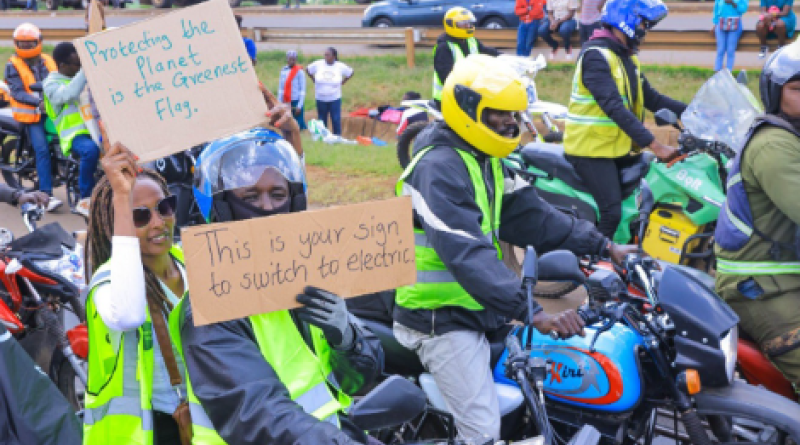
The ICCT report concludes that transitioning to ZEVs remains the most effective pathway to decarbonise the sector
Global road transport emissions could have peaked as early as 2025, driven by accelerating uptake of zero-emission vehicles (ZEVs) and stricter regulations in major markets, according to a new study by the International Council on Clean Transportation (ICCT).
The findings are set out in Vision 2050: Update on the Global Zero-Emission Vehicle Transition in 2025, the fourth annual assessment tracking the impact of ZEV policies and market developments on vehicle sales, energy use and emissions through to mid-century.
Road transport currently accounts for nearly one-fifth of global carbon dioxide emissions, making it a critical sector for achieving the Paris Agreement goal of limiting global warming to well below 2°C.
Zero-emission vehicles drive decarbonisation ambition
The ICCT report concludes that transitioning to ZEVs remains the most effective pathway to decarbonise the sector, with recent policy adoption delivering measurable gains – but leaving a substantial ambition gap.
Under the study’s Baseline 2025 scenario, which reflects policies adopted as of August 2025, global road transport emissions are projected to peak by 2025 before entering a sustained decline.
This represents a significant improvement on earlier trajectories, with the report estimating that 22 billion tonnes of CO2-equivalent emissions could be avoided cumulatively through 2050 compared with a 2021 policy baseline.
If governments fully deliver on their stated but non-binding targets – modelled under the report’s Momentum scenario – a further 11 billion tonnes of emissions could be avoided. However, the analysis finds that this still leaves a gap of 53 billion tonnes compared with an Ambitious scenario aligned with the Paris Agreement.
Electric vehicle growth continues
Electric vehicle (EV) market share continues to expand rapidly across both passenger and commercial segments. While China remains the world’s largest EV market, the fastest growth between 2024 and 2025 occurred in emerging economies including Vietnam, Thailand, Turkey and Indonesia.
The report attributes this to supportive fiscal policies, domestic manufacturing capacity and cost-competitive Chinese imports.
China and the EU also lead in electrifying medium- and heavy-duty trucks. Several EU countries recorded electric medium-duty truck sales shares exceeding 50% in the first half of 2025, while China achieved double-digit sales shares in the heavy-duty segment.
Despite strong market momentum, the report notes a slowdown in new policy adoption over the past year.
Between September 2024 and August 2025, no major new supply-side regulations were introduced. Instead, jurisdictions such as the EU and the UK introduced short-term flexibilities, while a new US administration moved to roll back federal and state-level vehicle regulations.
Africa’s low vehicle ownership rate – just 43 vehicles per 1,000 people, compared with a global average of 197 – presents what analysts describe as a leapfrogging opportunity, allowing countries to bypass conventional internal combustion-based transport systems.
The ICCT warns that if proposed rollbacks in the US proceed, the country risks becoming a global outlier.
Under the Momentum scenario, US emissions are projected to rise above baseline levels, reducing its emissions gap closure from 60% under Baseline 2025 policies to just 14%. By contrast, Canada and the EU are projected to close around 90% of their emissions gap under the same scenario.
Globally, the report finds that emissions and liquid fuel consumption from road transport could peak as soon as 2025 in all but the most conservative scenarios. However, the timing of that peak remains sensitive to growth in vehicle activity, particularly in fast-urbanising regions.
The EV sector in Africa
While Africa is not among the largest contributors to global road transport emissions today, the continent’s motorisation trajectory places it at the centre of future transport decarbonisation efforts.
The ICCT analysis highlights emerging markets as critical to closing the remaining ambition gap, particularly as heavy-duty vehicle electrification lags passenger EV uptake.
That challenge is matched by growing opportunity. Africa’s electric vehicle market is projected to expand from $0.45 billion in 2025 to $4.2 billion by 2030, representing annual growth of more than 56%, according to market data published by EV24.africa.
Growth is being driven primarily by electric two- and three-wheelers, which are expected to record annual growth rates approaching 60%, alongside supportive government policies and falling battery costs.
Ethiopia, Rwanda, Kenya and South Africa are emerging as early leaders, backed by measures including
- tax incentives,
- bans on internal combustion engine imports and
- investment in charging infrastructure.
As of May 2025, more than 30,000 EVs were already in operation across the continent, with commercial fleets – including motorcycle taxis, buses and delivery vehicles – accounting for the bulk of demand. In Sub-Saharan Africa, electric two-wheelers are projected to capture between 50% and 70% of all sales over the coming decades.
Africa’s ‘leapfrogging’ EV opportunity
Cost competitiveness is a key driver. In Kenya, operating an EV is estimated to be between 47% and 83% cheaper per 100 kilometres than a fuel-powered equivalent, strengthening the business case for high-utilisation commercial users.
Battery-swapping networks, solar-powered charging and DC fast-charging hubs are increasingly being deployed to address infrastructure constraints.
Africa’s low vehicle ownership rate – just 43 vehicles per 1,000 people, compared with a global average of 197 – presents what analysts describe as a leapfrogging opportunity, allowing countries to bypass conventional internal combustion-based transport systems.
The continent’s reserves of critical minerals such as cobalt and platinum further position it as a strategic player in the global EV value chain.
Meanwhile, the ICCT report says that while recent policy action has placed global road transport on a downward emissions trajectory, aligning fully with Paris-compatible pathways will require faster conversion of non-binding targets into enforceable regulations, expanded standards for heavy-duty vehicles and sustained momentum in emerging markets, including Africa.
Cover photo: Riders aboard electric motorcycles took part in a parade highlighting e-mobility ahead of the E-mobility Conference and Expo held in Nairobi in 2025. Source: Kenya Power/X