

Understanding the Energy Dominance Agenda

What does this key concept in Trump’s energy policy actually mean?
The term “energy dominance” gained currency in Trump’s first Term. It’s now a cornerstone of the Administration’s energy policy. It’s the motivation behind deregulating fossil fuel production and use, as exemplified by Trump’s Day One executive order on “Unleashing American Energy.” It’s also the rationale for suppressing alternative sources of energy like renewables. And it’s the major justification given for US subjugation of Venezuela. What does this concept mean? Putting aside environmental issues like climate change, does it make sense as a goal?
Trump fleshed out the concept of energy dominance when he proclaimed October to. Be “National Energy Dominance Month.” (He forgot to issue the proclamation until halfway through the month, meaning it got even less attention than it might have otherwise received. Still, it unpacks some of his thinking in a useful way. Below, I’ll try to tease out answers to some of the key questions.
What kinds of energy are covered?
The first question is, what kind of energy are we talking about? The proclamation says that the Administration “proudly recommits to harnessing the liquid gold and minerals under our feet and bountiful resources in our waters, forests, and fields, achieving American energy dominance, and forging a future defined by three simple words: ‘Drill, baby, drill.’”
The key phrases are “the liquid gold and minerals under our feet” and “bountiful resources in our waters, forests, and fields.” (This now seems to also include gold and minerals under Venezualan feet as well.) In energy terms, “liquid gold and minerals” means oil and coal. If you wanted to be fussy, it wouldn’t include natural gas (not a liquid or a mineral), but obviously Trump did mean to include that. The U.S. isn’t known for having huge uranium deposits and basically doesn’t produce much, so nuclear power arguably may not be included (although Trump does refer to it later in passing).
How are resources in “waters, forests, and fields” relevant to energy? Water is used for hydro, forest is used for biomass (wood chips), and fields are used for biofuels, prominently including corn ethanol. This definition seems to include almost everything except wind, solar, and possibly nuclear and geothermal.
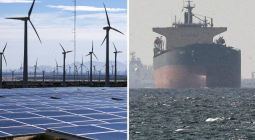
Trump’s view of U.S. resources is oddly downward looking. There may be wealth beneath our feet, but what about the resources over our heads? This earthbound focus does not seem fully consistent with the idea of exploiting natural resources, since the U.S. has a lot of sunshine (especially in the Southwest) and a lot of wind (especially on the plains).
What does dominance mean?
This isn’t clearly defined. The proclamation touts that the U.S. was #1 in oil and gas production in his first term. His goal is now to “restore the United States as a global energy superpower.” Trump also refers to “is defined by maximum production, maximum prosperity, and maximum power.” Note that these goals aren’t totally consistent – if we wanted to maximize oil revenue, we join OPEC and cut production, thereby increasing global energy prices.
What would be the benefits of energy dominance?
Trump speaks of a goal to “bring back American energy dominance, uplift the American worker, protect the American industry, cherish American resources, and make America the most prosperous country on the face of the Earth.” So clearly, he views energy dominance as crucial for national wealth. The proclamation also speaks of energy dominance as important for national security, although it does not explain why. Elsewhere he has connected bountiful energy with the electricity needs of AI, which he views as crucial for national security.
I actually think that fossil fuels have MAGA appeal for another reason: they’re considered really masculine. Coal miners and roughnecks may have tough, dangerous jobs, and fossil fuel generation is noisy, polluting uses, and uses big shiny machines. All things that a small boy might associate with manliness. But I’m going to stick to grownup justifications for energy dominance.
Would maximizing fossil fuel be a huge boost to the economy?
This is complicated. IF we again put aside environments impacts, having valuable resources makes a country richer, all other things being equal. If we’re talking about huge increases in energy production, however, all other things aren’t equal.
The first question is whether this is the cheapest form of energy available. If it is, then that directly benefits U.S. consumers and helps companies that use a lot of energy, such as heavy industry and AI. But fossil fuels are probably not the cheapest form of energy in many applications anymore.
Putting that aside, we have to remember the “all things being equal” proviso. Under some circumstances, mineral wealth can hurt overall economic growth. It can strengthen the currency, making imports cheaper and discouraging production of other exports such as manufactured goods. It can also siphon off capital that might have gone for other purposes, and mineral-based national wealth (gold and oil) is often associated with more corruption and less democratic governments. Economists call this the “resource curse.”
Notably, investors aren’t convinced that Trump’s policies are going to produce great wealth. Oil stocks today are almost exactly where they were the day he took the oath of office.
Opportunity Costs of Backing the Wrong Horse
There’s also the matter of opportunity costs. Going “all in” for fossil fuels also means suppressing newer energy forms involving wind, solar, and battery storage. Even if we assume that those technologies are not yet more economically attractive than fossil fuels, the trend in those industries has been one of sharply declining costs, increased deployment, and better performance. Improvements in fossil fuel technologies has generally been much slower because those technologies are more mature. We are already seeing some of the effects of this in the form of static global demand for petroleum-based vehicle fuels.
The economic risk of Trump’s strategy is that it could turn out like an “equine dominance” strategy a century ago. Having the most and least expensive horses and mules didn’t turn out to be the military and economic benefit it might have seemed when Trump’s hero McKinley was President. And it would be especially damaging if it involved suppressing gas engines to ensure that they don’t compete with horses.
The economic risk of placing all your chips on the wrong technology comes with a corresponding national security risk. China is pursuing its own energy dominance agenda based on renewable energy, battery storage, and electric vehicles. if they turn out to be right and Trump is wrong, they get to dominate world energy markets and have the most advanced technologies for their military, such as drones that rely on batteries and electric motors.
Considering all of this, make huge bets on fossil fuels seems like risky business, with a big risk of making the country poorer and less secure. I’ve put aside environmental issues in this analysis. But those are also obviously important in considering the costs and benefits of fossil fuels. Coal is particularly bad, but all fossil fuels have outsized impacts on public health and the natural environment. That makes the energy dominance agenda all the more dubious.
Cover photo: Dan Farber has written and taught on environmental and constitutional law as well as about contracts, jurisprudence and legislation.