

Milestone for utility and municipality smart meter security as STSA and DLMS UA partner on legacy foundation
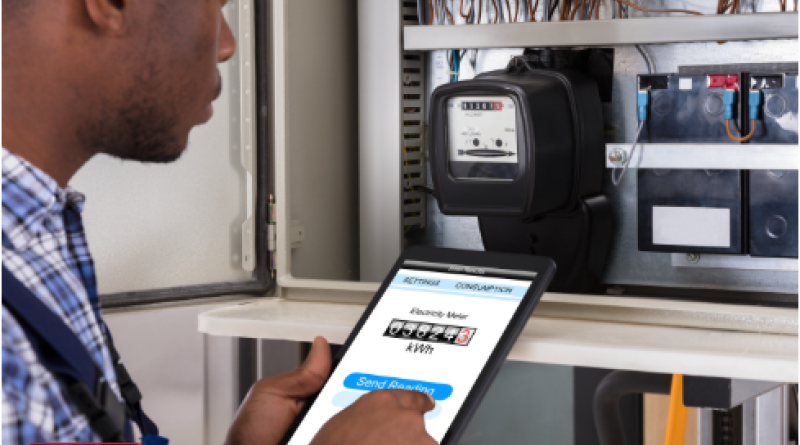
The long-term sustainability of prepaid electricity meter systems depends on security, interoperability and lifecycle governance
A partnership between the STSA and the DLMS UA is set to advance interoperability, strengthen smart prepayment integration, and deliver greater value to the global metering ecosystem by aligning secure data exchange with trusted prepayment systems.
What does this partnership mean for you and your metering assets?
The long-term sustainability of prepaid electricity meter systems depends on three foundational principles: security, interoperability and lifecycle governance.
The Standard Transfer Specification (STS) was developed specifically to address these requirements on a global scale, and its continued evolution demonstrates how standards-based design mitigates systemic risk rather than creating it.
For more than 30 years, STS has powered energy access across more than 120 countries, ensuring that every token, transaction and customer interaction is secure and reliable. Far from being a legacy system, STS is the foundation upon which the smart metering era is being built.
It safeguards millions of existing meters while empowering utilities to embrace digital transformation with confidence. In a world that demands interoperability, transparency and trust, STS remains the preferred open standard.
Cryptographic renewal through controlled rollover processes avoids the accumulation of latent security risks that can arise in systems without defined lifecycle controls.
Security by design and planned evolution
STS incorporates cryptographic controls that prevent token reuse, fraud and indefinite reliance on static security parameters. The Token Identifier (TID) mechanism is not an operational constraint, but a deliberate safeguard that ensures prepaid systems remain secure over decades of use.
By enforcing periodic cryptographic renewal through controlled rollover processes, STS avoids the accumulation of latent security risk that can arise in systems without defined lifecycle controls.
The transition to a new base date during the TID Rollover is therefore an example of a planned security evolution — ensuring that prepaid infrastructure remains aligned with contemporary cybersecurity expectations and international standards.
This approach reflects best practice in critical infrastructure governance: systems are designed to evolve securely, rather than operate indefinitely beyond their intended security horizon.
The recent re-approval of STS by the IEC underscores its global importance and technical resilience.
Reaffirming global relevance
The International Electrotechnical Commission (IEC) is the world’s leading international standards body responsible for developing and maintaining global standards for electrical, electronic, and related technologies.
The recent re-approval of STS by the IEC underscores its global importance and technical resilience.
Following an independent security review, STS reaffirmed its adoption of the EA11 (128-bit) encryption algorithm, completely replacing the older EA07 version.
This upgrade delivers stronger protection against cyber threats and ensures utilities remain compliant with the latest international security Standards.
At the same time, obsolete features such as common keys have been retired, streamlining the standard to reflect current and future requirements. With the expected publication of Edition 3 Amendment 1 of the specification by the IEC, STS is once again demonstrating its ability to evolve without disruption. As a result, STS remains a dynamic, trusted and thriving open standard built for the future.
Benefits to your metering assets through bridging legacy and smart infrastructure
The STS Association recently signed a Liaison Agreement with the Device Language Message Specification User Association (DLMS UA), marking an important milestone in the continued evolution of interoperable, secure and future-ready metering systems.
This strategic partnership advances interoperability, strengthens smart prepayment integration, and delivers greater value to the global metering ecosystem by aligning secure data exchange with trusted prepayment systems.
The DLMS User Association is a leading voice globally in interoperable and secure data exchange, providing a foundation for innovation and growth to support strategic energy and water management.
The DLMS/Companion Specification for Energy Metering (COSEM) protocol and data model are widely adopted and supported by major international standardisation bodies.
This liaison agreement represents a strategic alignment between two widely adopted and deployed global standards — STS token technology and the DLMS/COSEM data model — with the shared objective of delivering stronger interoperability, enhanced smart prepayment capabilities, and increased value across the metering ecosystem.
Through this collaboration, the STS Association and DLMS UA will work closely to ensure that STS tokens are seamlessly transported using the DLMS/COSEM protocol and data model.
The liaison will support the development of the specifications, mappings and technical enhancements needed to integrate STS token functionality into the DLMS/COSEM Generic Companion Profiles (GCP).
Both associations will also coordinate their respective roadmaps to ensure that future developments in token technology and data exchange evolve in a synchronised and complementary manner.
In parallel, joint efforts will focus on market education, technical documentation and awareness initiatives that clearly articulate the benefits of combining STS prepayment with DLMS-based communication frameworks.
While electricity metering remains a core focus, the collaboration will also support the expansion of aligned use cases across electricity, water, gas and time metering, reinforcing the multi-utility relevance of both standards.
By working in close cooperation with DLMS UA, the STS Association aims to further strengthen smart prepayment implementations, support utilities and manufacturers with clear and consistent specifications, and enable secure, flexible solutions that are fit for both current and future smart-metering environments.
Sustainable utility service delivery
STS is more than a prepayment technology standard; it is a proven governance framework for secure, interoperable and sustainable utility service delivery. Its security mechanisms and lifecycle controls enable prepayment systems to operate reliably at a national scale while remaining aligned with international standards.
By supporting both legacy prepayment and modern smart metering, STS allows utilities to modernise at their own pace without abandoning existing investments or excluding consumers. In all markets, it provides a secure bridge between proven reliability and future innovation.
The transition to smarter energy systems does not mark the end of an era; it is, in fact, the natural evolution into a new era built on solid ground. STS continues to offer regulators, municipalities and utilities a stable foundation that balances modernisation with resilience, interoperability with accountability, and innovation with long-term public value — SIMPLE to implement, TRUSTED at scale, and SECURE by design.
Cover photo: andreypopov©123rf