

How Trump transformed energy, environmental policy this year
Since President Trump’s inauguration in January, the administration has embraced fossil fuels while eschewing renewable energy, climate actions and regulations.
Here are some of the major ways the administration has shaken up energy policy over the course of 2025.
All in on fossil fuels, nuclear energy
The Trump administration has embraced fossil fuels, as well as nuclear energy. It has sought to funnel money toward these energy sources and cut down red tape.
On his first day in office, the president declared an “energy emergency” — part of an effort to jumpstart production from energy sources the president supports.
That day, he also ordered his administration to open up more drilling in Alaska — something his administration has since proposed to do — and review policies that “burden the development of domestic energy resources.”
Since then, his administration has proposed axing regulations on coal and gas power plants. It also exempted dozens of coal plants from stricter standards for mercury, lead, nickel and arsenic emissions ,and moved to delay other rules that aimed to curtail coal plant pollution.
The Interior Department dramatically cut down timelines for environmental reviews of fossil fuel and mining projects on federal lands as well.
It has also delayed limits on planet-warming methane from oil and gas drilling, with an eye on eliminating the restrictions. The administration continued to approve drilling permits even during the record-long government shutdown.
The administration has also proposed a massive expansion of offshore oil and gas drilling — including off of the coast of California and Florida.
It has also sought to export more U.S.-produced natural gas.
The administration has said it ultimately hopes to quadruple the nation’s nuclear energy production. As part of that effort, Trump directed the nuclear regulatory commission to cut down on the timeline for nuclear reactor environmental reviews and reconsider its radiation standards.
Renewable energy attacks
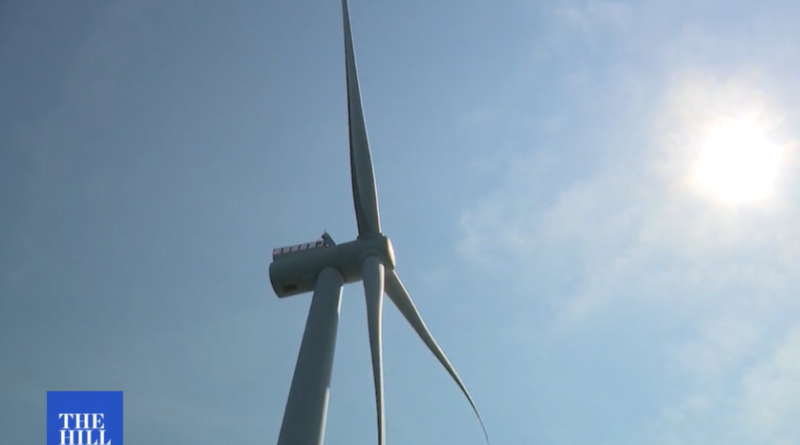
Since his first day in office — and even on the campaign trail — the president has sought to hamper renewable energy, especially wind energy.
On Day 1, he issued an order blocking the government from auctioning off the rights to build wind farms on public lands or in public waters.
Since that time, the administration has halted already-issued permits for the construction of several offshore wind projects. It further escalated this in December, suspending leases for five major wind projects.
The president’s “big, beautiful” tax bill, meanwhile, axed lucrative tax credits for renewable energy projects unless they begin construction within a year of the bill’s enactment or produce electricity by 2028 — a major blow to both the sector and U.S. climate efforts. The bill also axed credits for electric vehicles.
The administration also put additional hurdles in place for the renewable energy industry, including subjecting solar and wind projects to an elevated review process likely to slow down approval and make it more difficult to approve large projects — a move that was expected to hurt solar and wind power.
The administration has also sought to phase out Biden-era subsidies for many low-carbon energy sources at the agency level — seeking to claw back billions for green projects at the Environmental Protection Agency (EPA) and Energy Department.
A focus on climate deregulation, denial
The Trump administration has not only tried to stifle renewable energy, it has also taken aim at other climate policies — and has even downplayed or denied climate change itself.
The EPA has proposed to repeal the endangerment finding — a landmark 2009 determination that climate change poses a threat to public health.
The move is part of an effort to cut vehicle pollution limits supported by that finding. Relatedly, the administration has proposed to roll back vehicle fuel efficiency standards at the Transportation Department and zeroed out the penalties for violating the efficiency standards in the tax megabill.
Meanwhile, the Energy Department issued a controversial report written by prominent climate change skeptics that downplayed the climate crisis and its impacts. This was later refuted by a group of climate scientists.
The administration has also targeted climate research, dismissing scientists who had been working on the National Climate Assessment and cutting contracts to complete the congressionally mandated report. Meanwhile, in December, the administration said the government would “break up” a climate research center in Colorado.
Trump, on his first day in office, also moved to withdraw the U.S. from the global Paris Agreement — a pact under which the world’s countries agreed to try to limit climate change. The withdrawal will take effect in 2026.
The administration also did not send representatives to global climate negotiations at the COP30 summit in Brazil. It sought to undermine other global climate and environmental deals, including an effort to impose a carbon tax on global shipping.
And it has tried to undermine state-level climate and environment efforts, as Trump directed the Justice Department to target state-level laws that hamper energy development.
Loosening environmental regulations
The administration this year moved to loosen a number of regulations on issues related to water, toxic chemicals and more.
Trump directed agencies to sunset a wide array of energy and environmental regulations by October 2026. Meanwhile, the EPA proposed to narrow Clean Water Act regulations.
It also proposed to delay water utilities’ compliance with landmark 2024 limits on forever chemicals in drinking water and narrowed that regulation to apply to just two chemicals instead of six.
It also indicated that it plans to reconsider restrictions on hazardous air pollution from the energy, manufacturing and chemical industries. The EPA also said it will reconsider safety standards for workers at chemical plants and has proposed to loosen safety screenings for reevaluations of potentially toxic chemicals.
Earlier this year, President Trump also exempted more than 100 polluters from Biden-era pollution limits aimed at reining in releases of toxic chemicals.
Some of the administration’s chemical-related moves have been met with pushback not only from Democrats but also from its allies in the Make America Healthy Again movement.
Embracing AI
The Trump administration has embraced the build out of artificial intelligence (AI) data centers, moves that are expected to have significant environmental and climate impacts.
The administration has sought to expedite permitting for data centers, including by creating a “categorical exclusion” curtailing environmental reviews of these projects.
The EPA has said that it would try to expedite approvals of new chemicals expected to be used for data centers. Meanwhile, the Energy Department has pushed to try to get data centers connected to the power grid more quickly.
Dismantling the federal workforce
The administration has sought to cut down the federal workforce, including at environmental agencies.
Earlier this year, it offered rounds of buyouts to federal workers, resulting in the departure of tens of thousands of workers across the government.
Various agencies and departments, including Interior and the National Oceanic and Atmospheric Administration (NOAA), also conducted mass layoffs of probationary workers at the start of the year.
The layoffs at NOAA and its National Weather Service in particular prompted pushback, and the Trump administration later attempted to shuffle employees and hire meteorologists to fill vacancies.
Some agencies saw targeted rounds of firings, with the EPA eliminating its Office of Research and Development and cutting staffers who worked on environmental justice, that is, targeting pollution in overburdened and underserved communities.
Meanwhile, the Department of Health and Human Services fired all the staffers working on the Low Income Home Energy Assistance Program.
At agencies like the EPA, the workforce dwindled over the course of the year, with 15,166 employees on staff — down from more than 17,000 at beginning of 2025 —according to agency contingency plans from late September.
The Federal Emergency Management Agency (FEMA) has also been in the Trump administration’s crosshairs, with Trump and Homeland Security Secretary Kristi Noem floating eliminating the agency.
While they have since moved their rhetoric toward reforming the agency, Trump and Noem have not yet revealed what the reform plans are. CNN reported that it plans to cut the emergency management agency’s workforce in half.
Cover photo: THE HILL