

Federal Judge Vacates Illegal Offshore Wind Order, Says Wind Foes Are “Tilting At Windmills”
To the shock and surprise of exactly no-one, a federal judge has declared a key part of US President Trump’s notorious Offshore Wind Order of January 20 null and void. Trump initially presented the wind order as a temporary suspension of offshore wind lease activity pending further review, but on December 8 the US District Court District Of Massachusetts in Boston, determined that all the evidence points to a full, permanent — and illegal — stop.
A Second Wind For The US Offshore Wind Industry
For those of you new to the topic, Trump’s January 20 wind order did two things. First, Trump ordered that no new leases for offshore wind farms would be issued in federal waters. Second, he ordered all projects in the pipeline to be suspended pending review. The District Court upheld the president’s authority to suspend new lease activity. However, the Court decided that the suspension of ongoing projects was arbitrary and capricious, and illegal.
Of course, just because a judge exercises the US judiciary’s authority as a co-equal branch of government under the Constitution to order something to be done, it doesn’t mean that President Trump will do it. After all, he’s gotten away with rule-breaking every year of his adult life, why should 2025 be any different. Besides, who’s gonna make him obey the law? Certainly not the half-dozen toadies currently posturing as the majority voice of the US Supreme Court, where the case is all but certain to go on appeal.
Be that as it may, US District Judge Patti B. Saris laid out the matter clearly in her order of December 8. “After review of the parties’ submissions and a hearing, the Court concludes that the Wind Order constitutes a final agency action that is arbitrary and capricious and contrary to law,” Sarris wrote, referring to Trump’s January 20 executive order titled, “Temporary Withdrawal of All Areas on the Outer Continental Shelf From Offshore Wind Leasing and Review of the Federal Government’s Leasing and Permitting Practices for Wind Projects.”
“Accordingly, the Court ALLOWS Plaintiffs’ motions (Dkts. 172, 175), DENIES the Agency Defendants’ motion (Dkt. 179), and declares unlawful and VACATES the Wind Order,” Judge Saris added.
For the record, the order leads off with Donald J. Trump at the top of the list of Defendants. The full roster includes several individuals and a group of agencies, listed as “the Department of the Interior (and three of its subagencies: the Bureau of Ocean Energy Management, the Bureau of Land Management, and the U.S. Fish and Wildlife Service); the Department of Commerce (and two of its subagencies: the National Marine Fisheries Service and the National Oceanic and Atmospheric Administration); the Environmental Protection Agency; and the U.S. Army Corps of Engineers.”
Next Steps For Offshore Wind In The US
The plaintiffs in the case are headed up by the Alliance for Clean Energy New York, among other offshore wind industry organizations, along with a group of state attorneys general from Arizona, California, Colorado, Connecticut, Delaware, Illinois, Maine, Maryland, Massachusetts, Michigan, Minnesota, New Jersey, New Mexico, New York, Oregon, Rhode Island, and Washington, DC (read the full 47-page document here).
Officials from those states will have plenty to say in the days to come, but for now let’s note that ACENY executive Marguerite Wells already weighed in with a somewhat tempered statement. “As we look to build the electric grid that will power America’s future, wind energy is a key component. It is currently one of the most cost-effective ways to generate power, and is being used successfully not only in the United States, but across the world,” Wells said.
The New York Offshore Wind Alliance was a bit more forthcoming, though it also stuck to the facts. “The barrage of attacks by the federal government on offshore wind are misguided,” said NYOWA Director Alicia Gené Artessa, before noting that the offshore wind industry is “already delivering stable, affordable power to New York. ”
“The offshore wind industry is already a major economic driver, with tens of thousands of skilled workers and local manufacturers needed to support these projects. We need all the affordable and reliable energy we can get to meet demand — and offshore wind is ready to serve,” Artesssa added.
The offshore wind advocacy organization Oceantic Network also weighed in with more facts. The organization’s CEO, Liz Burdock, noted that the offshore wind industry already covers thousands of jobs and businesses across 40 different states, while helping to keep electricity bills down. “Overturning the unlawful blanket halt to offshore wind permitting activities is needed to achieve our nation’s energy and economic priorities of bringing more power online quickly, improving grid reliability, and driving billions of new American steel manufacturing and shipbuilding investments,” Burdock said.
We … Told You So!
The December 8 ruling is a bittersweet victory for the US offshore wind industry, which has already been disrupted all up and down the Atlantic coast. Even if the decision is upheld on appeal, the damage is already deep and widespread (see more wind order background here).
Oceantic Network and other offshore wind advocates tried to catch President Trump’s ear shortly after he won the 2024 election, underscoring the economic benefits all those thousands of jobs and businesses bring. However, the president-elect evidently had other priorities in mind for his second term in office.
Coastal states that were banking on offshore wind also faced significant harm, which the December 8 ruling recognized. “The State Plaintiffs have produced ample evidence demonstrating that they face ongoing or imminent injuries due to the Wind Order,” agreed Judge Saris, taking note of the impact on tax revenues and investments as well as lost opportunities to benefit from the power generated by offshore wind farms.
“For example, the Commonwealth of Massachusetts alone invested millions of dollars into the wind industry in 2024; it is a ‘rational economic assumption’ that returns on those investments are imperiled by an indefinite suspension of wind permitting,” Saris wrote.
“Similarly, the State Plaintiffs provide documentation that the Wind Order has resulted in delays to a project planned by Atlantic Shores Offshore Wind that is expected to provide nearly $2 billion in economic benefits to the State of New Jersey,” she added. “Those anticipated benefits are now jeopardized or deferred.”
In response to the evidence of harm, the defendants claimed that ACENY members lacked standing. However, Saris roundly rejected that argument.
“The Agency Defendants contend that ACE NY has failed to specify any member with standing. In mounting this challenge, the Agency Defendants are tilting at windmills,” Saris wrote (emphasis added).
What do you think, will the December 8 ruling be just another flyspeck to be brushed off by a willfully lawless Commander-in-Chief? Drop a note in the comment thread, or better yet, find your representatives in Congress and let them know what you think.
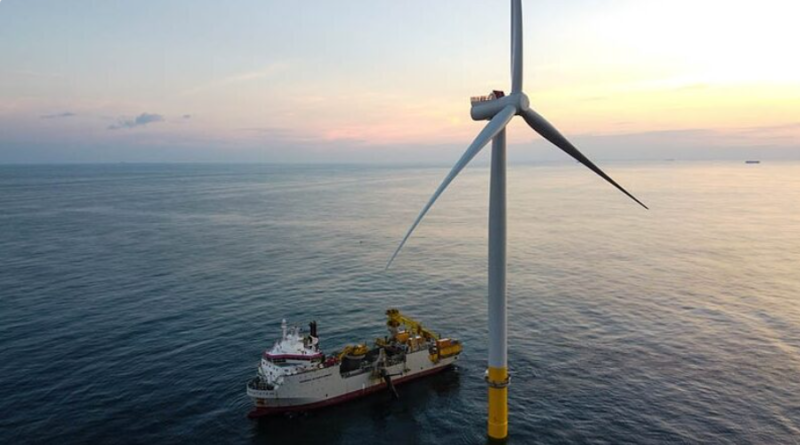
Cover photo: The US offshore wind industry lives to fight another day, now that a federal judge has voided a key part of US President Donald Trump's offshore wind ban (cropped, courtesy of NREL).