

Critical minerals: Urgent need to formalise artisanal mining across Africa
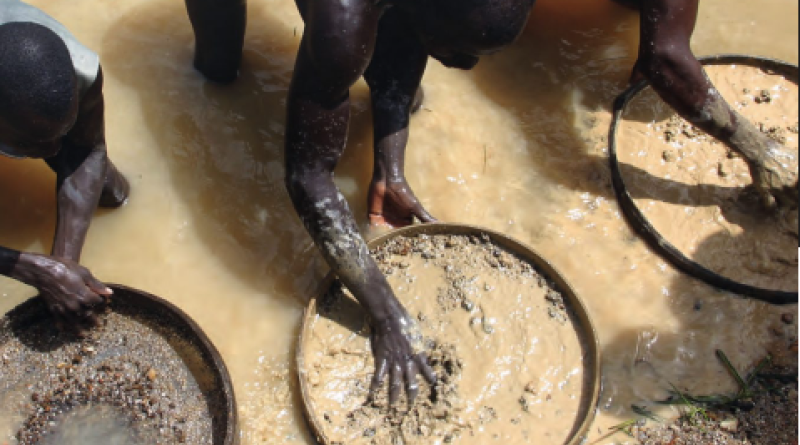
Bringing artisanal and small-scale mining (ASM) into the legal economy and linking it to global (critical) minerals supply chains underpinned a key discussion at Investing in African Mining Indaba 2026 in Cape Town last week.
ASM is a significant part of the global mineral economy, with 45 million people working directly in the sector and as many as 315 million benefiting indirectly.
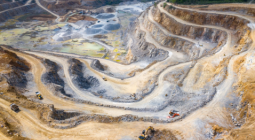
Delegates heard accounts of life in open-pit mines and debated how small miners could enter the legal mainstream, including whether formalisation could coexist with large-scale mining and whether governments and regional bodies were doing enough to enable it.
Formalising processes in South Africa
Ntokozo Nzimande, Deputy Director-General of mining and petroleum policy development at South Africa’s Department of Mineral and Petroleum Resources(DMPR), said the country had been slow to establish regulations for the ASM sector despite its large-scale mining tradition.
She said amendments to the Mineral and Petroleum Resources Development Act and the new Artisanal Mining Licensing System allowed miners to acquire permits for a small mining tenement for a month-to-month period of three years, with options to renew twice.
“There is still a need for greater clarity around artisanal mining. The intention is to regularise these activities and to provide a path for artisanal and small-scale miners to graduate to become junior miners and enter the mining mainstream.”
ASM is not illegal mining
Nzimande stressed that ASM should not be equated with illegal mining and recounted her childhood in Newcastle, KwaZulu-Natal.
“I grew up in a village called Blaauwbosch Laagte outside Newcastle.
“Behind the fence at the back of our school was a large pit where the local gogos (grandmothers) would dig for coal. They would sell that coal in the village from wheelbarrows, for R10 per load. I know these people whom we describe as artisanal miners. ASM is not academic to me. It’s a lived reality.”
She said she had dedicated her life to helping create space for artisanal miners in the mainstream economy.
Cooperative structures in the DRC
Popol Mabolia Yenga, Mining Cadastre (CAMI) Managing Director in the Democratic Republic of Congo (DRC), described the country’s experience after a state-owned mining body collapsed due to mismanagement.
“After the state company collapsed, experienced miners then had no choice but to resort to their own survival-mining activities. Government had to recognise that situation,” he said.
The DRC created official artisanal mining zones where many of its miners now operate. Miners can also join cooperatives that market products internationally and ensure minerals are traceability compliant.
Yenga said miners now access financial services, purchase life insurance and join retirement funds.
Linking critical minerals to markets
Norman Mukwakwami, Global Head of responsible sourcing—metals at Trafigura, said private-sector partnerships showed how ASM could connect to international supply chains.
He cited a responsible sourcing partnership between Trafigura, mining company Chemaf and the COMIAKOL miners collective at the Mutoshi mine in Kolwezi, DRC.
“The partnership has been able to ensure the safe and secure delivery of cobalt to the international market, by working with artisanal miners within the concession,” he said.
The session heard that there are an estimated 14 million artisanal miners globally, including 10 million in Africa and about two to three million in the DRC.
Mukwakwami said large-scale formalisation would require market clarity on export requirements and stronger regional partnerships, adding that formalisation was also about economic livelihoods.
Understanding the critical minerals value chain
Mohammad Stevens, legal counsel for the African Legal Support Facility (ALSF), said artisanal mining should be understood as part of a broader value chain.
He said governments needed legal resources to regulate where miners could work, what tools they could use and under what conditions, and to negotiate international agreements.
He added that environmental, health, safety and socio-economic impacts should be addressed in policy and guidelines should promote gender equality in ASM value-chain development.
Helping smaller miners progress
Delegates also raised the need for security of tenure and pathways allowing miners to progress from subsistence mining into small-scale and junior mining.
Nzimande said there were examples of coexistence between large and small operators.
“Where a large mining house finds that a certain concession cannot be developed profitably, it can cede that right to a smaller entity,” she said.
“There are also laws to allow ASM miners to graduate to more mechanised methods. There is room for mining operations of all sizes to work alongside each other, and for all of them to earn a living.” ESI
Cover photo: WHO-Africa Region