

The Climate-Denying Conspiracy Theorist Who Gets Everything Else Right
To someone who sees climate science as a global conspiracy, it looks like a threat when investors begin to factor in the risks. For the rest of us, it could be all of everything.
Every so often, common ground shows up in the most unexpected places.
The overwhelming majority of the people who’ve spent any time at all looking into climate change take certain truths to be self-evident. That the climate crisis is real, measurable, proven by science, and running out of control. That climate change is caused by human activity, primarily by burning fossil fuels. That we’re falling far behind in the effort to get a rolling, global emergency under control.
And that one of the quickest, surest ways to turn the tide will be to shift financing and investment from fossil fuels to clean electricity, mobilizing trillions of dollars per year to build a new climate economy that reverses the problem rather than making it worse.
So how do you respond when someone gets the solution exactly right, en route to denying that the problem even exists?
That’s the question I had to ask myself a few days ago when I ran across one of the clearest explanations I’ve ever seen of a concept that is still working its way into the mainstream of climate response—and is central to the big win that climate and energy transition hawks are beginning to see on the horizon.
The post came from Mark Keenan, a former UK government scientist apparently best known for his independently-published and quickly-archived claim that “climate CO2” is a hoax, and that bankers have “hijacked the climate movement”. In 2022, he wrote that “powerful special interests have tried to convince the world that CO2 is a climate changing toxin but the UN climate change narrative, that CO2 causes climate change, will be remembered as the greatest mass delusion in the history of the world.”
Well, then.
And yet Keenan gets it exactly right when he concludes that “the fight is not about carbon emissions alone. It is about who controls the financial system—and how that control is used to reshape the economy.”
“If the current trajectory continues,” he adds, “climate policy may become less about environmental protection and more about the management of capital itself.”
The problem, for anyone who understands or is living with the reality of climate change, is that Keenan sees climate finance as a challenge to economic freedom, rather than a decisive answer to an existential threat. And yet, starting out from the opposite side of the mirror, he still gets the story straight.
The real transformation is not occurring in environmental ministries or international climate conferences. It is occurring inside the global financial system.
Banks, central banks, regulators, and investment giants are increasingly embedding climate criteria into the rules that determine how credit is created and allocated. These changes rarely make headlines. They appear in technical papers, regulatory consultations, and supervisory guidance documents. Yet they have the potential to reshape the entire economy.
Once these rules are fully implemented, climate policy will no longer need to rely primarily on legislation. The financial system itself will enforce it.
Credit Where Credit Is Due (Both Kinds)
Full credit to Keenan for describing a still-emerging finance system that is learning to literally allocate credit where it’s due, a place where investors pour capital into projects that help solve a problem like climate change rather than making it worse.
We’re still a long way from that future. But look no farther than the long-awaited formation this week of Canada’s Taxonomy and Transition Planning Council for the latest signs that it’s getting closer—even in a petrostate that is lagging behind dozens of other countries in its embrace of sustainable finance.
The council is an interim step worth celebrating, as University Pension Plan of Ontario CEO Barbara Zvan points out on LinkedIn. “While the pool of sustainable capital is growing, Canada must compete for our share,” she writes.
“There are more than 60 sustainable finance taxonomies in use or in development around the world, which jurisdictions are using to signal credible opportunities for green and transition investments in their economies,” Zvan adds. “Canada is behind—but not for long!”
We didn’t get here overnight. Mark Keenan picks up the thread, crediting (well, in his case, blaming) our friends at Carbon Tracker for popularizing the now-foundational concepts of stranded assets and unburnable carbon.
Keenan writes:
The concept sounds technical, but the idea is simple. Many [fossil] energy companies hold large reserves of oil, gas, or coal on their balance sheets. Investors treat those reserves as valuable assets because they expect the resources to be extracted and sold in the future.
But if governments impose strict carbon restrictions, a portion of those reserves may never be used. In that case, assets currently valued in the trillions of dollars could suddenly lose their worth. They would become “stranded.”
What began as a financial observation quickly became a powerful political tool. Instead of arguing about climate change in moral or environmental terms, activists and policy-makers reframed the issue in the language of finance.
Climate risk became financial risk.
Once that shift occurred, the conversation moved away from environmental activism and into the offices of regulators, central banks, and large institutional investors.
If climate change could threaten the value of certain industries, the argument went, then banks and investors needed to account for those risks. Companies would need to disclose their exposure. Regulators would need to supervise the financial system accordingly.
At first, these ideas appeared in voluntary reporting frameworks. Companies were encouraged to disclose how climate policies might affect their business models. Investors began requesting information about carbon exposure, energy use, and transition plans.
Over time those voluntary norms hardened into regulatory expectations.
And that, he might have added, is a central part of how we win the fight against climate change.
Not the Whole Story
While he overstates the extent to which “large financial institutions have already embraced this approach,” spare some sympathy for Keenan’s point that financial sector boardrooms are not the best place for life-changing decisions that need public transparency and input.
He conveniently sidesteps the brutal reality that corporate boardrooms were exactly where fossil fuel companies first shared the knowledge that their activities were frying the atmosphere, and decided in the 1970s not to let the rest of us in on the secret. Not to mention the national surveys in dozens of countries showing that up to 89% of us understand that climate change is a crisis and want our governments to do more to solve it, but mostly don’t realize we’re in the majority.
But we can agree that communities must have a meaningful say in the decisions that shape their future and still recognize the “inside game” of climate finance as an essential part of building that future. And push back as we must on the over-the-top misinformation in Keenan’s quaint notion that the “current globalized system” promotes “beliefs and fake science that claim to be unchallengeable truths, but are, in fact, ideologies in which evidence is manipulated, twisted, and distorted to prove the ‘governing idea,’ and thus promote its worldwide dissemination.”
The manipulations and distortions, of course, are coming from the industry that has poured billions of dollars into promoting exactly this brand of climate denial, confusion, and mis- and disinformation, then delaying any action to solve the existential crisis they’ve brought to our doorstep.
Finance Holds Companies to Account
One of our biggest joys so far this year has been the opportunity to work with Carbon Tracker on a March 31 webinar on navigating the short- and long-term outlook for Canadian oil and gas. For a deeper dive, you can find the full video here.
In an interview this week, Carbon Tracker founder Mark Campanale said he’s become accustomed to the disconnect between climate scientists who study the problem “in 100- and 1,000- and 100,000-year cycles” and “very, very smart people who can’t see the science because they’re drawn literally to whatever is around them.” That lens “doesn’t make them very good commentators on the risks we’re trying to avoid.”
But climate deniers’ lavishly-funded efforts to distort and confuse public opinion and policy won’t be the only thing shaping the outcome.
In a more complex theory of power, “this idea that citizens are the only ones who decide what policies we have is not correct,” Campanale said. “Business has a massive influence,” and “finance can hold companies to account for good behaviour by supporting it, or for bad behaviour by challenging it.”
That’s why Carbon Tracker has worked to help investors understand the “risks and opportunities of going in one direction or the other,” he said. An increasingly important part of that conversation is that “renewable energy is beating fossil fuels in scaling, capital deployment, and delivering energy efficiently. By making the market aware of what’s actually going on, you create a positive sentiment that reinforces itself by more investors supporting renewables.”
That momentum then “draws in more investors doing the same,” he added, “and all of a sudden the [future] outcome you describe becomes the [actual] outcome.”
This Is How We Win
Mark Keenan’s body of work makes it pretty clear that he sees that outcome as a failure of “economic freedom”, rather than the big win that will enable anything else we want to do, any liveable future we want for future generations. But he still has an uncanny ability to describe what that win would look like.
A coal plant may not be outlawed by legislation. But if banks face punitive capital requirements for financing coal projects, those projects will struggle to secure funding.
A manufacturing firm may not be directly regulated out of existence. But if investors conclude that regulators consider its industry incompatible with future climate policy, capital will flow elsewhere.
It’s already happening, with the International Energy Agency reporting last year (with just some caveats) that the climate economy received twice as much investment as fossil fuels. That good news is picking up the pace, with Pakistan replacing 20% of its fossil-fuelled grid with rooftop solar in just two years, the Ember think tank identifying solar as the preferred source for 90% of India’s electricity, and a Vietnamese conglomerate seeking permission to cancel a 4.8-gigawatt gas plant in favour of renewables.
The outlier view of those trends, put forward by authors like Mark Keenan and funded by the fossil industry and its offshoots, is that those decisions are being warped by some nefarious global cabal. The reality is that financing was already beginning to follow the evidence, even before the American/Israeli war on Iran forced energy-importing countries into a faster, deeper energy transition.
This is how we win, even if the Canadian government is one of the last on Earth to get the memo.
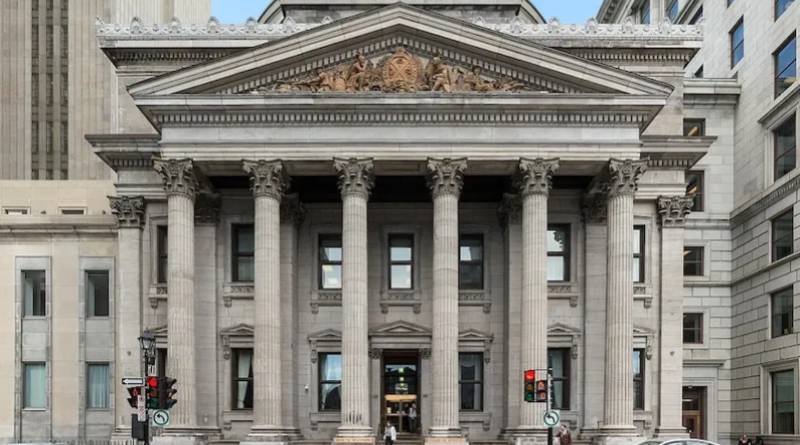
Cover photo: DXR/wikimedia commons