

UK Floating Solar Power Performance Improved By Tracking
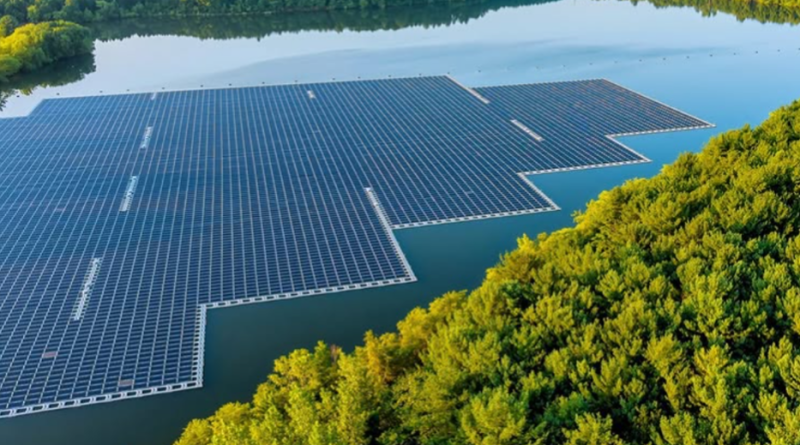
Floating photovoltaic solar power energy output in the United Kingdom was studied by University of Exeter researchers recently and they found a particular kind of tracking could increase yearly energy production by about 26%.
In their research paper, they noted: “Azimuthal tracking FPV boosts annual energy production by up to 26.9 % over fixed arrays.”
Well, what does that mean? It’s pretty simple really — the solar panels follow the sun across the sky during daylight hours. Young sunflowers also do this kind of tracking to help them grow.
Aziimuthal tracking has to do with where the solar panels are pointed. “Azimuth Angle: The horizontal orientation of your panels (in relation to the equator, in this case).” One source described this kind of tracking as fixed-tilt panels on a turntable so they can be rotated to face the sun as it moves in the sky.
‘The UK FPV results are unexpectedly competitive, particularly given the country’s Lower solar irradiance. These findings suggest that floating solar – especially when combined with tracking – can play a meaningful role alongside wind in the UK’s marine renewables mix, offering a scalable and cost-effective pathway for further clean energy deployment,” said study author Aritra Ghosh.
Floating solar power has some other benefits: no dry land has to be used because the technology is water based. The floating technology can reduce evaporation of water where it is located. Water bodies near electrical interconnections can be selected for floating PV installations. Water bodies can also be selected that are not near population centers so no one or not many people will see them and object to seeing the technology. (Wind turbines on land are much more visible and some object to their presence, for example.)
The amount of UK solar power has grown recently to over 6% of the total amount of electricity nationally. Wind power is considerably more, almost 30%.
Floating solar power may expand in the UK due to favorable conditions for further growth, “The UK has thousands of reservoirs and lagoons, many on private or industrial land, that remain largely untapped for energy generation.”
Cover photo: Earth.com via Instagram