

Mining without compromise – ESI Africa reporting from Mining Indaba 2026
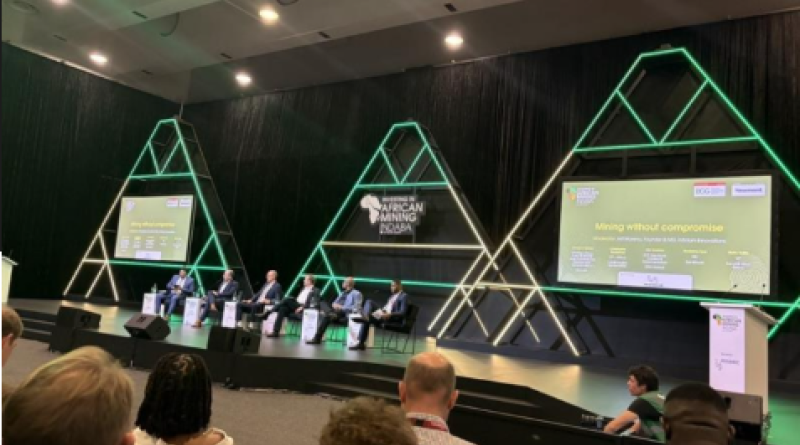
A panel at Mining Indaba looked at whether technology can enable mines to meet global ESG standards while increasing output
Can mining operations in Africa achieve zero waste and zero emissions while still expanding production?
That question framed a panel discussion on technology, energy, and ESG performance on the opening day of the Investing in African Mining Indaba at the Cape Town International Convention Centre on Monday (9 February), where industry leaders argued that the sector is moving from sustainability pledges to operational delivery.
Arif Moreno, founder and managing director of Infinium Innovations, said mining companies are now under pressure to demonstrate real results rather than commitments.
“We talk a lot about ESG [in] mining, but often we’re not impacting its most difficult component, which is scale,” he said.
“We’ve moved from sustainability commitments to a much harder phase of delivery and growth, especially in capital-intensive environments.”
Moreno noted that emerging markets will account for most future emissions growth but operate with significantly different infrastructure and capital constraints.
The discussion focused on whether technology – across energy systems, equipment, logistics and waste management – can enable mines to meet global ESG standards while increasing output.
Renewables displacing diesel
Christophe Fleurence, VP for Africa at TotalEnergies Renewables, said the most immediate decarbonisation opportunity for mines is replacing diesel generation with renewable energy.
“The easy low-hanging fruit is to replace costly energy with renewables,” he said, adding that solar and battery systems can power mines independently of unreliable national grids.
On-site solar installations paired with battery storage are increasingly attractive because they stabilise operations and reduce operating costs. Cheaper battery technology is also accelerating the shift away from diesel generators.
Fleurence pointed to regulatory changes in some African countries, including Zambia, where rules now allow electricity to be generated in one location and used elsewhere, enabling more flexible energy supply arrangements for mining companies.
Managing large power loads
Ian Gebbie, senior vice-president for electrical, control and instrumentation at DRA Global, said the scale of energy demand in mining has changed dramatically.
“We are no longer engineering at 10MW,” he said. “We are engineering around 60, 100, 200, 400MW. Five years ago, that wasn’t possible.”
Modern mines increasingly combine multiple power sources – hydro, wind, solar and batteries – with diesel generators used only as backup. The main challenge, he said, is integrating these energy systems into mining infrastructure and managing fluctuating supply.
He described a case in which a mine attempted to electrify underground operations with battery-powered equipment. Although charging times were competitive with diesel refuelling, inadequate infrastructure and workforce readiness led operators to revert to diesel under production pressure.
The experience, he said, highlighted the importance of planning charging stations, workshops and operational processes alongside technology deployment.
Skills, partnerships and regulation
Panelists stressed that technology alone is insufficient. Skills development, partnerships and policy frameworks are equally critical.
One industry participant noted that African mines are already deploying advanced technologies in countries including Ghana, Mali and the Democratic Republic of Congo, but success depends on training workers to operate and maintain digital systems.
Regulation was also identified as a major accelerator. In some jurisdictions outside Africa, mines receive incentives to electrify operations, helping to speed decarbonisation.
Another cautioned that regulation must account for affordability and industrial capacity.
Economics driving the transition
Despite the challenges, the economics of renewable energy are becoming decisive.
Speakers agreed that the mining sector’s ESG future will depend less on ambition and more on operational execution – integrating renewable energy, electrified equipment and workforce readiness without compromising production.
The central question, Moreno said, is no longer whether ESG matters, but whether it can survive “contact with scale” in Africa’s rapidly expanding mining sector. ESI
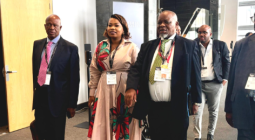
Cover photo: Panelists discuss ESG in the mining sector at the Investing in African Mining Indaba event in Cape Town. Source: ESI Africa