Managing the water resource gap and getting the flow just right
Competing industries all want the one thing we can’t live without and a new threat to water resources is approaching
Would you like a glass of water? In response to this question, most people will assume the water resource comes from a convenient tap or a bottle. But this assumption is being challenged.
Our global water resources are used by competing industries—all wanting the one thing we can’t live without. Water is life; we need to drink it and use it for sanitation, agriculture, manufacturing (of everything, including those attractive clean energy solutions), mining and for electricity generation.
Perhaps a little-known fact is that a whopping 90% of global power generation is water-intensive. You can argue that this figure will decrease as solar and wind advance; however, the cradle-to-grave pathway of renewable energies is not water-free.
Then there is a new water-hungry market emerging – green hydrogen.
Is hydrogen a threat?
An academic paper published in 2021 estimates the hydrogen demand for a distant renewable future at 2.3 Gt per year. Hydrogen produced by water electrolysis powered by renewable energy can reduce carbon emissions from the energy sector by up to 10.2 Gt annually relative to future emissions projections, compared with the International Panel on Climate Change’s worst-case RCP8.5 scenario.
This makes hydrogen a key technology in the race to decarbonise. But let’s consider hydrogen and water.
An electrolyser with a 100MW capacity consumes roughly 500 tons of water and produces approximately 50 tons of hydrogen daily. If the system is water-cooled, the water requirement doubles. However, it is possible to significantly reduce water requirements for hydrogen production by using air cooling or chiller systems to meet most of the cooling demand.
What is more important, water for consumption or water for energy?
Both are equally important; therefore, getting the flow of resources just right is a focus for all stakeholders. This focus must include updating policies to secure bulk water, regulations to keep it safe from contamination, and managing resource distribution for competing sectors.
This focus must consider the energy transition so that severe repercussions on the overall water demand do not materialise decades from now. What recommendations would you suggest for ensuring that already water-stressed areas are not further impacted?
A focus on our water resource for one day
Even though observing World Water Day (on 22 March) is not themed around the above challenge but rather on water and gender: Where Water Flows, Equality Grows, water allocation remains relevant. You can add the energy crisis to this theme because, without some form of power, sourcing (such as groundwater pumping), purifying, and reticulating potable water are untenable.
On the other end of the spectrum, energy generation will always require water (remember, the cradle-to-grave lifespan of all energy-related technologies needs water). And the state of global water resources is highly fragile.
An assessment of rivers, lakes, and aquifers in 97 countries in 2020 indicates that only 60% of water bodies have good water quality. Today, this figure could be even lower, as water quality for at least three billion people still needs to be assessed due to a lack of monitoring.
Sadly, the UN reports that over the past 300 years, over 85% of the planet’s wetlands have been lost, mainly through drainage and land conversion, with many remaining wetland areas degraded. Since 1970, 81% of species dependent on inland wetlands have declined faster than those relying on other biomes, and an increasing number of these species are facing extinction.
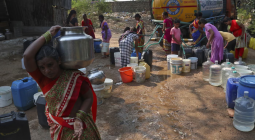
Even so, progress is underway. According to the UN Sustainable Development Goals 2022 report, in 2020, 74% of the global population had access to safely managed drinking water services. This figure is up by 4% from those recorded in 2015. With concerted efforts, this figure will continue to improve and ensure that the remaining people (mostly living on Level 1) have access to safe drinking water and essential water services.
Follow the water statistics
Regarding water resources, the UN Sustainable Development Goals 2022 report further highlighted that between 2015 and 2020, the share of the population with safely managed sanitation increased from 47% to 54%. The number of people with access to handwashing facilities with soap and water in the home increased from 67% to 71%.
But again, the rate of progress on these basic services would need to quadruple to achieve universal coverage by 2030.
At current rates of progress, 1.6 billion people will lack safely managed drinking water, 2.8 billion will lack safely managed sanitation, and 1.9 billion will lack basic hand hygiene facilities in 2030.
Southern Asia and Central Asia registered high levels of water stress at over 75%, whereas Northern Africa registered critical water stress at over 100%. Since 2015, water stress levels have increased significantly in Western Asia and Northern Africa.
Though North African countries are already investing heavily in upcoming hydrogen projects, the water resource gap in this region could become a serious threat without careful planning. This planning will address the need for energy resources versus water, and the effects on people due to a lack of either.
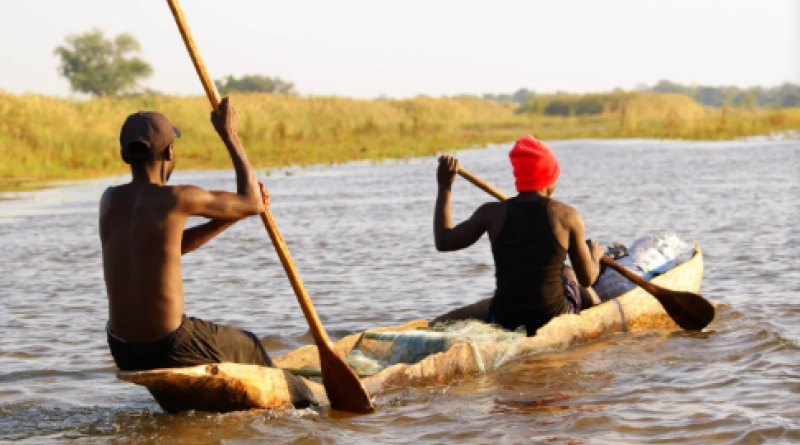
Cover photo: Traditional fishing on the Zambezi River. Source: barbeye/123rf.com