

Experts say climate change bigger threat to biodiversity than renewable energy projects
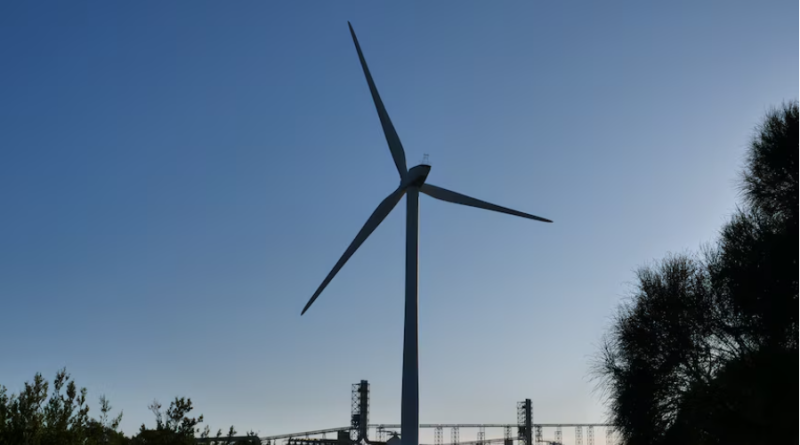
As aging coal-fired power stations along Australia's east coast reach the end of their lives, the country is looking to transition to renewable energy to secure our energy sources into the future in the face of climate change.
But what happens when these developments have the potential to hurt sensitive ecosystems or biodiversity?
Is some environmental damage an unfortunate — but unavoidable — casualty in the battle against climate change?
Energy revolution
The Victorian Department of Environment, Energy and Climate Action (DEECA) says that in the next 10 years at least an additional 9.5 gigawatts of energy is needed from on-shore renewable energy sources to meet its target of 95 per cent renewable energy by 2035.
The Kentbruck Green Power Hub near Nelson, about 330 kilometres west of Melbourne, is among the projects that could help the state hit these targets.
If approved, HMC Capital's project could see up to 105 turbines, standing at 270 metres tall, constructed across a pine plantation.
Project documents say it will generate an estimated 600 megawatts of power — or enough to power about 400,000 homes — and is in an area with consistent high winds and a strong grid connection.
In December 2024, the Commonwealth government gave the project capacity investment funding as part of an underwriting scheme that aims to help Australia meet its renewable energy targets.
The future of the wind farm lies with Victorian planning minister Sonya Kilkenny, who will decide whether to grant it a permit.
Environmental concerns
The proposed wind farm is adjacent to an internationally significant Ramsar-listed wetland and a number of national parks, sparking concerns it could pose a risk to a number of endangered birds, including the Australasian bittern, orange-bellied parrot and south-eastern red-tailed black cockatoo.
More than 200 submissions were made on the project during the public consultation period.
Among the concerns raised by environmental groups was lack of data on how birds used habitat in the area and inadequate plans to monitor and respond to any bird deaths caused by the wind farm.
The Victorian National Parks Association is among the organisations that wants the wind farm moved to a different location that is less ecologically sensitive.
Association campaigner Jordan Crook said on paper it looked good to put wind turbines in a pine plantation, which was already a degraded habitat.
"But when you zoom out and see that pine plantation is within an [ecologically] important area in the south-west, where there's already limited amounts of habitat because of past clearing, it really doesn't stack up," Mr Crook said.
Victoria is the most cleared state in Australia, Mr Crook said, with about 70 per cent of native vegetation removed.
"How we put in new infrastructure should take that into account," he said.
He said the wind farm would fragment the landscape and prevent the free movement of wildlife in the wider area, potentially posing a collision risk to endangered birds and bats.
The wind farm's project documents said while there was a risk some birds could hit the turbines, birds were unlikely to fly high enough to pose a serious collision risk.
Climate change a bigger threat
Australian National University professor of environmental and climate change economics Frank Jotzo said renewable energy projects have a "minimal" impact on the environment, and while that's unfortunate, they are for the greater good.
"Whatever we do, there will be some undesirable effects," Professor Jotzo said.
"In the big picture, there's no omelette you can make without breaking any eggs.
"Climate change is the far bigger threat to biodiversity, to our environment, agricultural systems and economy."
But if renewable energy such as wind and solar is not expanded, then what alternatives are there?
"We would need to build new gas and coal-fired power stations, which would come at a higher cost than wind and solar," Professor Jotzo said.
Chris O'Keefe is the national spokesperson for the Clean Energy Council, an industry-advocacy group.
He said renewable energy existed to protect the environment.
"It was invented because of the major issues that are confronting the world on climate change," Mr O'Keefe said.
But can we perfect the balance between protecting ecosystems and biodiversity, and rolling out these projects?
"I don't think that's possible to say," Mr O'Keefe said.
"But … there is no renewable energy company in Australia that does not have the environment front of mind."
Cover photo: Alcoa's Portland Aluminium Smelter has a memorandum of understanding with the proposed Kentbruck wind farm. (ABC News: Jean Bell)