Eritrea: Solar energy project to light up country’s ‘breadbasket’
The investment also aligns with Mission 300 – a joint effort between the African Development Bank and the World Bank to connect 300 million additional Africans to electricity by 2030
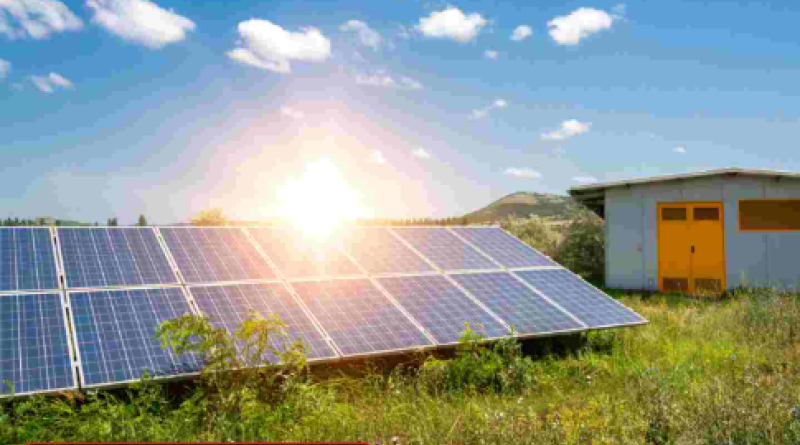
The African Development Bank (AfDB) has approved $58.04 million in grant financing for a 34MW solar-powered mini-grid programme targeting three towns in Eritrea’s Gash Barka region.
The region is often described as the country’s breadbasket or the “land of opportunities” due to its vast resources, including large grazing areas that hold a significant portion of the nation’s livestock.
Approved on 18 February, the Eritrea Energy Integrated Project for Tesseney, Kerkebet and Barentu will be financed through a $37.31m grant from the AfDB Fund and a further $20.73m from the Bank’s Transition Support Facility.
34MW solar backbone and 542km of distribution lines
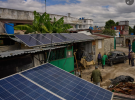
At the core of the project is the deployment of a 34MW solar mini-grid system designed to strengthen local generation capacity and stabilise supply in and around Tesseney, Barentu and Kerkebet.
The programme also includes the construction and upgrading of 542 kilometres of distribution lines to expand grid reach and improve reliability.
The Bank said the infrastructure will deliver affordable and dependable electricity to households, small businesses and public services across the three towns and surrounding communities.
Beyond basic electrification, the project is structured to anchor productive energy use.
Clean power will support water pumping systems, expand irrigation schemes and improve agricultural yields. Agro-processing facilities and small enterprises are expected to extend operating hours and reduce reliance on costly diesel generation.
Linking solar energy to agro-industrial growth in Eritrea
The project forms part of the Bank’s flagship Desert to Power initiative, which aims to harness the Sahel’s vast solar resources to drive economic development across 11 countries, including Eritrea.
Rather than focusing solely on generation capacity, the Eritrea programme adopts an integrated model linking energy access to agro-processing, irrigation and local industrial development.
The approach is intended to catalyse broader socio-economic transformation in one of the country’s most underserved regions.
Kevin Kariuki, the Bank Group’s Vice President for Power, Energy, Climate and Green Growth, said the investment would help unlock local economic activity.
“This timely investment will help deliver reliable and affordable clean power to communities in Eritrea that need it most, thereby spurring job creation, strengthening local economies and helping Eritrea move towards a sustainable energy future,” he said.
Jobs, skills and emissions reductions
The project is expected to benefit around 306,000 people and generate employment during the construction and operational phases. It also aims to build local technical capacity, particularly in renewable energy services and grid management.
Over time, the programme is projected to reduce greenhouse gas emissions by displacing diesel-based generation and supporting Eritrea’s transition to a lower-carbon and climate-resilient energy system.
The investment also aligns with Mission 300 – a joint effort between the African Development Bank and the World Bank to connect 300 million additional Africans to electricity by 2030.
Cover photo: [diyanadimitrova]©123rf.com