

The end of fossil fuel safety and 5 lessons from the latest energy shock
Central banks are beginning to recognise fossil fuel inflation as a direct threat to their mandate for price stability
Every day, one-fifth of the world’s oil and liquefied natural gas (LNG) threads through a single maritime needle, the Strait of Hormuz.
This chokepoint accounts for 20% of global energy flow. As tensions and war in the Middle East escalate, the long-held illusion that globalised fossil fuel markets offer a security buffer has been shattered.
This is likely not a temporary price spike and is bringing to the fore just how fragile our energy systems are.
According to Ani Dasgupta, President and CEO of the World Resources Institute, this is a visceral reminder that our reliance on volatile fuels is a climate concern, and also a systemic threat to civilisation itself.
This shock follows too closely on the heels of the invasion of Ukraine, creating a double whammy that our global infrastructure was never designed to absorb. To navigate this era of compounding crises, we must look beyond these five shifts in the global landscape of energy, security and survival.
1. From pollutant to systemic risk
For decades, the transition to clean energy was relegated to the halls of environmental ministries. Today, the conversation has moved to the high-security vaults of finance ministries and central banks. Fossil fuels are now viewed primarily as a source of economic and financial instability.
Leading financial architects realise that dependence on oil and gas creates uncontrollable debt and fiscal imbalances. When a single geopolitical tremor can derail a nation’s GDP, the fuel source itself becomes a liability.
“This shock actually has positioned oil and gas as a very, very different perspective… not just a polluting source of fuel, but a risky source of fuel, a source of fuel that causes lack of stability,” says Dasgupta, adding that countries are now actively thinking about how to manage this risk.
2. How front-runners brace the storm
In the world of climate diplomacy, the global consensus process moves like a slow convoy, restricted by its slowest members. In contrast, a group of speedboats (front-runner nations) are moving unilaterally to decouple from global markets to ensure their own survival.
Countries like China, Pakistan, Spain and France are faring significantly better than their peers because they prioritised domestic resilience.
Their success is built on three pillars:
- Insulated energy mixes: France generates 70% of its power from nuclear and 25% from renewables, keeping gas dependence under 4%. Spain produces 57% of its electricity from renewables.
- The ‘free fuel’ advantage: Unlike gas, wind and solar have zero fuel costs once the infrastructure is in place. They are immune to the volatility of the Strait of Hormuz.
- Strategic buffers: Pakistan’s recent solar boom—largely driven by decentralised, imported panels—saved the nation an estimated $12 billion in fuel imports even before the current crisis began.
Furthermore, the rise of “plug-in solar”—individual balcony panels that plug directly into wall sockets—is turning energy security into a grassroots movement for individual energy independence.
3. The invisible crisis on our dinner plates
The energy shock is currently metastasising into a food system shock. Because natural gas (LNG) is the primary feedstock for urea (the backbone of nitrogen fertiliser), the disruption of the Strait of Hormuz is felt immediately in the soil.
Global urea prices have surged 40–55%, but the impact is uneven. In India, prices have doubled.
This creates a lethal feedback loop as the world was already reeling from the fertiliser shortages caused by the Ukraine invasion.
And this new shock arrives during a predicted Super El Niño year, which threatens drought and crop failure across South Asia and Brazil. For fertiliser-dependent regions, the cost of survival is becoming prohibitive.
Have you read? Why the Iran crisis is an ominous sign for African policy makers
4. Fossil fuel inflation and the central bank pivot
Central banks are beginning to recognise fossil fuel inflation as a direct threat to their mandate for price stability. In previous crises, many banks missed the opportunity to raise interest rates to fight inflation, which accidentally choked off the capital needed for green investments.
Nick Robins, Senior Director for Finance and Private Sector at WRI, points out that forward-thinking institutions are now pivoting. While the European Central Bank acknowledges that fossil dependence poses a risk to price stability, China has already implemented low-cost green refinancing facilities at 1.75%. This ensures that the transition continues even when global interest rates are high, shielding the green economy from the very inflation caused by fossil fuels.
“Central banks [are] seeing the transition away from fossil fuels as a fundamental investment in stability, which is the core job of central banks,” states Robins.
Follow our WhatsApp channel for exclusive daily content, breaking energy and water news,
insights from industry experts and more
5. The African vulnerability gap and the flight to safety
The African continent faces a unique fiscal squeeze. Most African nations are net fuel importers with a dangerous reserve gap, holding an average of only 30 days of fuel compared to the global average of 90 days.
This is compounded by the “flight to safety” in the US dollar, says Melanie Robinson, WRI’s Global Climate, Economics and Finance Programme Director, explaining that as investors rush to the dollar during the Iran crisis, local African currencies depreciate.
This means nations must spend more of their devalued currency to buy more expensive, dollar-denominated fuel. In Nairobi, this economic math has already translated into visceral social unrest, with fuel and food price spikes serving as the primary triggers for demonstrations. ESI
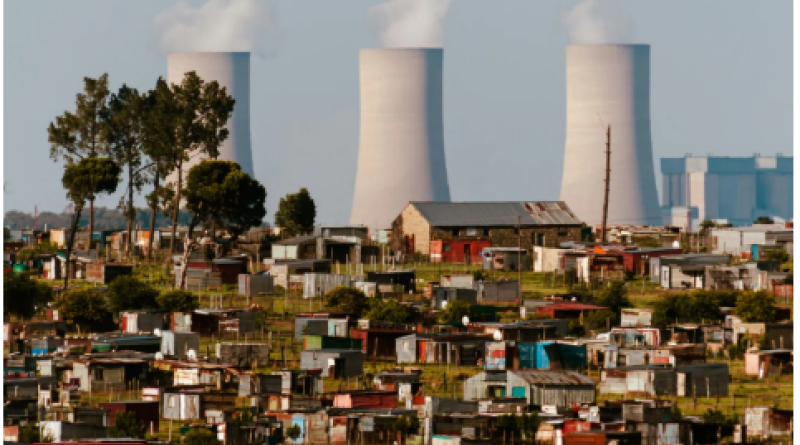
Cover photo: Coal power station in Mpumalanga. Source: Michelle Hart©pexels