

Algeria to commission 1.48GW of solar capacity by August
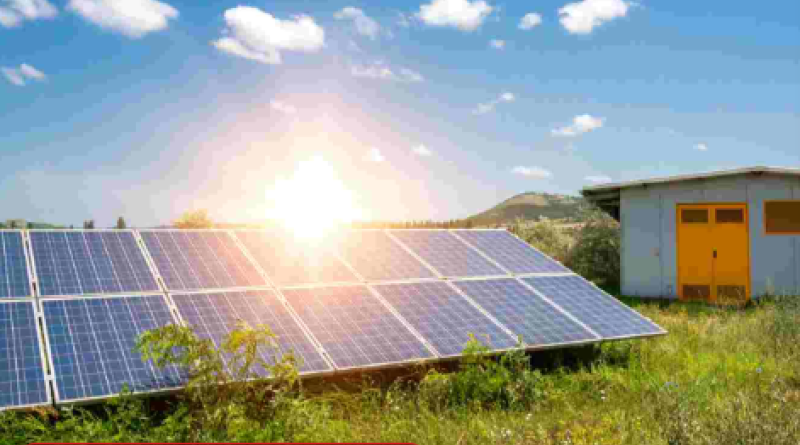
The new solar facilities will complement existing renewable energy assets, including the Ghar Djebilet solar power plant and the Adrar wind farm
Algeria plans to commission nine photovoltaic power plants with a combined capacity of 1,480MW by August 2026, as part of a broader push to scale up renewable energy generation under its national energy transition programme.
Africa’s energy transformation is happening fast! In just 12 months, the continent imported 15GW of solar panels, a 60% increase from the previous year
According to Khalil Hedna, Director of Information and Communication at the Ministry of Energy and Renewable Energies, the plants will be brought online during August, contributing to the first phase of a national programme targeting 3,200MW of renewable energy capacity.
Two of the solar plants, each with a capacity of 200MW, are expected to become operational by the end of January. These are located in Laghouat, in Biskra province, and Tendla, in El Meghaier province.
Expanding the solar footprint in Algeria
The new solar facilities will complement existing renewable energy assets, including the Ghar Djebilet solar power plant and the Adrar wind farm.
Officials say the programme is based on an energy mix combining fossil fuels with renewable sources, reflecting Algeria’s gradual approach to energy transition while maintaining supply security.
Alongside the solar rollout, the ministry expects the Djelfa combined cycle power plant, with a capacity of 1,260MW, to be commissioned in August. Construction of the plant by Spanish engineering firm Duro Felguera had previously been halted, prompting Sonelgaz to initiate international arbitration proceedings.
The case was decided in favour of the Algerian utility, with the contractor fined €54.2 million.
Algeria ramps up electricity exports
Algeria currently produces around 27,000MW of electricity, according to official ministry figures, with domestic consumption accounting for only about a third of total output.
In response to this surplus, President Abdelmadjid Tebboune has reportedly instructed authorities to expand electricity exports to foreign markets.
The country already exports approximately 500MW of power to Tunisia and is developing additional export projects to Egypt and Libya via Tunisian interconnections. Plans are also under way for a maritime link to supply Italy with low-carbon electricity.
Energy infrastructure plans
Beyond generation capacity, the ministry has identified improving public services, activating delayed facilities and strengthening national energy security as key sector priorities.
Efforts are also continuing to expand Algeria’s natural gas connection network, with the current connection rate standing at around 75% nationwide.
Digitalisation forms a central pillar of the ministry’s strategy. Several applications have been deployed to support remote monitoring, fault notification and maintenance of energy networks.
Authorities are also developing a national energy consumption model based on time periods and regional demand, with the aim of guiding future investment decisions and supporting the rollout of energy efficiency programmes.
The strategy further includes connecting isolated areas through individual photovoltaic systems, alongside planned propane gas storage solutions in Bordj Badji Mokhtar and Ain Guezzam.
However, the scale and complexity of these initiatives have raised questions over Algeria’s ability to meet commissioning timelines and fully realise its export ambitions.
Mapping renewable energy output in Algeria
New data from Dii Desert Energy, a Middle East and North Africa (MENA)-based energy transition think tank, indicates that regional renewable capacity and project pipelines are expanding rapidly.
According to Dii’s MENA Energy Outlook 2026: Renewables, Hydrogen and Energy Storage Developments report, the region ended 2025 with 43.7GW of operational renewable capacity, driven largely by solar PV and wind, while its active project pipeline reached 202GW.
The report estimates Algeria’s installed renewable capacity at 446MW at the end of 2025, with approximately 2.6GW under construction. While the National Renewable Energy Programme initially targeted 22GW by 2030, recent strategic revisions have reduced the ambition to 15GW by 2035, implying an interim target of around 10GW by 2030.
The sector gained renewed momentum after the launch of the 1,000MW solar programme and a subsequent 2GW tender announced in 2023. Although implementation has progressed slowly, the first two projects from these tenders are now advancing and are expected to become operational within the next year.
Future developments include 600MW of photovoltaic capacity under development and an additional 1GW of wind power announced, marking a significant step towards diversifying Algeria’s renewable energy mix.
Cover photo: [diyanadimitrova]©123rf.com